


Spill Containment Systems & Emergency Response Equipment
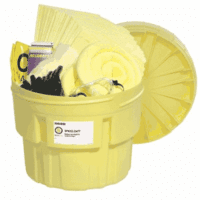
Spill containment systems and emergency response kits are engineered to mitigate environmental contamination and ensure regulatory compliance in industrial facilities. This category encompasses secondary containment hardware, including spill pallets, decks, and IBC basins, alongside mobile response tools like salvage drums and vehicle-based kits. Materials are selected for chemical resistance, utilizing HDPE for corrosive substances and high-visibility PVC for berms. These solutions address various containment requirements, from managing small-scale leaks with sorbent materials to implementing large-scale stormwater Best Management Practices (BMPs). All products are designed to meet EPA and OSHA safety standards for hazardous material handling.

Product Comparision Chart
Secondary Containment vs. Active Response Spill management is divided into two primary configurations: passive secondary containment and active response equipment. Passive systems, such as spill pallets, decks, and basins, are stationary units designed to capture leaks at the source before they reach the facility floor. These units feature integrated sumps with varying capacities to meet EPA requirements. Active response equipment, including emergency spill kits and leak repair tools, are portable solutions deployed during an incident. First response kits are categorized by their sorbent type—Universal, Oil-Only, or Hazmat—ensuring the correct chemical reaction occurs during the neutralization and absorption process.
Polymer Durability and Chemical Resistance The majority of spill containment hardware is manufactured from High-Density Polyethylene (HDPE) through a rotomolding or injection molding process. HDPE is utilized for its high strength-to-density ratio and its resistance to a broad spectrum of industrial chemicals, including acids, bases, and solvents. For mobile response, salvage drums are constructed from heavy-duty plastic to withstand the rigors of transport and mechanical handling. Sorbent materials are engineered from melt-blown polypropylene, which can be modified to be hydrophobic (repelling water while absorbing oil) or hydrophilic (absorbing water-based fluids), depending on the specific industrial requirement.
EPA, OSHA, and UN Compliance Spill containment equipment must adhere to specific federal mandates. EPA 40 CFR 264.175 dictates the required sump capacity for secondary containment systems, generally requiring the unit to hold 10% of the total volume of all containers or 100% of the volume of the largest container, whichever is greater. For shipping damaged or leaking hazardous materials, Plastic Salvage Drums must meet UN Ratings for transport under DOT regulations. Stormwater Management BMPs are governed by the National Pollutant Discharge Elimination System (NPDES), requiring facilities to implement measures that prevent contaminated runoff from entering municipal sewer systems.
Sector-Specific Deployment The application of spill containment spans multiple sectors. In chemical manufacturing, IBC containment and spill pallets are standard for high-volume storage. The transportation and logistics sector utilizes truck spill kits and recovery pumps to manage leaks during transit. Agricultural operations deploy spill berms and plugs to secure fertilizers and pesticides. In heavy manufacturing, stormwater BMPs and drain guards are implemented to filter metal shavings and lubricants from rainwater runoff. Additionally, personal protective equipment (PPE) including gloves and eye protection is integrated into response protocols to ensure operator safety during hazardous cleanup.
Technical Factors for Implementation Selecting the appropriate containment system requires an analysis of chemical compatibility and load requirements. The Material Safety Data Sheet (MSDS) of the stored substance must be cross-referenced with the container material to prevent degradation. Load capacity is another critical factor; spill decks and pallets must be rated for the static weight of filled drums or IBCs. For emergency kits, selection is based on the volume of potential spills and the specific liquid type (hydrocarbons vs. aggressive chemicals). Facility layout also dictates whether low-profile spill decks or high-capacity enclosed storage units are necessary for optimizing floor space while maintaining safety compliance.
| Product Category | Primary Function | Common Applications |
|---|---|---|
| Spill Pallets & Decks | Secondary Containment | Drum storage and dispensing areas |
| Emergency Spill Kits | Hazardous Leak Response | First response for chemical or oil spills |
| Salvage Drums | Overpacking & Transport | Secure transport of leaking or damaged containers |
| IBC Containment | Bulk Fluid Management | Storage of Intermediate Bulk Containers |
| Stormwater BMPs | Runoff Filtration | Drain protection and outdoor site management |
| Sorbents | Fluid Absorption | Manual cleanup of liquids, oils, and chemicals |
Secondary Containment vs. Active Response Spill management is divided into two primary configurations: passive secondary containment and active response equipment. Passive systems, such as spill pallets, decks, and basins, are stationary units designed to capture leaks at the source before they reach the facility floor. These units feature integrated sumps with varying capacities to meet EPA requirements. Active response equipment, including emergency spill kits and leak repair tools, are portable solutions deployed during an incident. First response kits are categorized by their sorbent type—Universal, Oil-Only, or Hazmat—ensuring the correct chemical reaction occurs during the neutralization and absorption process.
Polymer Durability and Chemical Resistance The majority of spill containment hardware is manufactured from High-Density Polyethylene (HDPE) through a rotomolding or injection molding process. HDPE is utilized for its high strength-to-density ratio and its resistance to a broad spectrum of industrial chemicals, including acids, bases, and solvents. For mobile response, salvage drums are constructed from heavy-duty plastic to withstand the rigors of transport and mechanical handling. Sorbent materials are engineered from melt-blown polypropylene, which can be modified to be hydrophobic (repelling water while absorbing oil) or hydrophilic (absorbing water-based fluids), depending on the specific industrial requirement.
EPA, OSHA, and UN Compliance Spill containment equipment must adhere to specific federal mandates. EPA 40 CFR 264.175 dictates the required sump capacity for secondary containment systems, generally requiring the unit to hold 10% of the total volume of all containers or 100% of the volume of the largest container, whichever is greater. For shipping damaged or leaking hazardous materials, Plastic Salvage Drums must meet UN Ratings for transport under DOT regulations. Stormwater Management BMPs are governed by the National Pollutant Discharge Elimination System (NPDES), requiring facilities to implement measures that prevent contaminated runoff from entering municipal sewer systems.
Sector-Specific Deployment The application of spill containment spans multiple sectors. In chemical manufacturing, IBC containment and spill pallets are standard for high-volume storage. The transportation and logistics sector utilizes truck spill kits and recovery pumps to manage leaks during transit. Agricultural operations deploy spill berms and plugs to secure fertilizers and pesticides. In heavy manufacturing, stormwater BMPs and drain guards are implemented to filter metal shavings and lubricants from rainwater runoff. Additionally, personal protective equipment (PPE) including gloves and eye protection is integrated into response protocols to ensure operator safety during hazardous cleanup.
Technical Factors for Implementation Selecting the appropriate containment system requires an analysis of chemical compatibility and load requirements. The Material Safety Data Sheet (MSDS) of the stored substance must be cross-referenced with the container material to prevent degradation. Load capacity is another critical factor; spill decks and pallets must be rated for the static weight of filled drums or IBCs. For emergency kits, selection is based on the volume of potential spills and the specific liquid type (hydrocarbons vs. aggressive chemicals). Facility layout also dictates whether low-profile spill decks or high-capacity enclosed storage units are necessary for optimizing floor space while maintaining safety compliance.

