


Drum Containment Cradles | Spill Control Systems
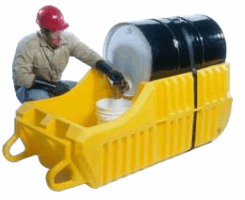
- Materials: Polyethylene Spill Containment Construction
- Configurations: Portable and Stationary Drum Cradles
- Capacity Range: Designed for Standard 30-Gallon and 55-Gallon Drums
- Compliance: Secondary Spill Containment for Industrial Leak Control
- Design Features: Integrated Drip Containment and Horizontal Drum Positioning

Featured Products
| Product | Configuration | Material | Application | Status |
|---|---|---|---|---|
| Portable All-Poly Cradles Catch Drips | Portable Drum Cradle | Polyethylene | Mobile Drum Dispensing and Spill Containment | Discontinued |
| Stationary All-Poly Cradles Catch Drips | Stationary Drum Cradle | Polyethylene | Fixed Drum Dispensing Stations | Discontinued |
Containment Cradle Configurations<
Containment cradles are engineered to position industrial drums horizontally for controlled dispensing and transfer operations. Portable cradle systems are commonly equipped with molded supports or integrated mobility features that allow operators to relocate drums between workstations, maintenance zones, and temporary dispensing areas. Stationary containment cradles are designed for fixed-position applications where repetitive dispensing or storage occurs within a dedicated facility area. Both configurations incorporate containment reservoirs beneath the drum to capture drips, valve leakage, and residual product during transfer operations.
Polyethylene Construction and Chemical Resistance<
Most all-poly containment cradles are manufactured from rotationally molded polyethylene materials selected for corrosion resistance and impact durability. Unlike painted steel systems, polyethylene does not rust or degrade when exposed to water, many industrial chemicals, or outdoor environments. The material is resistant to many petroleum products, cleaning agents, and industrial fluids commonly handled in maintenance and manufacturing operations. Molded poly construction also reduces seam failure risks associated with welded metal assemblies and provides smoother interior surfaces for easier cleaning and decontamination.
Integrated Spill Containment Design<
Containment cradles incorporate sump reservoirs or recessed collection basins directly beneath the drum body and dispensing area. These reservoirs are designed to capture minor leaks, overflows, and residual liquid generated during drum dispensing. Horizontal drum positioning improves product evacuation efficiency while reducing tipping hazards associated with vertical dispensing methods. Some cradle systems may also support compatibility with faucets, pumps, or drum valves installed at the drum bung opening. Containment systems help reduce floor contamination and support housekeeping procedures in industrial work environments.
Industrial Applications and Use Cases<
Containment cradles are commonly used in industrial maintenance departments, chemical processing facilities, automotive operations, manufacturing plants, and warehouse environments. These systems support dispensing operations involving lubricants, oils, detergents, solvents, coolants, and other industrial liquids stored in drums. Portable units are frequently utilized for maintenance crews and temporary work zones, while stationary models are integrated into production lines and fluid management stations. Horizontal drum positioning allows controlled dispensing into smaller containers, parts washers, or transfer systems.
Regulatory and Workplace Safety Considerations<
Secondary containment systems assist facilities in reducing accidental floor contamination and managing minor spills generated during dispensing operations. Spill containment equipment may support facility compliance efforts associated with EPA spill prevention guidelines, OSHA workplace safety standards, and internal environmental management procedures. Facilities handling hazardous liquids often incorporate containment cradles as part of broader spill response and fluid handling programs designed to reduce slip hazards, improve cleanup procedures, and protect drainage systems from contamination.
Selection Criteria for Drum Containment Cradles<
Selecting a containment cradle requires evaluation of drum size compatibility, chemical resistance requirements, dispensing frequency, and mobility needs. Portable systems may be preferred for maintenance operations requiring frequent relocation, while stationary units are more suitable for continuous dispensing environments. Buyers should also evaluate sump capacity, drum support geometry, valve accessibility, and compatibility with dispensing accessories such as pumps or faucets. Material compatibility between stored liquids and polyethylene containment components should be reviewed prior to deployment in chemical handling applications.

