


Industrial Dippers | Sampling and Fluid Transfer Tools
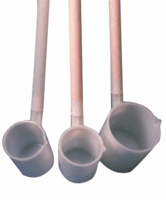
- Material Composition: High-Density Polyethylene (HDPE), 304/316 Stainless Steel.
- Size/Capacity Range: 500 mL to 2000 mL capacities; handle lengths up to 12 feet.
- Compliance/Ratings: FDA-Compliant materials for food and pharmaceutical contact.
- Closure Types: Open-top bowls with reinforced pour spouts or graduated markings.

| Product Name | Material | Handle Length | Typical Capacity |
|---|---|---|---|
| Long-Handle Polyethylene Dippers | High-Density Polyethylene (HDPE) | 3' to 12' | 500 mL - 1000 mL |
| Stainless Steel Long Handle Dippers | 304 or 316 Stainless Steel | 3' to 6' | 500 mL - 2000 mL |
Technical Dipper Configurations Industrial dippers are primarily categorized by their handle length and bowl attachment method. Fixed-handle dippers provide a rigid connection between the sampling bowl and the shaft, ensuring stability when submerged in high-viscosity fluids. Telescoping or modular handle designs allow for variable reach, which is critical when sampling from large-scale containment or environmental runoff points. The sampling bowls are typically designed with integrated pour spouts to minimize turbulence and splashing during the transfer of the sample to a secondary container. Some models feature dual-sided spouts to accommodate both left-handed and right-handed operation in confined industrial spaces.
Material Properties and Chemical Resistance The selection of dipper material is determined by the chemical nature of the fluid being sampled. High-density polyethylene (HDPE) dippers are non-corrosive and lightweight, making them suitable for acids, bases, and general aqueous solutions. HDPE is an inert thermoplastic that resists impact and does not leach contaminants into the sample. For applications involving high temperatures, organic solvents, or stringent sterilization requirements, 304 or 316-grade stainless steel is utilized. Stainless steel dippers offer high tensile strength and can withstand autoclaving or heavy-duty chemical cleaning without surface degradation. The smooth, non-porous finish of stainless steel prevents cross-contamination between sampling batches.
Compliance and Safety Standards In the food, beverage, and pharmaceutical industries, dippers must meet specific regulatory criteria. Materials used in these sectors are required to be FDA-compliant, ensuring that the sampling tool does not introduce harmful substances into the product stream. For laboratory use, dippers may be manufactured to meet ASTM standards for volumetric accuracy if they feature graduated markings. In hazardous material handling, the use of long-handle dippers assists in compliance with OSHA safety protocols by maintaining a physical distance between the operator and potentially volatile or corrosive substances, reducing the risk of dermal contact or inhalation of concentrated vapors.
Sector-Specific Use Cases Dippers are essential tools across diverse industrial landscapes. In wastewater treatment facilities, long-handle polyethylene dippers are used to collect effluent samples from tanks and channels for laboratory analysis of pH and chemical composition. In the agricultural sector, they facilitate the sampling of liquid fertilizers and pesticides from bulk storage. The food and dairy industries utilize stainless steel dippers for the sanitary extraction of ingredients from processing vats. Furthermore, chemical manufacturers rely on these tools for quality control sampling of raw materials directly from 55-gallon drums or intermediate bulk containers (IBCs).
Technical Factors for Procurement When selecting an industrial dipper, the primary consideration is the chemical compatibility between the fluid and the sampler material to prevent corrosion or sample bias. The depth of the source vessel dictates the required handle length; insufficient length may necessitate unsafe leaning over open tanks, while excessive length can hinder maneuverability in low-clearance areas. Bowl capacity must align with the required sample volume for laboratory testing to avoid multiple submersions, which increases the risk of contamination. Additionally, for high-purity applications, the ability of the material to withstand specific sterilization agents or high-heat cycles must be verified.

