


Emergency Water Storage Tanks By Poly-Mart | 5 Year Manufacturer Warranty

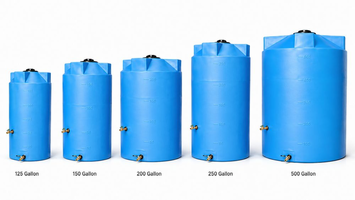
- Material Composition: FDA/NSF-approved, food-grade, BPA-free polyethylene with UV inhibitors.
- Capacity Range: 100-gallon to 500-gallon emergency water storage tanks.
- Use Rating: Designed for long-term potable emergency water storage applications.
- Fittings: Two 3/4" bulkhead fittings, lead-free brass spigot, and lead-free brass ball valve assembly.
- Configurations: Indoor doorway-compatible tanks and larger garage, basement, or outdoor storage tanks.

Product Comparison Chart
Indoor and Outdoor Tank Configurations Emergency water storage tanks are configured around capacity, doorway clearance, floor space, and access to dispensing fittings. The 100, 125, and 150 gallon models are built with a 30-inch diameter, allowing them to pass through an average 32-inch American doorway for indoor emergency water storage. These smaller models are suited for closets, utility rooms, garages, or other controlled indoor areas. The 200, 250, and 500 gallon models provide larger reserves for basement, garage, or outdoor placement where additional diameter and weight capacity can be accommodated.
Food-Grade Polyethylene Construction These tanks are manufactured from FDA/NSF-approved, food-grade, BPA-free polyethylene. Polyethylene is used for potable water storage because it does not rust, corrode, or require interior metal linings. The resin includes built-in UV inhibitors to reduce color fading and material breakdown from sunlight exposure. For outdoor storage, darker colors such as black or dark green reduce light penetration through the tank wall. Reduced sunlight exposure inside the tank helps limit algae growth when water is stored for extended periods.
Potable Water Storage Requirements Emergency water tanks intended for drinking water storage require food-grade resin and compatible fittings. These tanks are listed as FDA/NSF-approved and BPA-free, making them suitable for potable emergency water applications when filled, sealed, and maintained according to local water storage practices. Lead-free brass fittings are used for the spigot and ball valve assembly to support potable water contact. Stored emergency water should be protected from contamination, excessive heat, sunlight exposure, and contact with non-potable plumbing components.
Bulkhead Fittings and Valve Placement Each tank is outfitted with two 3/4-inch bulkhead fittings. One fitting is located at the base of the tank for draining. The second fitting is positioned approximately 14 inches off the ground and offset from the lower drain fitting. This layout allows a 5-gallon bucket, pan, or container to be filled without interference from the lower fitting. The included lead-free brass spigot supports controlled dispensing, while the lead-free brass ball valve assembly provides a larger shutoff point for draining or system connection.
Emergency Preparedness and Utility Water Storage Emergency water storage tanks are used in residential preparedness plans, storm-prone areas, rural properties, commercial facilities, and utility backup systems. Homeowners may use smaller tanks for indoor drinking water reserves, while larger tanks support extended storage in garages, basements, sheds, or outdoor pads. These tanks are also used where municipal water interruptions, hurricanes, freezes, droughts, or infrastructure outages may affect access to water. Stored water can support drinking, cooking, hygiene, cleaning, and basic household water needs when properly maintained.
Capacity, Location, and Access Planning Tank selection should begin with the number of people served, expected storage duration, available space, and whether the tank will be installed indoors or outdoors. Smaller tanks provide easier placement and doorway access but store less water. Larger tanks increase reserve capacity but require more floor area, stronger support, and careful planning for filled weight. Water weighs approximately 8.34 pounds per gallon, so a 500 gallon tank can exceed 4,000 pounds when full before accounting for tank weight and fittings.
Sunlight, Color, and Maintenance Factors Storage environment affects water quality and tank performance. Indoor placement reduces sunlight exposure and temperature swings. Outdoor placement requires attention to tank color, sunlight penetration, pad stability, and fitting protection. Light blue identifies the tank as emergency water storage, while black and dark green are better suited for outdoor locations because they block more sunlight. If lighter colors are used outdoors, additional sunlight control may be needed. Buyers should also plan for periodic inspection, water rotation, valve access, and protection from freezing conditions where applicable.
| Product | Capacity | Dimensions | Color | Configuration | Primary Placement |
|---|---|---|---|---|---|
| Emergency Water Storage Tank | 100 Gallon | 30" Diameter x 42" Height | Light Blue | Vertical Tank | Indoor home storage |
| Emergency Water Storage Tank | 125 Gallon | 30" Diameter x 50" Height | Light Blue | Vertical Tank | Indoor home storage |
| Emergency Water Storage Tank | 150 Gallon | 30" Diameter x 58" Height | Light Blue | Vertical Tank | Indoor home storage |
| Emergency Water Storage Tank | 200 Gallon | 36" Diameter x 56" Height | Light Blue | Vertical Tank | Basement, garage, or outdoor storage |
| Emergency Water Storage Tank | 250 Gallon | 36" Diameter x 67" Height | Light Blue | Vertical Tank | Basement, garage, or outdoor storage |
| Emergency Water Storage Tank | 500 Gallon | 48" Diameter x 71" Height | Light Blue | Vertical Tank | Garage, basement, or outdoor bulk storage |
Indoor and Outdoor Tank Configurations Emergency water storage tanks are configured around capacity, doorway clearance, floor space, and access to dispensing fittings. The 100, 125, and 150 gallon models are built with a 30-inch diameter, allowing them to pass through an average 32-inch American doorway for indoor emergency water storage. These smaller models are suited for closets, utility rooms, garages, or other controlled indoor areas. The 200, 250, and 500 gallon models provide larger reserves for basement, garage, or outdoor placement where additional diameter and weight capacity can be accommodated.
Food-Grade Polyethylene Construction These tanks are manufactured from FDA/NSF-approved, food-grade, BPA-free polyethylene. Polyethylene is used for potable water storage because it does not rust, corrode, or require interior metal linings. The resin includes built-in UV inhibitors to reduce color fading and material breakdown from sunlight exposure. For outdoor storage, darker colors such as black or dark green reduce light penetration through the tank wall. Reduced sunlight exposure inside the tank helps limit algae growth when water is stored for extended periods.
Potable Water Storage Requirements Emergency water tanks intended for drinking water storage require food-grade resin and compatible fittings. These tanks are listed as FDA/NSF-approved and BPA-free, making them suitable for potable emergency water applications when filled, sealed, and maintained according to local water storage practices. Lead-free brass fittings are used for the spigot and ball valve assembly to support potable water contact. Stored emergency water should be protected from contamination, excessive heat, sunlight exposure, and contact with non-potable plumbing components.
Bulkhead Fittings and Valve Placement Each tank is outfitted with two 3/4-inch bulkhead fittings. One fitting is located at the base of the tank for draining. The second fitting is positioned approximately 14 inches off the ground and offset from the lower drain fitting. This layout allows a 5-gallon bucket, pan, or container to be filled without interference from the lower fitting. The included lead-free brass spigot supports controlled dispensing, while the lead-free brass ball valve assembly provides a larger shutoff point for draining or system connection.
Emergency Preparedness and Utility Water Storage Emergency water storage tanks are used in residential preparedness plans, storm-prone areas, rural properties, commercial facilities, and utility backup systems. Homeowners may use smaller tanks for indoor drinking water reserves, while larger tanks support extended storage in garages, basements, sheds, or outdoor pads. These tanks are also used where municipal water interruptions, hurricanes, freezes, droughts, or infrastructure outages may affect access to water. Stored water can support drinking, cooking, hygiene, cleaning, and basic household water needs when properly maintained.
Capacity, Location, and Access Planning Tank selection should begin with the number of people served, expected storage duration, available space, and whether the tank will be installed indoors or outdoors. Smaller tanks provide easier placement and doorway access but store less water. Larger tanks increase reserve capacity but require more floor area, stronger support, and careful planning for filled weight. Water weighs approximately 8.34 pounds per gallon, so a 500 gallon tank can exceed 4,000 pounds when full before accounting for tank weight and fittings.
Sunlight, Color, and Maintenance Factors Storage environment affects water quality and tank performance. Indoor placement reduces sunlight exposure and temperature swings. Outdoor placement requires attention to tank color, sunlight penetration, pad stability, and fitting protection. Light blue identifies the tank as emergency water storage, while black and dark green are better suited for outdoor locations because they block more sunlight. If lighter colors are used outdoors, additional sunlight control may be needed. Buyers should also plan for periodic inspection, water rotation, valve access, and protection from freezing conditions where applicable.

