


Drum Security | Capseals, Plugs & Sealing Tools
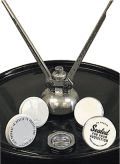
- Material Composition: Steel, Aluminum, Polyethylene, and Zinc-Plated components.
- Size/Capacity Range: Standard 2-inch (50mm) and 3/4-inch (19mm) bung configurations.
- Compliance/Ratings: Meets DOT and UN specifications for tamper-evident sealing.
- Closure Types: Push-on capseals, screw-in plugs, and crimping tools.

| Product Category | Primary Material | Standard Sizes | Primary Function |
|---|---|---|---|
| Metal Capseals | Tinplated Steel | 2" and 3/4" | Tamper-evidence / Leak prevention |
| Plastic Capseals | Polyethylene | 2" and 3/4" | Corrosion resistance / Dust protection |
| Bung Plugs | Steel or Nylon | NPT / NPS Threads | Primary orifice closure |
| Crimp Tools | Hardened Steel | Manual / Pneumatic | Permanent seal application |
Configuration Analysis Drum security systems are categorized into primary closures and secondary tamper-evident seals. The primary closure consists of the bung plug, typically threaded into the drum flange. These are available in "Tight-Head" configurations where the plug remains the sole access point. Secondary security is provided by capseals, which are applied over the bung. Metal capseals require a manual or pneumatic crimping tool to deform the skirt of the seal under the flange, creating a permanent, non-removable barrier. Plastic "snap-on" versions provide a lower-security alternative that prevents dust accumulation and moisture ingress but does not offer the same level of tamper-resistance as metal variants.
Material Engineering The engineering of drum closures must account for chemical reactivity and structural stress. Steel plugs are often zinc-plated or galvanized to provide a sacrificial layer against oxidation. For high-purity or corrosive environments, stainless steel or glass-filled nylon plugs are utilized. Capseals are manufactured from light-gauge tin-plated steel, allowing for precise deformation during the crimping process without compromising the seal's structural integrity. Scoring lines are often engineered into the metal to ensure that the seal breaks away cleanly when the removal tab is engaged, providing immediate visual evidence of entry.
Regulatory Standards Industrial drum security is governed by Department of Transportation (DOT) and United Nations (UN) performance standards. For a drum to maintain its UN Rating during shipping, the closure must be tightened to specific torque requirements—measured in foot-pounds—using calibrated torque wrenches. Tamper-evident seals are often a regulatory requirement for the transport of hazardous materials (HazMat) to ensure the contents have not been altered or compromised. Compliance with OSHA standards also dictates that seals must not have sharp edges after removal to prevent workplace lacerations.
Industrial Applications The application of drum security components spans several high-stakes industries. In the chemical and petroleum sectors, metal capseals prevent the evaporation of volatile organic compounds (VOCs) and protect against fuel theft. The food and beverage industry utilizes plastic, gasketed capseals to prevent biological contaminants from settling on the bung surface during outdoor storage or long-term warehousing. In agricultural settings, these seals ensure that pesticides and fertilizers remain concentrated and free from rainwater dilution.
Selection Criteria Selecting the appropriate drum security hardware requires an analysis of the container material and the stored substance. Steel drums require steel or compatible metal plugs to prevent galvanic corrosion. Buyers must determine if the application requires a "scored" capseal, which breaks upon removal, or a "non-scored" version for different security protocols. Furthermore, the choice between manual and pneumatic sealing tools depends on the volume of drums processed; high-throughput facilities utilize pneumatic crimpers to ensure uniform sealing pressure and reduce operator fatigue, whereas manual tools are sufficient for low-volume specialty chemical batches.

