


Drum Handling Equipment | Lifting, Moving & Storage Systems
- Materials: Carbon Steel, Powder-Coated Steel, Galvanized Steel
- Capacity Range: 30-Gallon to 55-Gallon Drums (400–800+ lbs)
- Compliance: OSHA Handling Guidelines, EPA Spill Containment Compatible
- Operation Types: Manual, Hydraulic, Forklift-Compatible
- Configurations: Lifters, Grabbers, Dollies, Racks, Dumpers

Product Comparison Chart
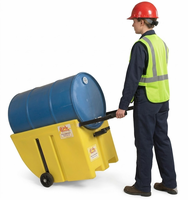
Drum handling equipment is segmented by functional design based on operational requirements. Drum lifters are used for vertical lifting and positioning, commonly attached to forklifts or hoists. Drum grabbers secure drums using mechanical clamping systems for transport without direct contact. Drum trucks and dollies provide ground-level mobility, allowing operators to move drums across flat surfaces with reduced effort. Drum racks and stackers are used for storage optimization, enabling vertical or horizontal drum placement. Cradles and tilting levers allow controlled dispensing by rotating drums along a fixed axis. Drum dumpers are designed for full inversion and emptying of drum contents, typically used in batch processing or waste handling applications. Each configuration targets a specific stage in drum handling workflows.
Most drum handling equipment is constructed from carbon steel due to its structural strength and load-bearing capacity. Steel frames are often fabricated using box-section or reinforced tubing to withstand repetitive heavy loads. Powder-coated finishes provide resistance to corrosion and abrasion in indoor environments, while galvanized steel is used for outdoor or chemical-exposed conditions. Load-bearing components such as clamps, rollers, and pivot points are reinforced to prevent deformation under stress. Bearings and rotating elements in cradles and dumpers are engineered for smooth operation under full drum weight. Weld integrity and frame thickness are critical factors, particularly in applications involving hazardous or high-density materials.
Drum handling equipment must align with workplace safety and environmental regulations. OSHA guidelines address safe lifting practices, ergonomic handling, and operator protection. Equipment used with hazardous materials must support compliance with EPA spill containment standards, particularly when integrated with sump pallets or containment racks. Forklift-compatible attachments must meet load stability and securement requirements. In operations involving hazardous chemicals, equipment design must minimize the risk of spills, leaks, or drum damage during movement. Compliance ensures reduced liability and adherence to federal and local safety regulations.
Drum handling equipment is used across multiple industries where bulk materials are stored in drums. In chemical processing, lifters and grabbers are used to transport hazardous liquids while minimizing exposure. Oil and gas operations rely on drum trucks and dollies for moving lubricants and fuels within facilities. Food and beverage manufacturing uses drum handling systems for ingredients such as syrups, oils, and concentrates, requiring controlled dispensing and sanitary handling. Agricultural operations use drum racks and dumpers for fertilizers and treatment chemicals. Warehousing and distribution centers utilize stackers and racks to maximize storage density and streamline logistics.
Equipment selection depends on several technical factors. Load capacity must match the weight of full drums, typically ranging from 400 to over 800 pounds. Compatibility with drum size (30-gallon vs. 55-gallon) and material (steel, plastic, fiber) is required for secure handling. Operational method is a key factor—manual units are suited for low-volume environments, while hydraulic or forklift-compatible systems support high-throughput operations. Environmental conditions influence material choice; galvanized or coated steel is required in corrosive or outdoor settings. Additional considerations include mobility requirements, frequency of handling, and whether the application involves lifting, tilting, stacking, or dispensing. Selecting equipment aligned with these criteria ensures safe operation and consistent handling performance.
Industrial drum handling equipment includes lifters, grabbers, racks, and dumpers built from heavy-duty steel to move and store 30–55 gallon drums. Selection depends on load capacity, operation type, and task (lifting, moving, or dispensing), with OSHA and EPA compliance as key factors.
| Product Type | Primary Function | Capacity | Operation Type | Compatible Drum Sizes |
|---|---|---|---|---|
| Drum Lifters | Vertical lifting and positioning | Up to 800 lbs | Manual / Forklift | 30–55 Gallon |
| Drum Grabbers | Secure gripping and transport | Up to 800 lbs | Forklift | 55 Gallon |
| Drum Trucks | Ground transport | 400–800 lbs | Manual | 30–55 Gallon |
| Drum Racks | Storage and stacking | Multi-drum systems | Static | 55 Gallon |
| Drum Dumpers | Controlled emptying | Up to 800 lbs | Hydraulic / Electric | 30–55 Gallon |
Drum handling equipment is segmented by functional design based on operational requirements. Drum lifters are used for vertical lifting and positioning, commonly attached to forklifts or hoists. Drum grabbers secure drums using mechanical clamping systems for transport without direct contact. Drum trucks and dollies provide ground-level mobility, allowing operators to move drums across flat surfaces with reduced effort. Drum racks and stackers are used for storage optimization, enabling vertical or horizontal drum placement. Cradles and tilting levers allow controlled dispensing by rotating drums along a fixed axis. Drum dumpers are designed for full inversion and emptying of drum contents, typically used in batch processing or waste handling applications. Each configuration targets a specific stage in drum handling workflows.
Most drum handling equipment is constructed from carbon steel due to its structural strength and load-bearing capacity. Steel frames are often fabricated using box-section or reinforced tubing to withstand repetitive heavy loads. Powder-coated finishes provide resistance to corrosion and abrasion in indoor environments, while galvanized steel is used for outdoor or chemical-exposed conditions. Load-bearing components such as clamps, rollers, and pivot points are reinforced to prevent deformation under stress. Bearings and rotating elements in cradles and dumpers are engineered for smooth operation under full drum weight. Weld integrity and frame thickness are critical factors, particularly in applications involving hazardous or high-density materials.
Drum handling equipment must align with workplace safety and environmental regulations. OSHA guidelines address safe lifting practices, ergonomic handling, and operator protection. Equipment used with hazardous materials must support compliance with EPA spill containment standards, particularly when integrated with sump pallets or containment racks. Forklift-compatible attachments must meet load stability and securement requirements. In operations involving hazardous chemicals, equipment design must minimize the risk of spills, leaks, or drum damage during movement. Compliance ensures reduced liability and adherence to federal and local safety regulations.
Drum handling equipment is used across multiple industries where bulk materials are stored in drums. In chemical processing, lifters and grabbers are used to transport hazardous liquids while minimizing exposure. Oil and gas operations rely on drum trucks and dollies for moving lubricants and fuels within facilities. Food and beverage manufacturing uses drum handling systems for ingredients such as syrups, oils, and concentrates, requiring controlled dispensing and sanitary handling. Agricultural operations use drum racks and dumpers for fertilizers and treatment chemicals. Warehousing and distribution centers utilize stackers and racks to maximize storage density and streamline logistics.
Equipment selection depends on several technical factors. Load capacity must match the weight of full drums, typically ranging from 400 to over 800 pounds. Compatibility with drum size (30-gallon vs. 55-gallon) and material (steel, plastic, fiber) is required for secure handling. Operational method is a key factor—manual units are suited for low-volume environments, while hydraulic or forklift-compatible systems support high-throughput operations. Environmental conditions influence material choice; galvanized or coated steel is required in corrosive or outdoor settings. Additional considerations include mobility requirements, frequency of handling, and whether the application involves lifting, tilting, stacking, or dispensing. Selecting equipment aligned with these criteria ensures safe operation and consistent handling performance.
Industrial drum handling equipment includes lifters, grabbers, racks, and dumpers built from heavy-duty steel to move and store 30–55 gallon drums. Selection depends on load capacity, operation type, and task (lifting, moving, or dispensing), with OSHA and EPA compliance as key factors.

