


Industrial Scoops and Scrapers | Material Handling Tools
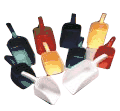
- Material Composition: Polypropylene, Stainless Steel, Cast Aluminum, and Polyethylene.
- Size/Capacity Range: 2-ounce portioning to 1-gallon high-capacity scoops.
- Compliance/Ratings: FDA-compliant materials, HACCP color-coding, and BPA-free options.
- Handle Configurations: Ergonomic hand-held, long-handle, and portion-control grips.

Industrial Scoop and Scraper Comparison
Scoop Geometry and Handle Ergonomics Industrial scoops are categorized by their structural profile and handle length to suit specific task requirements. Standard handheld scoops feature a contoured grip located directly behind the bowl, providing maximum leverage for heavy loads like grains or resins. Long-handle scoops are engineered for deep-vessel access, allowing operators to extract material from 55-gallon drums while maintaining a safe distance from the contents. Flat-bottom scoops are specifically designed for leveling and clearing the bases of rectangular bins, whereas round-bottom models are optimized for fluid movement and pouring. Scrapers are configured with rigid or flexible blades to accommodate various surface contours during cleaning or material recovery.
Substrate Properties and Durability The selection of material is dictated by the chemical and physical nature of the substance being handled. Stainless steel scoops are the standard for pharmaceutical and food-processing environments due to their non-porous surfaces and ability to withstand high-temperature sterilization. Polypropylene and polyethylene variants offer high chemical resistance to acids and bases, and their one-piece injection-molded construction eliminates seams where bacteria can proliferate. Cast aluminum provides a lightweight yet rigid alternative for non-corrosive dry goods, often utilized in agricultural settings. For high-impact environments, polycarbonate (Bouncer®) provides transparency for visual inspection while resisting cracking under mechanical stress.
Compliance and Sanitation Protocols Material handling tools must often adhere to strict regulatory frameworks, particularly in the food and beverage and medical sectors. Many products in this category are manufactured from FDA-compliant resins that meet 21 CFR standards for food contact. In facilities implementing HACCP (Hazard Analysis and Critical Control Points) programs, color-coded polypropylene scoops are utilized to prevent cross-contamination between different production zones. Stainless steel models often meet NSF (National Sanitation Foundation) requirements, ensuring that the tool design facilitates easy cleaning and resists the accumulation of biological contaminants.
Sector-Specific Utility In chemical manufacturing, scoops and scrapers are used for the precise measurement of dry reagents and the removal of precipitates from mixing vessels. The food and beverage industry utilizes sanitary-grade tools for handling ingredients in bulk quantities, where non-corrosive materials are mandatory. Agricultural applications involve the distribution of feed and fertilizers, requiring high-capacity aluminum or plastic scoops. In laboratory environments, smaller, portioned scoops ensure the repeatable transfer of samples for analytical testing. Scrapers are essential in maintenance roles for removing buildup from conveyor belts and processing surfaces without damaging the underlying equipment.
Technical Factors for Procurement When specifying scoops or scrapers, chemical compatibility must be the primary consideration to prevent material degradation or leaching. The "Total Volume" capacity should be matched to the bulk density of the material to prevent operator fatigue or tool failure. In environments with explosive dust or volatile vapors, non-sparking aluminum or specialized anti-static plastics are required. Furthermore, the storage environment dictates the choice between UV-stabilized polymers for outdoor use and high-polish metals for indoor, sterile environments. Buyers must also evaluate the tool's thermal tolerance if the application involves extreme temperatures during material transfer or cleaning cycles.
| Product Name | Primary Material | Key Technical Attribute |
|---|---|---|
| Bouncer® Scoops | Polycarbonate | Impact resistance and optical clarity |
| Sanitary Stainless Steel Scoops | 304/316 Stainless Steel | Corrosion resistance; autoclavable |
| Safety Portioning Scoops | Food-Grade Plastic | Integrated hand guards; precise volume measurement |
| REMCO® Tough Polypropylene Scoops | Injection-Molded Polypropylene | Chemical resistance; one-piece construction |
| REMCO® Scrapers | Reinforced Polypropylene | Non-marring surface contact; chemical inertness |
| Long Handle Polyethylene Scoop | High-Density Polyethylene | Extended reach for deep barrel sampling |
| Cast Aluminum Scoops | Heavy-Duty Aluminum | High strength-to-weight ratio; non-sparking properties |
| Translucent Polypropylene Scoops | Polypropylene | Visual content verification; economical utility |
Scoop Geometry and Handle Ergonomics Industrial scoops are categorized by their structural profile and handle length to suit specific task requirements. Standard handheld scoops feature a contoured grip located directly behind the bowl, providing maximum leverage for heavy loads like grains or resins. Long-handle scoops are engineered for deep-vessel access, allowing operators to extract material from 55-gallon drums while maintaining a safe distance from the contents. Flat-bottom scoops are specifically designed for leveling and clearing the bases of rectangular bins, whereas round-bottom models are optimized for fluid movement and pouring. Scrapers are configured with rigid or flexible blades to accommodate various surface contours during cleaning or material recovery.
Substrate Properties and Durability The selection of material is dictated by the chemical and physical nature of the substance being handled. Stainless steel scoops are the standard for pharmaceutical and food-processing environments due to their non-porous surfaces and ability to withstand high-temperature sterilization. Polypropylene and polyethylene variants offer high chemical resistance to acids and bases, and their one-piece injection-molded construction eliminates seams where bacteria can proliferate. Cast aluminum provides a lightweight yet rigid alternative for non-corrosive dry goods, often utilized in agricultural settings. For high-impact environments, polycarbonate (Bouncer®) provides transparency for visual inspection while resisting cracking under mechanical stress.
Compliance and Sanitation Protocols Material handling tools must often adhere to strict regulatory frameworks, particularly in the food and beverage and medical sectors. Many products in this category are manufactured from FDA-compliant resins that meet 21 CFR standards for food contact. In facilities implementing HACCP (Hazard Analysis and Critical Control Points) programs, color-coded polypropylene scoops are utilized to prevent cross-contamination between different production zones. Stainless steel models often meet NSF (National Sanitation Foundation) requirements, ensuring that the tool design facilitates easy cleaning and resists the accumulation of biological contaminants.
Sector-Specific Utility In chemical manufacturing, scoops and scrapers are used for the precise measurement of dry reagents and the removal of precipitates from mixing vessels. The food and beverage industry utilizes sanitary-grade tools for handling ingredients in bulk quantities, where non-corrosive materials are mandatory. Agricultural applications involve the distribution of feed and fertilizers, requiring high-capacity aluminum or plastic scoops. In laboratory environments, smaller, portioned scoops ensure the repeatable transfer of samples for analytical testing. Scrapers are essential in maintenance roles for removing buildup from conveyor belts and processing surfaces without damaging the underlying equipment.
Technical Factors for Procurement When specifying scoops or scrapers, chemical compatibility must be the primary consideration to prevent material degradation or leaching. The "Total Volume" capacity should be matched to the bulk density of the material to prevent operator fatigue or tool failure. In environments with explosive dust or volatile vapors, non-sparking aluminum or specialized anti-static plastics are required. Furthermore, the storage environment dictates the choice between UV-stabilized polymers for outdoor use and high-polish metals for indoor, sterile environments. Buyers must also evaluate the tool's thermal tolerance if the application involves extreme temperatures during material transfer or cleaning cycles.

