


Measuring Pitchers & Graduated Containers
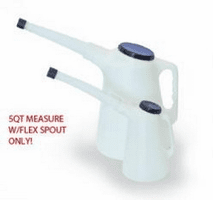
- Material Composition: Polyethylene, Stainless Steel, Seamless Aluminum, Galvanized Steel.
- Size/Capacity Range: 0.5-Quart to 5-Gallon heavy-duty containers.
- Measurement Scales: Dual US Customary and Metric graduations.
- Configuration Types: Flexible spout, open-top, and color-coded lid systems.

| Product Name | Primary Material | Key Feature |
|---|---|---|
| Measuring Pitcher with Flexible Spout | Polyethylene | Directional pouring for hard-to-reach areas |
| Zee Line Flexible Spout Oil Measure | Steel / Polyethylene | Designed for lubricant and oil transfer |
| Seamless Aluminum Measures | Aluminum | Corrosion-resistant, lightweight construction |
| Graduated Stainless Steel Measures | Stainless Steel | Sanitary grade for food and pharma |
| US/Metric Graduated Pitchers | Polypropylene/Polyethylene | Dual-scale high-contrast markings |
| Bouncer Measuring Cups | Polycarbonate | Break-resistant clear plastic |
| BRUTE Buckets | Heavy-Duty Plastic | High-capacity industrial volume transfer |
| Oil Safe Containers and Accessories | High-Density Polyethylene | Color-coded contamination control system |
Industrial Pitcher and Measure Design Measuring vessels are categorized by their delivery mechanism and aperture design. Open-top pitchers provide rapid filling and easy cleaning, making them suitable for non-volatile liquids and dry bulk goods. Models equipped with flexible spouts are engineered for precision applications where the target intake is obstructed, common in automotive and machinery lubrication. Specialized pouring pails and BRUTE buckets incorporate reinforced handles and pour spouts to manage higher weight loads while maintaining flow control. For storage-integrated measurement, systems like Oil Safe utilize threaded lids with integrated spouts, allowing the container to transition from a measurement tool to a sealed storage unit.
Substrate Properties and Chemical Resistance The selection of material determines the vessel's compatibility with specific reagents and environmental stressors. Polyethylene (PE) and Polypropylene (PP) are utilized for their resistance to a wide spectrum of chemicals, including acids and bases, though they are temperature-limited compared to metals. Stainless steel measures offer the highest level of durability and are non-reactive, making them the standard for pharmaceutical and food-grade operations where sterilization is required. Seamless aluminum construction eliminates crevices where bacteria or residue can accumulate, providing a lightweight alternative for dry goods. Galvanized steel, though largely superseded by synthetic polymers in modern kits, remains a traditional choice for rugged warehouse environments requiring high impact resistance.
Compliance and Measurement Accuracy Industrial measures are manufactured to meet specific volumetric accuracy standards required for consistent batching. While not all containers are "legal for trade" (which requires NIST Handbook 44 compliance), they are calibrated to industrial tolerances for internal process control. In food service applications, NSF (National Sanitation Foundation) certification is critical, ensuring the materials do not leach toxins into the contents. For hazardous material handling, specific containers may adhere to OSHA standards regarding spill prevention and ergonomics. Color-coding systems, such as those found in Oil Safe products, align with ISO cleanliness standards (ISO 4406) by preventing the cross-contamination of different lubricant grades.
Sector-Specific Utility In the chemical processing industry, graduated pitchers are used for small-scale additive blending where precision is mandatory for chemical reactions. The food and beverage sector utilizes stainless steel and Bouncer (polycarbonate) measures to ensure recipe consistency and hygiene. Agricultural and automotive sectors rely heavily on polyethylene measures with flexible spouts for the transfer of pesticides, fertilizers, and engine oils, where minimizing environmental spills is a primary operational requirement. Warehouse measures are frequently used for inventorying bulk liquids and ensuring accurate distribution from 55-gallon drums to smaller workstations.
Technical Factors for Procurement When selecting an industrial measuring container, the primary factor is chemical compatibility. Users must verify that the liquid's pH and solvent profile do not degrade the plastic or metal substrate. Thermal stability is the secondary consideration; stainless steel is required for high-temperature fluids, whereas polyethylene may soften or deform. Graduation visibility is also a critical technical factor; embossed markings provide permanent reference but may be harder to read in low light compared to high-contrast printed scales. Finally, the viscosity of the fluid dictates the spout diameter; high-viscosity lubricants require larger bore spouts to prevent air-lock and ensure efficient flow rates.

