


4-6 Gallon Tight-Head Plastic Jugs and Closures
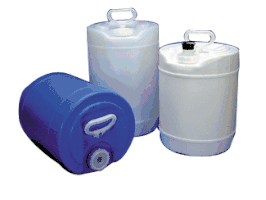
- Material Composition: High-Density Polyethylene (HDPE).
- Size/Capacity Range: 4-Gallon, 5-Gallon, and 6-Gallon.
- Compliance/Ratings: UN-Rated for Hazardous Materials; FDA-Compliant HDPE.
- Closure Types: 70mm Screw Caps, FLEXSPOUT Crimping Closures.

Featured Products
| Product Name | Capacity | Geometry | Closure Type | Material |
|---|---|---|---|---|
| 6 Gal Square Plastic Jug | 6 Gallon | Square | 70mm Screw Cap | HDPE |
| 5 Gallon Closed-Head Plastic Jug | 5 Gallon | Round/Square | 70mm Screw Cap | HDPE |
| 5 Gallon Round HDPE Jug | 5 Gallon | Round | 70mm Screw Cap | HDPE |
| FLEXSPOUT Closures | N/A | N/A | Crimp-on Spout | LDPE/Metal |
Tight-Head Container Design Tight-head jugs are characterized by a non-removable top, where the body and head are molded as a single unit. This construction is engineered specifically for liquids, providing a seamless barrier that prevents leakage. The two primary form factors—round and square—serve distinct operational purposes. Round jugs offer high structural strength under internal pressure and are easily agitated for mixing. Square jugs, often referred to as "cubes," maximize space efficiency on pallets and shelving, reducing shipping costs by eliminating the void space inherent in cylindrical designs.
HDPE Properties and Chemical Resistance The primary material used in these containers is High-Density Polyethylene (HDPE). This thermoplastic provides a high strength-to-density ratio and is chemically inert, making it compatible with a broad range of acids, bases, and specialized chemicals. HDPE is also UV-stabilized in many industrial configurations to prevent degradation during outdoor exposure. For the food and beverage industry, natural or white HDPE resins are used to meet FDA compliance, ensuring that the plastic does not leach contaminants into the stored media. Interior surfaces are smooth to prevent sediment buildup and facilitate complete drainage.
UN Ratings and Transport Compliance To facilitate the legal transport of hazardous materials, many 5-gallon and 6-gallon tight-head jugs are tested to meet United Nations (UN) performance standards. These ratings, such as 1H1/Y1.8/100, indicate the container has passed drop tests, leak-proof tests, and hydrostatic pressure tests. Compliance with Department of Transportation (DOT) and OSHA regulations is mandatory for the shipment of flammable or corrosive liquids. Buyers must ensure the UN rating of the jug exceeds the specific gravity and vapor pressure requirements of the liquid being contained to maintain safety during transit.
Sector-Specific Utility Tight-head jugs are utilized extensively in the chemical industry for the distribution of cleaning agents, industrial solvents, and laboratory reagents. In the agricultural sector, they serve as the standard vessel for liquid fertilizers and pesticides. The food service industry utilizes FDA-compliant versions for bulk oils, syrups, and flavor concentrates. Additionally, the automotive and manufacturing sectors rely on these containers for lubricants, hydraulic fluids, and coolants, where the integrated handles and precision pouring capabilities minimize spills in fast-paced environments.
Technical Factors for Procurement Selecting the appropriate tight-head jug requires an analysis of closure compatibility and venting requirements. The 70mm screw cap is the industrial standard, often featuring a 3/4" NPT fine-thread knock-out for the installation of faucets. For applications requiring high-flow dispensing and tamper-evidence, the FLEXSPOUT system is utilized. This requires a specific crimping tool to permanently attach the retractable spout to the jug. Buyers must also consider "overpack" requirements; while some jugs are rated for standalone shipment, others may require an external corrugated box to meet specific shipping certifications. Chemical compatibility charts should be consulted to ensure the HDPE resin and gasket materials (such as EPDM or Viton) are resistant to the specific liquid handled.

