


FLEXSPOUT Crimping Tools & Closures | Rieke Tools
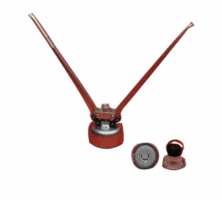
- Materials: Steel manual crimping tools; aluminum heavy-duty crimping tools.
- Closure Sizes: 63mm and 70mm Rieke Flexspout compatibility.
- Container Use: Industrial pails, cans, and small drums with compatible openings.
- Closure Types: Crimp-on Flexspout closures for controlled pouring and dispensing.
- Compliance Consideration: Container and closure assembly must be validated for UN or transport requirements when used with regulated materials.

$799.98
$887.98
(You Save 10%)
Product Comparison Chart
Manual Flexspout Tool Configurations
Manual FLEXSPOUT crimping tools are designed to mechanically compress a Rieke-style closure around a compatible container opening. The economy manual model is specified for 63mm and 70mm Flexspouts and uses a steel body for hand-operated crimping. Manual tools are commonly used in lower-volume filling lines, maintenance areas, field packaging, and operations where powered equipment is not required.
Heavy-Duty Crimping Tool Construction
The heavy-duty Rieke Flexspout crimping tool uses aluminum material to reduce tool weight while maintaining structural rigidity for repeated closure installation. This configuration supports repeated manual cycling where consistent operator control is required. Tool selection should be based on closure diameter, container opening design, production volume, and the amount of force needed to form the closure bead.
Steel Tool Properties
Steel crimping tools provide high compressive strength and wear resistance at the forming surfaces. Steel construction is suitable for applications where the tool must withstand repeated pressure against metal closure components. Buyers should evaluate handle geometry, jaw alignment, and closure seat contact to reduce uneven crimp formation.
Aluminum Tool Properties
Aluminum crimping tools reduce operator handling weight while retaining dimensional stability for repeated closure compression. Aluminum is commonly used where portability and reduced hand fatigue are operational factors. Contact points, pins, and forming surfaces should be inspected during use because worn surfaces can affect closure seating.
UN and Transport Compliance
A crimping tool does not create a compliant package by itself. UN-rated packaging depends on the tested combination of container, closure, gasket, torque or crimp method, contents, and shipping conditions. For hazardous materials, buyers should confirm that the container and Flexspout closure assembly matches the tested packaging specification required for DOT, carrier, and hazardous materials regulations.
Workplace Handling Standards
In industrial facilities, closure installation procedures should align with internal packaging controls, OSHA handling procedures, and material safety requirements. Operators should inspect tools for deformation, confirm closure size before use, and verify that the crimp is uniform around the full circumference of the Flexspout.
Chemical and Coatings Packaging
Rieke-style Flexspouts are used on containers holding coatings, solvents, cleaners, additives, and compatible chemical blends. Crimped closures provide controlled dispensing access while limiting exposure during pouring. Chemical compatibility should be verified between the product, closure gasket, container lining, and Flexspout material.
Food, Agriculture, and Industrial Fluids
Flexspout closures are also used for food ingredients, agricultural liquids, lubricants, adhesives, and dry-flow products. Applications may require tamper-evident features, controlled pour behavior, reseal capability, or compatibility with lined pails and metal cans.
Tool and Closure Compatibility
Selection should begin with the required Flexspout diameter, including 63mm or 70mm formats. The container opening must match the closure design, and the crimping tool must contact the closure evenly. Incorrect tool sizing can produce incomplete crimps, uneven sealing pressure, or closure distortion.
Operational Requirements
Buyers should consider daily closure volume, operator handling requirements, material exposure, container material, and inspection procedures. Steel tools are suited for high-contact durability, while aluminum tools reduce handling weight. Packaging operations handling regulated contents should document closure type, crimp method, and inspection criteria.
| Product | Material | Compatible Closure Size | Tool Type | Primary Use |
|---|---|---|---|---|
| Economy Manual Flexspout Crimping Tool | Steel | 63mm and 70mm Rieke Flexspouts | Manual crimping tool | Manual installation of Flexspout closures on compatible containers |
| Heavy Duty Rieke Flexspout Crimping Tool | Aluminum | Rieke Flexspout closures | Heavy-duty manual crimping tool | Repeated closure installation in packaging operations |
Manual Flexspout Tool Configurations
Manual FLEXSPOUT crimping tools are designed to mechanically compress a Rieke-style closure around a compatible container opening. The economy manual model is specified for 63mm and 70mm Flexspouts and uses a steel body for hand-operated crimping. Manual tools are commonly used in lower-volume filling lines, maintenance areas, field packaging, and operations where powered equipment is not required.
Heavy-Duty Crimping Tool Construction
The heavy-duty Rieke Flexspout crimping tool uses aluminum material to reduce tool weight while maintaining structural rigidity for repeated closure installation. This configuration supports repeated manual cycling where consistent operator control is required. Tool selection should be based on closure diameter, container opening design, production volume, and the amount of force needed to form the closure bead.
Steel Tool Properties
Steel crimping tools provide high compressive strength and wear resistance at the forming surfaces. Steel construction is suitable for applications where the tool must withstand repeated pressure against metal closure components. Buyers should evaluate handle geometry, jaw alignment, and closure seat contact to reduce uneven crimp formation.
Aluminum Tool Properties
Aluminum crimping tools reduce operator handling weight while retaining dimensional stability for repeated closure compression. Aluminum is commonly used where portability and reduced hand fatigue are operational factors. Contact points, pins, and forming surfaces should be inspected during use because worn surfaces can affect closure seating.
UN and Transport Compliance
A crimping tool does not create a compliant package by itself. UN-rated packaging depends on the tested combination of container, closure, gasket, torque or crimp method, contents, and shipping conditions. For hazardous materials, buyers should confirm that the container and Flexspout closure assembly matches the tested packaging specification required for DOT, carrier, and hazardous materials regulations.
Workplace Handling Standards
In industrial facilities, closure installation procedures should align with internal packaging controls, OSHA handling procedures, and material safety requirements. Operators should inspect tools for deformation, confirm closure size before use, and verify that the crimp is uniform around the full circumference of the Flexspout.
Chemical and Coatings Packaging
Rieke-style Flexspouts are used on containers holding coatings, solvents, cleaners, additives, and compatible chemical blends. Crimped closures provide controlled dispensing access while limiting exposure during pouring. Chemical compatibility should be verified between the product, closure gasket, container lining, and Flexspout material.
Food, Agriculture, and Industrial Fluids
Flexspout closures are also used for food ingredients, agricultural liquids, lubricants, adhesives, and dry-flow products. Applications may require tamper-evident features, controlled pour behavior, reseal capability, or compatibility with lined pails and metal cans.
Tool and Closure Compatibility
Selection should begin with the required Flexspout diameter, including 63mm or 70mm formats. The container opening must match the closure design, and the crimping tool must contact the closure evenly. Incorrect tool sizing can produce incomplete crimps, uneven sealing pressure, or closure distortion.
Operational Requirements
Buyers should consider daily closure volume, operator handling requirements, material exposure, container material, and inspection procedures. Steel tools are suited for high-contact durability, while aluminum tools reduce handling weight. Packaging operations handling regulated contents should document closure type, crimp method, and inspection criteria.

