


Steel Pails & Buckets for Commercial Storage & Shipping | Open & Closed Top
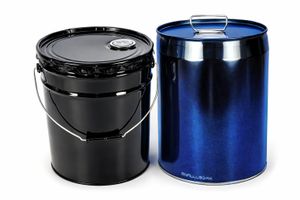
- Material Composition: Cold-Rolled Carbon Steel, 304 Stainless Steel, and Electropolished Steel.
- Size/Capacity Range: 1-Gallon to 7-Gallon capacities; 5-Gallon industry standard.
- Compliance/Ratings: UN-Rated for Hazmat (Groups I, II, III), DOT-Compliant, and Food-Grade.
- Closure Types: Lug Cover, Lever-Lock Ring, and Tight-Head with Tri-Sure or Rieke fittings.

Product Comparison Chart
Configuration Analysis
Open-Head Steel Pails Open-head steel pails use a removable cover that allows direct access to the container interior. This configuration is used for solids, powders, pastes, adhesives, coatings, greases, and high-viscosity liquids that cannot be handled efficiently through a small bung or spout. Covers may be secured with lug-style closure systems or lever-lock rings. Lug covers are crimped or pressed into place, while lever-lock rings provide removable access for repeated opening and closing. Open-head pails are commonly selected when the contents require scooping, pouring, mixing, or full-width filling.
Tight-Head Steel Pails Tight-head steel pails have a permanently seamed top head with controlled access through fittings, bungs, or dispensing closures. This design is used for low-viscosity liquids, chemicals, solvents, lubricants, and regulated materials where spill control and vapor containment are required. Tight-head configurations may use Tri-Sure or Rieke-style fittings for filling, dispensing, and resealing. The sealed top reduces exposure during transport and supports closure consistency when used with compatible caps, gaskets, and torque procedures.
Carbon Steel Construction Cold-rolled carbon steel provides puncture resistance, shape retention, and stack strength for commercial storage and shipping. Steel pails are commonly manufactured in gauges such as 24-gauge and 22-gauge, with lower gauge numbers indicating thicker steel. Thicker steel may be required for heavier contents, hazardous material packaging, or multi-tier palletized storage. Carbon steel pails may include exterior coatings to reduce atmospheric corrosion and interior treatments to limit product contact with bare metal.
Stainless and Electropolished Steel 304 stainless steel pails are used where corrosion resistance, washdown compatibility, and product purity are required. Stainless steel resists oxidation better than carbon steel and is commonly used in food processing, pharmaceutical handling, laboratory work, and clean industrial environments. Electropolished steel provides a smoother surface finish by reducing microscopic peaks on the metal surface. This finish can support easier cleaning and reduced residue retention in applications where sanitation and repeated cleaning are part of the workflow.
Interior Linings and Coatings Steel pails may be unlined, rust-inhibitor lined, or chemically lined depending on the contents. Rust-inhibitor coatings help reduce oxidation during storage but are not a universal chemical barrier. Epoxy-phenolic and pigmented phenolic linings create a barrier between the steel substrate and the stored material. These linings are selected based on solvent strength, pH, temperature, and product compatibility. Incorrect lining selection can lead to pitting, coating failure, product contamination, or corrosion of the steel body.
UN and DOT Packaging Requirements UN-rated steel pails are tested for hazardous material transport under performance packaging rules. Common test procedures include drop testing, hydrostatic pressure testing, leakproofness testing, and stacking tests. Tight-head steel pails may carry 1A1-style markings, while open-head steel pails may carry 1A2-style markings. These markings identify the container type, packing group suitability, test level, and regulatory use case. DOT-compliant packaging must be matched to the material classification, packing group, closure instruction, and shipping method.
Hazardous Material Closure Control For regulated shipments, container compliance depends on the pail, cover, gasket, fitting, and closure method working as a complete system. A UN-rated pail must be closed according to the manufacturer’s instructions. This may include a specified torque value, ring setting, lug compression, or cap installation method. Using an incorrect cover, gasket, fitting, or closure tool can affect package performance. Buyers should verify compatibility before using steel pails for hazardous materials, flammable liquids, or regulated chemical distribution.
Chemical and Coatings Use Steel pails are used in chemical manufacturing, coatings production, adhesives, sealants, lubricants, solvents, and specialty resin packaging. Open-head pails support thick materials that need wide-mouth filling or manual removal. Tight-head pails support liquids that require controlled pouring and reduced vapor exposure. Carbon steel construction provides rigidity for handling, palletizing, and transport through warehouses and production areas.
Food, Pharmaceutical, and Clean Handling Stainless steel utility pails are used in food processing, sanitation areas, laboratories, and pharmaceutical environments. These applications often require corrosion resistance, repeated washing, and reduced risk of product contamination. Food-grade steel pails must be selected based on contact surface, lining, cleaning process, and product chemistry. Stainless and electropolished finishes are used where surface cleanliness and chemical resistance are more important than low container cost.
Construction, Automotive, and Industrial Maintenance Construction users rely on steel pails for sealants, mastics, coatings, mortars, and industrial compounds. Automotive and aerospace operations use steel containers for oils, greases, fuels, hydraulic fluids, and maintenance chemicals. Steel pails are selected where plastic containers may deform, absorb vapors, or lack required puncture resistance. The correct closure type depends on whether the material is poured, pumped, scooped, mixed, or shipped as a regulated product.
Container Style Selection Open-head pails should be selected for solids, powders, viscous liquids, and products requiring full access. Tight-head pails should be selected for low-viscosity liquids, controlled dispensing, and shipment conditions where the sealed top helps reduce leakage risk. Closure type should match the filling method, dispensing method, and user access requirements. Lug covers are suited for one-time closure work, while lever-lock rings are used where reopening is required.
Compatibility and Storage Conditions Buyers should match the pail material and lining to the contents. Solvent strength, acidity, alkalinity, moisture content, temperature, and storage duration all affect compatibility. Carbon steel may require lining for aggressive contents, while stainless steel may be required for corrosion-sensitive or food-grade applications. Storage conditions also matter. High humidity, outdoor exposure, and corrosive atmospheres may require coated exteriors or stainless construction. Gauge thickness should be selected based on product weight, stacking height, handling method, and transportation requirements.
| Product | Configuration | Material | Capacity Range | Primary Use |
|---|---|---|---|---|
| UN Rated Tight Head Steel Pails And Buckets | Tight Head | Carbon Steel | Commonly 5 Gallon | Hazardous liquid shipping and regulated storage |
| 5 Gallon Open-Head Steel Pails & Bucket Cans and Covers | Open Head | Carbon Steel | 5 Gallon | Solids, powders, coatings, and viscous materials |
| Stainless Steel Utility Pails | Open Utility Pail | 304 Stainless Steel | Varies by model | Food processing, washdown areas, and clean handling |
| DELPAK Tighthead Shipping Container | Tight Head | Steel | Varies by model | Liquid shipping and controlled dispensing |
Open-Head Steel Pails Open-head steel pails use a removable cover that allows direct access to the container interior. This configuration is used for solids, powders, pastes, adhesives, coatings, greases, and high-viscosity liquids that cannot be handled efficiently through a small bung or spout. Covers may be secured with lug-style closure systems or lever-lock rings. Lug covers are crimped or pressed into place, while lever-lock rings provide removable access for repeated opening and closing. Open-head pails are commonly selected when the contents require scooping, pouring, mixing, or full-width filling.
Tight-Head Steel Pails Tight-head steel pails have a permanently seamed top head with controlled access through fittings, bungs, or dispensing closures. This design is used for low-viscosity liquids, chemicals, solvents, lubricants, and regulated materials where spill control and vapor containment are required. Tight-head configurations may use Tri-Sure or Rieke-style fittings for filling, dispensing, and resealing. The sealed top reduces exposure during transport and supports closure consistency when used with compatible caps, gaskets, and torque procedures.
Carbon Steel Construction Cold-rolled carbon steel provides puncture resistance, shape retention, and stack strength for commercial storage and shipping. Steel pails are commonly manufactured in gauges such as 24-gauge and 22-gauge, with lower gauge numbers indicating thicker steel. Thicker steel may be required for heavier contents, hazardous material packaging, or multi-tier palletized storage. Carbon steel pails may include exterior coatings to reduce atmospheric corrosion and interior treatments to limit product contact with bare metal.
Stainless and Electropolished Steel 304 stainless steel pails are used where corrosion resistance, washdown compatibility, and product purity are required. Stainless steel resists oxidation better than carbon steel and is commonly used in food processing, pharmaceutical handling, laboratory work, and clean industrial environments. Electropolished steel provides a smoother surface finish by reducing microscopic peaks on the metal surface. This finish can support easier cleaning and reduced residue retention in applications where sanitation and repeated cleaning are part of the workflow.
Interior Linings and Coatings Steel pails may be unlined, rust-inhibitor lined, or chemically lined depending on the contents. Rust-inhibitor coatings help reduce oxidation during storage but are not a universal chemical barrier. Epoxy-phenolic and pigmented phenolic linings create a barrier between the steel substrate and the stored material. These linings are selected based on solvent strength, pH, temperature, and product compatibility. Incorrect lining selection can lead to pitting, coating failure, product contamination, or corrosion of the steel body.
UN and DOT Packaging Requirements UN-rated steel pails are tested for hazardous material transport under performance packaging rules. Common test procedures include drop testing, hydrostatic pressure testing, leakproofness testing, and stacking tests. Tight-head steel pails may carry 1A1-style markings, while open-head steel pails may carry 1A2-style markings. These markings identify the container type, packing group suitability, test level, and regulatory use case. DOT-compliant packaging must be matched to the material classification, packing group, closure instruction, and shipping method.
Hazardous Material Closure Control For regulated shipments, container compliance depends on the pail, cover, gasket, fitting, and closure method working as a complete system. A UN-rated pail must be closed according to the manufacturer’s instructions. This may include a specified torque value, ring setting, lug compression, or cap installation method. Using an incorrect cover, gasket, fitting, or closure tool can affect package performance. Buyers should verify compatibility before using steel pails for hazardous materials, flammable liquids, or regulated chemical distribution.
Chemical and Coatings Use Steel pails are used in chemical manufacturing, coatings production, adhesives, sealants, lubricants, solvents, and specialty resin packaging. Open-head pails support thick materials that need wide-mouth filling or manual removal. Tight-head pails support liquids that require controlled pouring and reduced vapor exposure. Carbon steel construction provides rigidity for handling, palletizing, and transport through warehouses and production areas.
Food, Pharmaceutical, and Clean Handling Stainless steel utility pails are used in food processing, sanitation areas, laboratories, and pharmaceutical environments. These applications often require corrosion resistance, repeated washing, and reduced risk of product contamination. Food-grade steel pails must be selected based on contact surface, lining, cleaning process, and product chemistry. Stainless and electropolished finishes are used where surface cleanliness and chemical resistance are more important than low container cost.
Construction, Automotive, and Industrial Maintenance Construction users rely on steel pails for sealants, mastics, coatings, mortars, and industrial compounds. Automotive and aerospace operations use steel containers for oils, greases, fuels, hydraulic fluids, and maintenance chemicals. Steel pails are selected where plastic containers may deform, absorb vapors, or lack required puncture resistance. The correct closure type depends on whether the material is poured, pumped, scooped, mixed, or shipped as a regulated product.
Container Style Selection Open-head pails should be selected for solids, powders, viscous liquids, and products requiring full access. Tight-head pails should be selected for low-viscosity liquids, controlled dispensing, and shipment conditions where the sealed top helps reduce leakage risk. Closure type should match the filling method, dispensing method, and user access requirements. Lug covers are suited for one-time closure work, while lever-lock rings are used where reopening is required.
Compatibility and Storage Conditions Buyers should match the pail material and lining to the contents. Solvent strength, acidity, alkalinity, moisture content, temperature, and storage duration all affect compatibility. Carbon steel may require lining for aggressive contents, while stainless steel may be required for corrosion-sensitive or food-grade applications. Storage conditions also matter. High humidity, outdoor exposure, and corrosive atmospheres may require coated exteriors or stainless construction. Gauge thickness should be selected based on product weight, stacking height, handling method, and transportation requirements.

