


Spill Containment Carts & Drum Dollies
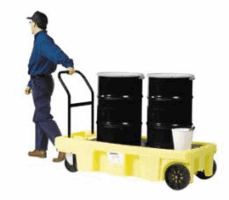
- Materials: Powder-Coated Carbon Steel, Polyethylene Spill Sumps, Heavy-Duty Steel Frames
- Capacities: Single Drum to Multi-Container Spill Transport Systems
- Compliance: EPA Spill Containment Standards, OSHA Workplace Safety Requirements
- Configurations: Drum Dollies, Mobile Spill Carts, Secondary Containment Transport Units
- Mobility Features: Swivel Casters, Forklift-Compatible Bases, Integrated Spill Sumps

Product Comparison
Mobile Spill Containment Configurations
Spill containment carts are manufactured in multiple configurations to support industrial transport and liquid handling operations. Drum dollies are compact mobile units designed to move individual 30-gallon or 55-gallon drums while containing incidental leaks beneath the container. These units typically feature low-profile spill sumps and rotational mobility for positioning drums near dispensing stations or production equipment.
Steel containment carts are larger transport systems equipped with reinforced frames and integrated spill basins capable of supporting multiple containers or auxiliary equipment. These carts are commonly utilized for liquid transfer operations, maintenance departments, and hazardous material handling where mobility and spill capture are required simultaneously. Secondary containment transport systems may also include handles, tow bars, or forklift-compatible designs for movement across larger industrial facilities.
Material Engineering and Structural Design
Mobile spill containment systems are commonly constructed using powder-coated carbon steel frames combined with polyethylene spill collection basins. Steel structures provide high load-bearing capacity and resistance to impact during industrial transport operations.
Powder-coated finishes reduce corrosion exposure in humid or chemical-processing environments. Polyethylene containment components are manufactured from rotationally molded high-density polyethylene (HDPE), which provides chemical resistance against oils, solvents, acids, and caustic materials. Molded sump sections are designed without seams to reduce leak paths and improve liquid retention integrity. Heavy-duty caster assemblies are typically manufactured with steel brackets and polyurethane or phenolic wheels to support drum transport loads while maintaining maneuverability.
Certain containment carts incorporate removable grating systems positioned above the sump reservoir. These grates allow leaks and drips to collect below the working surface while keeping containers elevated from accumulated liquids. Structural reinforcements are integrated into high-capacity units intended for repeated industrial transport cycles.
Regulatory Compliance and Spill Control Standards
Spill containment carts are used to support compliance with EPA spill prevention regulations and OSHA workplace safety requirements. Secondary containment systems assist facilities in managing incidental leaks during drum movement and fluid transfer activities. EPA spill control regulations under 40 CFR guidelines require containment measures for many hazardous material storage and transport operations.
Containment sump capacities are generally engineered to capture leaks, drips, and minor spills associated with container transport. Facilities handling hazardous chemicals may use mobile spill carts as part of broader Spill Prevention, Control, and Countermeasure (SPCC) programs. Proper containment equipment can assist in reducing floor contamination, slip hazards, and uncontrolled chemical releases within industrial workspaces.
Industrial Applications for Spill Containment Carts
Mobile spill containment systems are widely utilized in manufacturing plants, chemical processing facilities, automotive maintenance operations, warehouses, and utility departments. Drum dollies support movement of lubricants, cleaning chemicals, solvents, and waste liquids between workstations while maintaining containment beneath the drum.
Steel containment carts are commonly used for maintenance fluid transport, temporary chemical staging, and portable dispensing systems. Facilities involved in painting, parts washing, oil distribution, and hazardous waste collection frequently implement containment carts to reduce spill exposure during routine operations. Mobile containment systems are also utilized during spill response preparation and temporary storage applications.
Selection Criteria for Spill Transport Systems
Selecting a spill containment cart requires evaluation of container size, chemical compatibility, transport environment, and required sump capacity. Facilities handling corrosive chemicals may require polyethylene containment systems, while heavy industrial environments may prioritize reinforced steel structures with higher weight capacities.
Caster size and wheel material influence maneuverability across uneven floors, loading docks, and warehouse surfaces. Drum quantity, dispensing operations, and available aisle space also determine appropriate cart dimensions and mobility configurations. Buyers should evaluate sump capacity, grating strength, and load ratings to ensure compatibility with operational and regulatory requirements.
| Product | Material | Containment Type | Application | Mobility Features |
|---|---|---|---|---|
| Spill Scooter Drum Dolly | Polyethylene and Steel | Integrated Spill Sump | Single Drum Transport | Swivel Casters |
| Steel Containment Carts | Powder-Coated Carbon Steel | Secondary Containment Basin | Industrial Drum Handling | Heavy-Duty Wheels |
| Secondary Containment on the Move | Steel Frame with Poly Sump | Portable Spill Capture | Chemical Transport | Mobile Cart Design |
Mobile Spill Containment Configurations
Spill containment carts are manufactured in multiple configurations to support industrial transport and liquid handling operations. Drum dollies are compact mobile units designed to move individual 30-gallon or 55-gallon drums while containing incidental leaks beneath the container. These units typically feature low-profile spill sumps and rotational mobility for positioning drums near dispensing stations or production equipment.
Steel containment carts are larger transport systems equipped with reinforced frames and integrated spill basins capable of supporting multiple containers or auxiliary equipment. These carts are commonly utilized for liquid transfer operations, maintenance departments, and hazardous material handling where mobility and spill capture are required simultaneously. Secondary containment transport systems may also include handles, tow bars, or forklift-compatible designs for movement across larger industrial facilities.
Material Engineering and Structural Design
Mobile spill containment systems are commonly constructed using powder-coated carbon steel frames combined with polyethylene spill collection basins. Steel structures provide high load-bearing capacity and resistance to impact during industrial transport operations.
Powder-coated finishes reduce corrosion exposure in humid or chemical-processing environments. Polyethylene containment components are manufactured from rotationally molded high-density polyethylene (HDPE), which provides chemical resistance against oils, solvents, acids, and caustic materials. Molded sump sections are designed without seams to reduce leak paths and improve liquid retention integrity. Heavy-duty caster assemblies are typically manufactured with steel brackets and polyurethane or phenolic wheels to support drum transport loads while maintaining maneuverability.
Certain containment carts incorporate removable grating systems positioned above the sump reservoir. These grates allow leaks and drips to collect below the working surface while keeping containers elevated from accumulated liquids. Structural reinforcements are integrated into high-capacity units intended for repeated industrial transport cycles.
Regulatory Compliance and Spill Control Standards
Spill containment carts are used to support compliance with EPA spill prevention regulations and OSHA workplace safety requirements. Secondary containment systems assist facilities in managing incidental leaks during drum movement and fluid transfer activities. EPA spill control regulations under 40 CFR guidelines require containment measures for many hazardous material storage and transport operations.
Containment sump capacities are generally engineered to capture leaks, drips, and minor spills associated with container transport. Facilities handling hazardous chemicals may use mobile spill carts as part of broader Spill Prevention, Control, and Countermeasure (SPCC) programs. Proper containment equipment can assist in reducing floor contamination, slip hazards, and uncontrolled chemical releases within industrial workspaces.
Industrial Applications for Spill Containment Carts
Mobile spill containment systems are widely utilized in manufacturing plants, chemical processing facilities, automotive maintenance operations, warehouses, and utility departments. Drum dollies support movement of lubricants, cleaning chemicals, solvents, and waste liquids between workstations while maintaining containment beneath the drum.
Steel containment carts are commonly used for maintenance fluid transport, temporary chemical staging, and portable dispensing systems. Facilities involved in painting, parts washing, oil distribution, and hazardous waste collection frequently implement containment carts to reduce spill exposure during routine operations. Mobile containment systems are also utilized during spill response preparation and temporary storage applications.
Selection Criteria for Spill Transport Systems
Selecting a spill containment cart requires evaluation of container size, chemical compatibility, transport environment, and required sump capacity. Facilities handling corrosive chemicals may require polyethylene containment systems, while heavy industrial environments may prioritize reinforced steel structures with higher weight capacities.
Caster size and wheel material influence maneuverability across uneven floors, loading docks, and warehouse surfaces. Drum quantity, dispensing operations, and available aisle space also determine appropriate cart dimensions and mobility configurations. Buyers should evaluate sump capacity, grating strength, and load ratings to ensure compatibility with operational and regulatory requirements.

