


Industrial Eye Protection Glasses & Safety Goggles
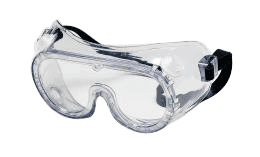
- Materials: Polycarbonate Lenses, PVC Frames, Rubber Seals, Chemical-Resistant Components
- Styles: Safety Glasses, Chemical Goggles, OTG Glasses, Emergency Eyewash Stations
- Compliance: ANSI Z87.1 Rated Eye Protection and Emergency Eyewash Equipment
- Lens Options: Clear, Anti-Fog, Scratch-Resistant, UV Protective Coatings
- Applications: Chemical Handling, Industrial Manufacturing, Laboratory, Construction, Maintenance

Product Comparison Chart
| Product | Type | Primary Use | Key Configuration |
|---|---|---|---|
| Crews Storm Safety Glasses | Safety Glasses | Impact and debris protection | Polycarbonate lens safety eyewear |
| Crews Economy Chemical Goggles | Chemical Goggles | Liquid splash protection | Enclosed goggle frame |
| Crews Tomahawk Safety Glasses | Safety Glasses | General industrial eye protection | Impact-resistant lens design |
| Crews Blackjack Safety Glasses | Safety Glasses | Manufacturing and maintenance work | Safety glasses with side coverage |
| Crews Klondike Safety Glasses | Safety Glasses | Industrial and outdoor work areas | Protective lens safety eyewear |
| Uvex Astro OTG 3001 Safety Glasses | OTG Safety Glasses | Prescription eyewear users | Over-the-glass configuration |
| Uvex Astrospec 3000 Safety Glasses | Safety Glasses | Industrial impact protection | Polycarbonate safety lens |
| Uvex Genesis Safety Glasses | Safety Glasses | Workplace eye protection | Impact-rated safety glasses |
| Uvex Stealth Safety Goggles | Safety Goggles | Chemical splash and sealed protection | Sealed goggle body with head strap |
| Fend-all Eyesaline Wall Stations | Emergency Eyewash Station | Eye flushing and decontamination | Wall-mounted eyewash station |
| Fend-all Porta Stream I | Portable Eyewash Station | Remote or temporary work areas | Self-contained portable unit |
| Fend-all Porta Stream II | Portable Eyewash Station | Emergency eye flushing | Portable gravity-fed eyewash unit |
| Fend-all Pure Flow 1000 | Emergency Eyewash System | Extended emergency flushing | Self-contained eyewash system |
Safety Glasses and Goggle Configurations Industrial eye protection products are divided into several primary configurations based on exposure risks and operational requirements. Standard safety glasses, such as the Crews Storm, Tomahawk, Blackjack, and Klondike models, provide frontal impact protection against airborne particles, dust, and light debris commonly encountered in manufacturing and maintenance operations. Wraparound lens configurations increase peripheral protection while maintaining visibility.
Chemical splash goggles, including economy chemical goggles and Uvex Stealth safety goggles, incorporate sealed frame systems that minimize liquid intrusion around the eyes. Venting systems may be indirect or non-vented depending on the chemical exposure level. Over-the-glass (OTG) designs such as the Uvex Astro OTG 3001 accommodate prescription eyewear while maintaining compliance with workplace safety requirements.
Lens Materials and Optical Engineering Most industrial eye protection systems utilize polycarbonate lenses due to their high impact resistance and lightweight characteristics. Polycarbonate materials provide optical clarity while resisting cracking or shattering under mechanical stress. Many models incorporate hard-coated surfaces to reduce scratching during repeated industrial use.
Anti-fog coatings are commonly integrated into enclosed goggle systems and high-humidity work environments where condensation may obstruct visibility. UV-resistant coatings reduce ultraviolet light transmission for outdoor or high-intensity lighting applications. Lens tint options may include clear, gray, amber, or mirrored finishes depending on environmental lighting conditions and glare reduction requirements.
Frame construction materials typically include PVC, thermoplastic elastomers, nylon, and rubber sealing compounds. Adjustable temples and elastic headbands allow users to maintain fit stability during extended wear periods and high-movement industrial tasks.
ANSI and OSHA Compliance Standards Industrial eye protection equipment is commonly manufactured to comply with ANSI Z87.1 impact protection standards. ANSI-rated products are tested for impact resistance, lens retention, optical quality, and coverage performance. Markings on compliant eyewear identify the protection classification and manufacturer certification.
Emergency eyewash systems such as Fend-all Eyesaline Wall Stations, Porta Stream units, and Pure Flow systems support OSHA emergency preparedness requirements for workplaces handling corrosive or hazardous chemicals. These systems are designed to provide continuous flushing capability for emergency eye decontamination procedures. Portable eyewash stations are frequently used in remote work environments, mobile maintenance operations, and temporary job sites lacking permanent plumbing access.
Industrial and Commercial Applications Safety glasses and goggles are used across multiple industries including chemical processing, food manufacturing, construction, automotive maintenance, metal fabrication, agriculture, laboratories, and utility operations. Open-frame safety glasses are commonly selected for grinding, assembly, inspection, and warehouse operations where airborne debris is the primary concern.
Chemical-resistant goggles are used in laboratories, hazardous material handling, sanitation operations, and liquid transfer environments where splash protection is required. OTG safety eyewear is frequently utilized in facilities where prescription eyewear users require compliance without removing corrective lenses.
Portable eyewash systems are deployed in chemical storage facilities, industrial maintenance shops, transportation yards, and emergency response applications where rapid flushing capability is necessary.
Selection Criteria for Industrial Eye Protection Selection of industrial eye protection equipment depends on exposure hazards, environmental conditions, user comfort requirements, and regulatory obligations. Facilities handling corrosive chemicals typically require sealed goggle systems with indirect venting to reduce splash penetration risks.
Impact-intensive operations such as grinding or machining generally require ANSI-rated polycarbonate safety glasses with side protection. Outdoor operations may require UV-resistant or tinted lenses to reduce glare and light exposure. Workers using prescription glasses may require OTG configurations to maintain proper fit and compliance.
Emergency eyewash equipment selection depends on installation location, water supply availability, flushing duration requirements, and OSHA compliance considerations. Portable self-contained systems are often selected for remote operations or temporary worksites where plumbed stations are not feasible.

