


Flammable Liquid Recovery Systems & Spill Containment
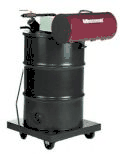
- Materials: Polyethylene, Chemical-Resistant Polymers, Grounded Metal Components
- Capacities: Portable Spill Pools to Industrial Flammable Liquid Recovery Vacuums
- Compliance: OSHA, EPA, NFPA, and Hazardous Material Spill Response Standards
- Configurations: Recovery Vacuums, Portable Spill Pools, Temporary Spill Containment Systems
- Applications: Flammable Liquid Spill Recovery, Emergency Containment, Hazardous Waste Collection

| Product | Configuration | Material | Primary Application | Compliance Focus |
|---|---|---|---|---|
| Flammable Liquid Recovery Vac | Industrial Recovery Vacuum | Grounded Conductive Components | Flammable Liquid Collection | NFPA / OSHA |
| Ultra Pop-Up-Pools | Portable Spill Containment Pool | Chemical-Resistant Polyethylene | Temporary Spill Containment | EPA Spill Control |
Flammable Liquid Recovery Equipment Configurations
Flammable liquid recovery systems are engineered to manage hazardous liquids during spill response, maintenance operations, and industrial cleanup procedures. Recovery vacuums designed for flammable liquids incorporate grounded conductive components, bonded hoses, and static-control features intended to reduce ignition risks during liquid transfer operations. These systems are commonly utilized for collecting gasoline, diesel fuel, solvents, alcohols, and other combustible liquids from floors, sumps, containment areas, and process equipment.
Portable spill containment pools provide temporary secondary containment for leaking drums, tanks, machinery, and damaged containers. Pop-up spill pools are designed for rapid deployment during emergency situations and can be folded or collapsed for compact storage. Reinforced sidewalls and flexible support structures allow these systems to maintain containment integrity while handling leaks and spills in field operations or industrial facilities.
Material Engineering and Chemical Resistance
Flammable liquid recovery equipment is manufactured using materials selected for chemical compatibility and environmental durability. Recovery vacuum systems frequently incorporate conductive hoses, grounded stainless steel or coated metal components, and static-dissipative materials designed for hazardous liquid handling applications. Internal seals and gaskets are selected based on compatibility with petroleum products, hydrocarbons, and industrial solvents. Spill containment pools are commonly constructed from polyethylene-coated fabrics, reinforced polymer liners, or flexible chemical-resistant membranes. These materials are selected to withstand exposure to oils, fuels, acids, and industrial chemicals while maintaining flexibility for repeated deployment. UV-resistant coatings are often incorporated to support outdoor use and prolonged environmental exposure.
Regulatory Standards and Spill Compliance
Flammable liquid spill response equipment is commonly used to support compliance with OSHA, EPA, NFPA, and local environmental regulations governing hazardous material handling and spill prevention. Recovery systems handling combustible liquids must account for static electricity management, grounding procedures, vapor hazards, and proper waste transfer protocols. EPA spill containment regulations often require facilities storing petroleum products or hazardous chemicals to maintain secondary containment systems capable of preventing environmental discharge. Portable spill pools are frequently used during tank maintenance, drum transfer operations, vehicle servicing, and emergency leak response to reduce contamination risks and support spill mitigation procedures.
Facilities handling ignitable liquids may also implement recovery vacuums and containment systems as part of SPCC (Spill Prevention, Control, and Countermeasure) programs and hazardous waste management procedures. Selection of compliant equipment depends on liquid classification, storage volume, transfer method, and facility operating conditions.
Industrial and Emergency Response Applications
Flammable liquid recovery vacuums are utilized across chemical manufacturing, oil and gas operations, transportation terminals, aviation maintenance, marine facilities, and industrial processing environments. These systems assist with recovering leaked fuels, contaminated wash water, solvent spills, and hazardous liquid residues from equipment or containment areas. Portable spill pools are frequently positioned beneath leaking vehicles, drums, transformers, pumps, hydraulic systems, and storage containers during maintenance or emergency operations. Emergency response teams also deploy collapsible containment pools during tanker incidents, chemical transfer failures, and environmental cleanup projects.
Warehousing, utility maintenance, and heavy equipment operations commonly utilize temporary containment systems to isolate leaks during repair activities. Portable containment solutions provide flexibility in areas where permanent secondary containment infrastructure is unavailable.
Selection Criteria for Spill Recovery Systems
Selection of flammable liquid recovery equipment requires evaluation of chemical compatibility, ignition hazard classification, containment volume requirements, and operating environment. Recovery vacuums should be matched to the flash point, viscosity, and vapor characteristics of the liquid being collected. Grounding and bonding provisions are critical when transferring ignitable liquids.
Containment pool sizing should account for the total liquid volume that could potentially leak during transfer or maintenance operations. Material selection should consider exposure to fuels, oils, solvents, UV conditions, and environmental temperature ranges. Facilities operating in outdoor environments may require reinforced or weather-resistant containment materials for long-term deployment.

