


Spill Trays & Secondary Containment Basins
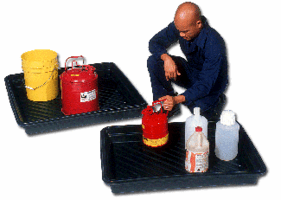
- Materials: Polyethylene, Polypropylene, PVC, Chemical-Resistant Polymers.
- Capacities: Small Countertop Trays to Drum and Rack Containment Systems.
- Compliance: EPA Spill Containment; Chemical-Resistant and Industrial-Grade Options.
- Configurations: Shelf Liners, Drum Trays, Rack Trays, Spill Pads, Utility Basins.
- Applications: Drum Storage, Laboratory Use, Chemical Handling, Leak Containment.

Featured Products
Product Comarision CHart
Spill Tray Configurations and Functional Design
Spill trays are manufactured in multiple configurations to address different containment requirements. Low-profile trays are commonly positioned beneath dispensing valves, pumps, and small containers to capture routine drips generated during transfer operations. Rack containment trays are engineered for integration with industrial shelving systems and provide isolated spill capture zones beneath stored containers. Drum trays feature circular or rectangular footprints sized for standard 30-gallon and 55-gallon drums. Flexible spill pools and portable berm systems provide temporary containment during maintenance, emergency response, or field operations where permanent containment systems are not practical.
Material Engineering and Chemical Compatibility
Most spill trays and containment basins are manufactured from high-density polyethylene (HDPE) due to its resistance to corrosion, moisture, and a broad range of industrial chemicals. Polypropylene variants are frequently used in laboratory environments where resistance to acids and solvents is required. Flexible containment systems may utilize PVC-coated fabrics reinforced with foam or collapsible sidewalls for portability and rapid deployment. Material selection depends heavily on the stored liquid’s chemical composition, temperature range, and exposure duration. Some containment trays are fluorinated or specially treated to improve compatibility with chlorinated solvents and aggressive chemicals.
Secondary Containment Regulations and Spill Control Standards
Secondary containment systems are utilized to support compliance with EPA spill prevention requirements and facility environmental management procedures. Industrial spill trays assist in preventing uncontrolled releases from entering drains, soil, or surrounding workspaces. Facilities storing hazardous chemicals often implement secondary containment beneath drums, tanks, and dispensing systems as part of Spill Prevention, Control, and Countermeasure (SPCC) programs. Laboratory and manufacturing operations may also use containment trays to comply with OSHA workplace safety requirements involving hazardous materials handling and liquid storage management.
Industrial and Commercial Applications
Spill trays and containment basins are used across manufacturing, chemical processing, laboratories, automotive service centers, agricultural operations, and warehouse facilities. Shelf liners and rack trays are frequently installed in chemical storage rooms to isolate leaking containers from shelving surfaces. Drum trays and spill pads are commonly positioned beneath oil drums, pumps, generators, compressors, and hydraulic systems. Portable containment pools and berms are used during tanker loading, equipment maintenance, and emergency spill response activities. Countertop spill trays are often utilized in laboratories and fluid dispensing stations to contain minor leaks from bottles, beakers, and transfer containers.
Selection Criteria for Spill Tray Systems
Selection of spill containment trays depends on chemical compatibility, containment volume, physical footprint, and environmental exposure conditions. Facilities handling corrosive liquids may require polyethylene or fluorinated containment systems instead of steel alternatives. Portable applications may prioritize lightweight collapsible systems, while permanent storage areas often require rigid containment trays with integrated grates or sump designs. Load-bearing requirements should also be evaluated when containment trays support drums, machinery, or shelving systems. Additional factors include UV resistance, drain configurations, stackability, and compatibility with forklifts, shelving systems, or dispensing equipment.
| Product | Primary Application | Material | Configuration | Containment Type |
|---|---|---|---|---|
| Shelf Liners | Shelf Leak Protection | Polyethylene | Flat Liner | Minor Drips and Leaks |
| Ultra-Rack Containment Tray® | Rack Storage Protection | Polyethylene | Rack Tray | Chemical Spill Containment |
| Poly-Lab Tray | Laboratory Containment | Polypropylene | Bench Tray | Small Container Leakage |
| Ultra Spill Tray | Countertop Spill Protection | Chemical-Resistant Polymer | Low-Profile Tray | Dispensing Drips |
| Ultra-Utility Trays | General Purpose Containment | Polyethylene | Utility Basin | Leak and Drip Capture |
| Poly-Spill Pad™ | Floor Protection | Absorbent Poly Material | Flat Spill Pad | Equipment Leakage |
| Enpac Stinger Yellow Jacket | Portable Spill Response | PVC and Foam Components | Portable Berm | Emergency Spill Control |
| Prowler™ Pool | Portable Secondary Containment | PVC-Coated Fabric | Flexible Basin | Temporary Liquid Containment |
| Ultra Drum Tray | Drum Leak Protection | Polyethylene | Circular Drum Tray | Drips and Overflow |
| All-Purpose Spill Basin | Equipment and Container Containment | Polyethylene | Open Basin | General Spill Collection |
Spill Tray Configurations and Functional Design
Spill trays are manufactured in multiple configurations to address different containment requirements. Low-profile trays are commonly positioned beneath dispensing valves, pumps, and small containers to capture routine drips generated during transfer operations. Rack containment trays are engineered for integration with industrial shelving systems and provide isolated spill capture zones beneath stored containers. Drum trays feature circular or rectangular footprints sized for standard 30-gallon and 55-gallon drums. Flexible spill pools and portable berm systems provide temporary containment during maintenance, emergency response, or field operations where permanent containment systems are not practical.
Material Engineering and Chemical Compatibility
Most spill trays and containment basins are manufactured from high-density polyethylene (HDPE) due to its resistance to corrosion, moisture, and a broad range of industrial chemicals. Polypropylene variants are frequently used in laboratory environments where resistance to acids and solvents is required. Flexible containment systems may utilize PVC-coated fabrics reinforced with foam or collapsible sidewalls for portability and rapid deployment. Material selection depends heavily on the stored liquid’s chemical composition, temperature range, and exposure duration. Some containment trays are fluorinated or specially treated to improve compatibility with chlorinated solvents and aggressive chemicals.
Secondary Containment Regulations and Spill Control Standards
Secondary containment systems are utilized to support compliance with EPA spill prevention requirements and facility environmental management procedures. Industrial spill trays assist in preventing uncontrolled releases from entering drains, soil, or surrounding workspaces. Facilities storing hazardous chemicals often implement secondary containment beneath drums, tanks, and dispensing systems as part of Spill Prevention, Control, and Countermeasure (SPCC) programs. Laboratory and manufacturing operations may also use containment trays to comply with OSHA workplace safety requirements involving hazardous materials handling and liquid storage management.
Industrial and Commercial Applications
Spill trays and containment basins are used across manufacturing, chemical processing, laboratories, automotive service centers, agricultural operations, and warehouse facilities. Shelf liners and rack trays are frequently installed in chemical storage rooms to isolate leaking containers from shelving surfaces. Drum trays and spill pads are commonly positioned beneath oil drums, pumps, generators, compressors, and hydraulic systems. Portable containment pools and berms are used during tanker loading, equipment maintenance, and emergency spill response activities. Countertop spill trays are often utilized in laboratories and fluid dispensing stations to contain minor leaks from bottles, beakers, and transfer containers.
Selection Criteria for Spill Tray Systems
Selection of spill containment trays depends on chemical compatibility, containment volume, physical footprint, and environmental exposure conditions. Facilities handling corrosive liquids may require polyethylene or fluorinated containment systems instead of steel alternatives. Portable applications may prioritize lightweight collapsible systems, while permanent storage areas often require rigid containment trays with integrated grates or sump designs. Load-bearing requirements should also be evaluated when containment trays support drums, machinery, or shelving systems. Additional factors include UV resistance, drain configurations, stackability, and compatibility with forklifts, shelving systems, or dispensing equipment.

