


Enclosed Spill Pallets & Outdoor Drum Storage
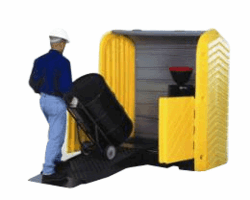
- Materials: Polyethylene, UV-Stabilized LLDPE, Heavy-Duty Steel Components
- Capacities: Two-Drum to Multi-Drum Outdoor Storage Configurations
- Compliance: EPA Spill Containment, SPCC, OSHA, Secondary Containment Requirements
- Configurations: Roll-Top, Hard-Top, Lockable Outdoor Storage Buildings, Drum Enclosures
- Applications: Hazardous Material Storage, Chemical Containment, Outdoor Drum Protection

Product Comparison
Outdoor Drum Containment Configurations
Enclosed spill pallets are manufactured in multiple configurations designed to manage hazardous material storage while reducing exposure to weather conditions and accidental releases. Roll-top units use sliding covers that provide access to drums without requiring additional clearance space, making them suitable for confined loading areas. Hard-top systems utilize hinged or removable covers that shield drums from rainfall and debris accumulation. Fully enclosed outdoor storage buildings provide lockable access doors and larger interior capacities for storing multiple drums, pails, absorbents, and spill response equipment within a single containment structure.
Material Engineering and Structural Design
Most enclosed containment systems are rotationally molded from linear low-density polyethylene (LLDPE), a material selected for chemical resistance, impact strength, and corrosion prevention. Polyethylene construction prevents rust formation in outdoor environments and resists degradation from oils, acids, solvents, and industrial cleaning chemicals. UV inhibitors are incorporated into outdoor units to minimize cracking, brittleness, and color fading caused by prolonged sun exposure. Steel-reinforced doors, hinges, and locking systems are commonly added to improve structural integrity and site security in industrial environments.
Secondary Containment Compliance Standards
Outdoor spill containment systems are commonly used to support compliance with EPA Spill Prevention, Control, and Countermeasure (SPCC) regulations and OSHA workplace safety requirements. Secondary containment sumps are engineered to capture leaks, drips, and catastrophic container failures before liquids reach drains, soil, or surrounding work areas. Many systems are designed to contain at least 110% of the largest stored container volume, which aligns with common spill containment guidelines for hazardous liquid storage. Facilities handling chemicals, petroleum products, lubricants, or agricultural fluids frequently utilize enclosed containment systems to reduce environmental exposure risks.
Industrial Applications and Storage Environments
Enclosed spill pallets and hazardous storage buildings are used across manufacturing plants, transportation yards, chemical processing facilities, water treatment operations, military installations, and agricultural sites. Outdoor drum enclosures help protect stored liquids from rainwater contamination, excessive heat exposure, and freezing conditions. These systems are also used to organize hazardous waste collection points and temporary storage areas for maintenance fluids, fuels, solvents, and cleaning chemicals. Lockable units assist facilities in controlling unauthorized access to regulated materials.
Selection Criteria for Enclosed Spill Containment
Selecting an enclosed storage system requires evaluation of container quantity, chemical compatibility, access frequency, environmental conditions, and required containment capacity. Facilities storing corrosive chemicals often prioritize polyethylene systems because of their resistance to rust and chemical attack. Drum handling methods should also be considered, including forklift access, drum loading clearances, and door opening dimensions. Additional considerations include sump capacity, weather resistance, ventilation requirements, lockable security features, and compatibility with local environmental and fire safety regulations.
| Product | Configuration | Material | Primary Use | Containment Type |
|---|---|---|---|---|
| Enpac Job Hut™ Outdoor Storage Building | Lockable Outdoor Building | Polyethylene | Hazardous Material Storage | Integrated Secondary Containment |
| Hazard Hut For Outdoor Storage of Hazardous Materials | Outdoor Hazardous Storage Unit | Polyethylene / Steel Components | Chemical and Drum Storage | Spill Containment Sump |
| Ultra-HardTop P1 Plus and P2 Plus | Hard-Top Spill Pallet | UV-Stabilized Polyethylene | Outdoor Drum Containment | Covered Spill Pallet |
| Enpac Roll Top Outdoor Spill Containment Pallet | Roll-Top Drum Enclosure | Polyethylene | Weather-Protected Drum Storage | Secondary Spill Containment |
| Enpac Safe, Secure Storage for Two Drums | Two-Drum Storage Unit | Polyethylene | Secure Drum Storage | Integrated Spill Sump |
| Enclosed Drum Storage Units | Fully Enclosed Drum Storage | Polyethylene / Steel | Indoor or Outdoor Drum Protection | Leak and Spill Containment |
Outdoor Drum Containment Configurations
Enclosed spill pallets are manufactured in multiple configurations designed to manage hazardous material storage while reducing exposure to weather conditions and accidental releases. Roll-top units use sliding covers that provide access to drums without requiring additional clearance space, making them suitable for confined loading areas. Hard-top systems utilize hinged or removable covers that shield drums from rainfall and debris accumulation. Fully enclosed outdoor storage buildings provide lockable access doors and larger interior capacities for storing multiple drums, pails, absorbents, and spill response equipment within a single containment structure.
Material Engineering and Structural Design
Most enclosed containment systems are rotationally molded from linear low-density polyethylene (LLDPE), a material selected for chemical resistance, impact strength, and corrosion prevention. Polyethylene construction prevents rust formation in outdoor environments and resists degradation from oils, acids, solvents, and industrial cleaning chemicals. UV inhibitors are incorporated into outdoor units to minimize cracking, brittleness, and color fading caused by prolonged sun exposure. Steel-reinforced doors, hinges, and locking systems are commonly added to improve structural integrity and site security in industrial environments.
Secondary Containment Compliance Standards
Outdoor spill containment systems are commonly used to support compliance with EPA Spill Prevention, Control, and Countermeasure (SPCC) regulations and OSHA workplace safety requirements. Secondary containment sumps are engineered to capture leaks, drips, and catastrophic container failures before liquids reach drains, soil, or surrounding work areas. Many systems are designed to contain at least 110% of the largest stored container volume, which aligns with common spill containment guidelines for hazardous liquid storage. Facilities handling chemicals, petroleum products, lubricants, or agricultural fluids frequently utilize enclosed containment systems to reduce environmental exposure risks.
Industrial Applications and Storage Environments
Enclosed spill pallets and hazardous storage buildings are used across manufacturing plants, transportation yards, chemical processing facilities, water treatment operations, military installations, and agricultural sites. Outdoor drum enclosures help protect stored liquids from rainwater contamination, excessive heat exposure, and freezing conditions. These systems are also used to organize hazardous waste collection points and temporary storage areas for maintenance fluids, fuels, solvents, and cleaning chemicals. Lockable units assist facilities in controlling unauthorized access to regulated materials.
Selection Criteria for Enclosed Spill Containment
Selecting an enclosed storage system requires evaluation of container quantity, chemical compatibility, access frequency, environmental conditions, and required containment capacity. Facilities storing corrosive chemicals often prioritize polyethylene systems because of their resistance to rust and chemical attack. Drum handling methods should also be considered, including forklift access, drum loading clearances, and door opening dimensions. Additional considerations include sump capacity, weather resistance, ventilation requirements, lockable security features, and compatibility with local environmental and fire safety regulations.

