


Spill Pallets | Poly & Steel Spill Containment Systems
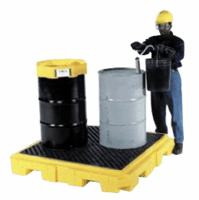
- Materials: Polyethylene, Fluorinated Polyethylene, Carbon Steel, All-Steel Construction
- Capacities: Single-Drum to Four-Drum Spill Containment Pallets
- Compliance: EPA SPCC, OSHA Spill Containment, Hazardous Material Storage Applications
- Configurations: Inline Spill Pallets, Low-Profile Units, Mobile Spill Platforms, Ramp-Compatible Systems
- Applications: Chemical Storage, Drum Dispensing, Solvent Containment, Industrial Liquid Handling

Product Comparison
Spill Pallet Configurations and Design Variations
Industrial spill pallets are manufactured in several configurations to support different storage layouts and liquid handling requirements. Standard four-drum spill pallets are commonly used for centralized hazardous material storage, while slim-line and inline models are designed to reduce floor space consumption in narrow warehouse aisles or against facility walls. Low-profile spill pallets simplify drum loading and dispensing operations by minimizing lifting height requirements. Mobile-compatible units incorporate reinforced fork channels for transportation using forklifts or pallet jacks. Ramp-compatible spill containment systems improve drum loading safety by reducing manual lifting during pallet access.
Polyethylene and Steel Material Engineering
Polyethylene spill pallets are rotationally molded using high-density polyethylene (HDPE), which provides broad chemical resistance against oils, acids, and corrosive liquids. Structural reinforcement ribs increase load-bearing capacity while maintaining lower overall weight compared to steel containment systems. Fluorinated polyethylene models undergo additional surface treatment to reduce permeation when storing chlorinated solvents and aggressive chemicals. Steel spill pallets are fabricated from welded carbon steel and may include powder-coated or galvanized finishes for corrosion resistance. Steel containment systems are frequently specified for flammable liquid storage due to grounding compatibility and higher structural rigidity.
Secondary Containment Compliance Standards
Spill pallets are utilized to support compliance with EPA Spill Prevention, Control, and Countermeasure (SPCC) regulations and OSHA workplace spill management requirements. Secondary containment systems are engineered to capture leaks from drums, totes, and liquid storage containers before discharge reaches floors or drainage systems. Many spill pallets are designed with sump capacities that meet containment volume requirements for hazardous liquid storage operations. Facilities handling oils, chemicals, fuels, or regulated liquids frequently implement spill containment pallets as part of environmental risk management programs and hazardous material storage protocols.
Industrial Spill Containment Applications
Spill pallets are used across manufacturing, chemical processing, transportation, utility, and maintenance industries. Chemical plants use polyethylene spill pallets for acid and solvent storage, while manufacturing facilities position containment pallets beneath dispensing stations to capture leaks during filling operations. Steel spill containment platforms are commonly utilized in flammable liquid storage areas, paint operations, and petroleum handling facilities. Warehouses and distribution centers use inline spill pallets to increase drum storage density while maintaining secondary containment protection. Mobile spill containment systems are also deployed in temporary maintenance operations and outdoor liquid handling environments.
Spill Pallet Selection Criteria
Selection of spill containment pallets depends on chemical compatibility, container quantity, load capacity, sump volume, and handling requirements. Polyethylene models are generally selected for corrosive chemical storage due to broad chemical resistance, while steel spill pallets may be specified for combustible liquid applications requiring grounding. Facilities handling chlorinated solvents or permeating chemicals often require fluorinated polyethylene containment systems. Buyers should evaluate forklift accessibility, removable grating systems, sump drainage options, and available floor space before selecting a spill pallet configuration. Environmental exposure, UV resistance, and operational traffic conditions should also be considered for indoor and outdoor containment installations.
| Product | Material | Configuration | Primary Application | Mobility |
|---|---|---|---|---|
| Enpac Poly Slim-Line™ 6000 | Polyethylene | Slim Profile Spill Pallet | Space-Constrained Drum Storage | Forklift Compatible |
| Ultra-SpillPallet P4 Plus | Polyethylene | 4-Drum Spill Pallet | Hazardous Liquid Containment | Forklift Compatible |
| Enpac In-Line Spill Pallets | Polyethylene | Inline Drum Storage | Floor Space Optimization | Modular Handling |
| All-Steel Spill Containment Pallets | Carbon Steel | Heavy-Duty Spill Platform | Flammable Liquid Storage | Forklift Compatible |
| Poly-Spillpallet™ 6000 | Polyethylene | Multi-Drum Spill Pallet | Chemical Drum Containment | Forklift Compatible |
| Ultra Fluorinated Poly Spill Pallets | Fluorinated Polyethylene | Chemical Resistant Spill Pallet | Chlorinated Solvent Storage | Forklift Compatible |
| Big Mouth Polyethylene Spill Pallet | Polyethylene | Wide Access Spill Pallet | Drum Dispensing Operations | Pallet Jack Compatible |
| SpillKing Spill Containment System | Polyethylene | Containment Platform System | Industrial Spill Prevention | Modular Handling |
Spill Pallet Configurations and Design Variations
Industrial spill pallets are manufactured in several configurations to support different storage layouts and liquid handling requirements. Standard four-drum spill pallets are commonly used for centralized hazardous material storage, while slim-line and inline models are designed to reduce floor space consumption in narrow warehouse aisles or against facility walls. Low-profile spill pallets simplify drum loading and dispensing operations by minimizing lifting height requirements. Mobile-compatible units incorporate reinforced fork channels for transportation using forklifts or pallet jacks. Ramp-compatible spill containment systems improve drum loading safety by reducing manual lifting during pallet access.
Polyethylene and Steel Material Engineering
Polyethylene spill pallets are rotationally molded using high-density polyethylene (HDPE), which provides broad chemical resistance against oils, acids, and corrosive liquids. Structural reinforcement ribs increase load-bearing capacity while maintaining lower overall weight compared to steel containment systems. Fluorinated polyethylene models undergo additional surface treatment to reduce permeation when storing chlorinated solvents and aggressive chemicals. Steel spill pallets are fabricated from welded carbon steel and may include powder-coated or galvanized finishes for corrosion resistance. Steel containment systems are frequently specified for flammable liquid storage due to grounding compatibility and higher structural rigidity.
Secondary Containment Compliance Standards
Spill pallets are utilized to support compliance with EPA Spill Prevention, Control, and Countermeasure (SPCC) regulations and OSHA workplace spill management requirements. Secondary containment systems are engineered to capture leaks from drums, totes, and liquid storage containers before discharge reaches floors or drainage systems. Many spill pallets are designed with sump capacities that meet containment volume requirements for hazardous liquid storage operations. Facilities handling oils, chemicals, fuels, or regulated liquids frequently implement spill containment pallets as part of environmental risk management programs and hazardous material storage protocols.
Industrial Spill Containment Applications
Spill pallets are used across manufacturing, chemical processing, transportation, utility, and maintenance industries. Chemical plants use polyethylene spill pallets for acid and solvent storage, while manufacturing facilities position containment pallets beneath dispensing stations to capture leaks during filling operations. Steel spill containment platforms are commonly utilized in flammable liquid storage areas, paint operations, and petroleum handling facilities. Warehouses and distribution centers use inline spill pallets to increase drum storage density while maintaining secondary containment protection. Mobile spill containment systems are also deployed in temporary maintenance operations and outdoor liquid handling environments.
Spill Pallet Selection Criteria
Selection of spill containment pallets depends on chemical compatibility, container quantity, load capacity, sump volume, and handling requirements. Polyethylene models are generally selected for corrosive chemical storage due to broad chemical resistance, while steel spill pallets may be specified for combustible liquid applications requiring grounding. Facilities handling chlorinated solvents or permeating chemicals often require fluorinated polyethylene containment systems. Buyers should evaluate forklift accessibility, removable grating systems, sump drainage options, and available floor space before selecting a spill pallet configuration. Environmental exposure, UV resistance, and operational traffic conditions should also be considered for indoor and outdoor containment installations.

