


Enpac In-Line Spill Pallets | Space-Saving Containment
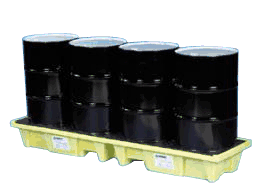
- Materials: Polyethylene Spill Containment Construction
- Capacities: 2-Drum and 4-Drum Spill Pallet Configurations
- Compliance: EPA 40 CFR 264.175 and SPCC Secondary Containment Requirements
- Sump Capacity: Up to 66-Gallon Integrated Spill Sump
- Configurations: Drain and No-Drain Models with Optional Protective Covers

$262.97
$299.95
(You Save 12%)$288.97
$349.99
(You Save 17%)$338.97
$399.95
(You Save 15%)$197.97
$249.95
(You Save 21%)$228.97
$328.97
(You Save 30%)$355.97
$439.95
(You Save 19%)| Product | Drum Capacity | Drain Option | Sump Capacity | Material |
|---|---|---|---|---|
| Enpac In-Line Spill Pallets 2-Drum No Drain | 2 Drum | No | Integrated Sump | Polyethylene |
| Enpac In-Line Spill Pallets 2-Drum With Drain | 2 Drum | Yes | Integrated Sump | Polyethylene |
| Enpac In-Line Spill Pallets 4-Drum No Drain | 4 Drum | No | 66 Gallon Sump | Polyethylene |
| Enpac In-Line Spill Pallets 4-Drum With Drain | 4 Drum | Yes | 66 Gallon Sump | Polyethylene |
| 2 Drum Cover For Enpac In-Line Spill Pallets | 2 Drum | N/A | N/A | Polyethylene |
| 4 Drum Cover For Enpac In-Line Spill Pallets | 4 Drum | N/A | N/A | Polyethylene |
Space-Saving Spill Containment Design
Enpac In-Line Spill Pallets are engineered with a narrow-profile layout that minimizes occupied floor space while maintaining compliant secondary containment capacity. Unlike square spill pallets that require larger staging areas, in-line systems position drums side-by-side in a linear arrangement. This configuration allows facilities to maximize storage efficiency along walls, production lines, maintenance corridors, and warehouse aisles. The reduced footprint supports material handling operations in facilities where space limitations restrict the use of traditional containment pallets.
Drain and No-Drain Spill Pallet Configurations
The spill pallet series is available in both drain and no-drain configurations. No-drain models feature sealed containment sumps that capture leaks and spills until manual removal is performed. Drain-equipped models incorporate threaded drain fittings that simplify sump evacuation and liquid recovery procedures. Facilities handling oils, chemicals, solvents, or wastewater often utilize drain systems to streamline maintenance operations and reduce manual cleanup time. Drain plugs remain sealed during normal operation to maintain containment compliance.
Polyethylene Material Engineering
These spill containment pallets are rotationally molded from polyethylene materials designed for chemical resistance and corrosion protection. Polyethylene construction resists rust, denting, and degradation caused by moisture exposure or many industrial chemicals. Unlike painted steel systems, polyethylene containment platforms do not require surface coatings to resist corrosion. The molded one-piece construction also reduces leak points that may occur in fabricated containment systems. UV-resistant material formulations support both indoor and outdoor containment applications.
Regulatory Spill Containment Requirements
Secondary containment systems are commonly used to support compliance with EPA spill prevention standards, including EPA 40 CFR 264.175 and SPCC spill containment requirements. These regulations require containment systems capable of capturing leaks from primary storage containers. Spill pallets with integrated sumps collect accidental releases before they reach floors, drains, or surrounding work areas. Facilities storing hazardous liquids, petroleum products, or chemical materials frequently implement spill pallet systems as part of environmental management and workplace safety programs.
Industrial Applications and Facility Use
In-line spill pallets are utilized across manufacturing plants, automotive facilities, chemical storage rooms, warehouses, pharmaceutical operations, and maintenance departments. Common applications include storage of oils, lubricants, cleaning chemicals, coolants, solvents, paints, and hazardous liquids stored in drums or pails. The linear configuration is particularly useful in narrow storage rooms and areas with forklift traffic where standard square containment units reduce maneuvering space. Optional drum covers provide additional protection against rainwater, dust, and outdoor contamination.
Selection Criteria for Spill Containment Systems
Selection factors include drum quantity, sump capacity requirements, drain preferences, chemical compatibility, and available floor space. Facilities storing aggressive chemicals should verify polyethylene compatibility with stored liquids. Drain systems may be preferred in applications requiring frequent liquid removal or washdown procedures. Outdoor storage operations often require optional weather covers to prevent rainwater accumulation within containment sumps. Drum loading methods, forklift access requirements, and OSHA walkway clearance considerations should also be evaluated when selecting spill containment equipment.

