


All-Steel Spill Containment Pallets | Drum Spill Control
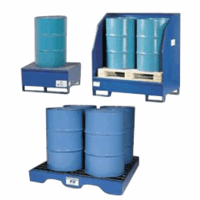
- Material: Heavy-Gauge Carbon Steel with Rust-Resistant Industrial Coating
- Capacity Range: Single Drum to 8-Drum Spill Containment Systems
- Load Ratings: 600 lb to 4,800 lb Uniform Load Capacity
- Configurations: Standard, Inline, Enclosed, and Horizontal Drum Rack Designs
- Compliance: Secondary Spill Containment for Industrial Chemical and Drum Storage Applications

$1,469.98
$1,729.41
(You Save 15%)$1,539.98
$1,811.76
(You Save 15%)$1,849.98
$2,176.00
(You Save 15%)$2,239.98
$2,635.00
(You Save 15%)$2,998.98
$3,528.00
(You Save 15%)$499.98
$588.00
(You Save 15%)$599.95
$665.95
(You Save 10%)| Product | Drum Capacity | Load Capacity | Configuration | Material |
|---|---|---|---|---|
| All-Steel Spill Containment Pallet Standard | 1 Drum | 600 lb | Standard | Carbon Steel |
| All-Steel Spill Containment Pallet Standard | 2 Drum | 1,200 lb | Standard | Carbon Steel |
| All-Steel Spill Containment Pallet Standard | 4 Drum | 2,400 lb | Standard | Carbon Steel |
| All-Steel Spill Containment Pallet Inline | 4 Drum | 2,400 lb | Inline | Carbon Steel |
| All-Steel Spill Containment Pallet Standard | 8 Drum | 4,800 lb | Standard | Carbon Steel |
| All-Steel Spill Containment Pallet Enclosed | 2 Drum | 1,200 lb | Enclosed | Carbon Steel |
| All-Steel Spill Containment Pallet Enclosed | 4 Drum | 2,400 lb | Enclosed | Carbon Steel |
| Horizontal Drum Rack Spill Containment | 1 Drum | 600 lb | Horizontal Rack | Carbon Steel |
| Double Horizontal Drum Cradle Rack | 2 Drum | 600 lb | Horizontal Cradle Rack | Carbon Steel |
Steel Spill Containment Configurations
All-steel spill containment systems are manufactured in multiple configurations to support industrial drum storage, dispensing, transportation, and hazardous material management. Standard vertical drum spill pallets are designed for upright drum storage and forklift handling. These units commonly support one, two, four, or eight drums while providing integrated sump containment beneath the storage surface. Inline spill containment pallets position drums in a linear arrangement to reduce floor space requirements in narrow warehouse aisles and production lines. Enclosed spill containment systems incorporate steel wall panels and covered containment areas to reduce exposure to weather, debris, and unauthorized access in outdoor storage applications.
Horizontal drum racks integrate spill containment directly beneath dispensing cradles and drum rack systems. These units support controlled dispensing operations while capturing drips, leaks, and residual product during fluid transfer procedures.
Material Construction and Engineering
Steel spill containment pallets are fabricated from heavy-gauge carbon steel designed to withstand concentrated drum loads, forklift traffic, and industrial handling environments. Structural reinforcement channels and welded seams provide rigidity under dynamic loading conditions associated with liquid-filled drums. Protective industrial coatings are commonly applied to reduce corrosion exposure from moisture, chemicals, oils, and outdoor environmental conditions. Steel construction offers higher static load capacities compared to molded polyethylene alternatives, making these containment systems suitable for high-density drum storage and steel drum applications.
Containment sumps are engineered to capture leaks and spills from drum failures, bung leakage, overfilling incidents, or dispensing operations. Removable steel grating platforms allow spill inspection, sump cleaning, and fluid recovery procedures while maintaining drum stability during storage and handling.
Regulatory Spill Containment Standards
Secondary spill containment systems are commonly used to support compliance with EPA, OSHA, SPCC, and hazardous material storage regulations. Industrial facilities handling oils, chemicals, solvents, paints, fuels, and regulated liquids frequently require secondary containment systems capable of containing leaks and accidental releases.
Steel spill pallets are used in facilities subject to Spill Prevention, Control, and Countermeasure (SPCC) requirements where petroleum-based products and hazardous materials are stored in drums or portable containers. Containment systems may also support facility compliance with local fire codes and environmental management procedures.
Facilities storing flammable liquids may integrate steel spill containment systems with grounding procedures, fire suppression systems, and hazardous material storage programs depending on the materials being stored.
Industrial Applications and Use Cases
All-steel spill containment pallets are utilized across manufacturing plants, automotive facilities, chemical processing operations, transportation terminals, maintenance departments, and industrial warehouses. Common applications include storage of lubricants, solvents, fuels, corrosives, coatings, cleaning chemicals, and waste liquids. Enclosed spill containment units are frequently installed in outdoor storage yards where drums require protection from precipitation and environmental exposure. Inline containment systems are commonly used in production areas with limited floor space availability. Horizontal drum containment racks support controlled dispensing of oils, chemicals, and industrial fluids in maintenance shops, lubrication systems, and production environments where direct drum access is required during transfer operations.
Selection Criteria for Steel Spill Containment Systems
Selection of steel spill containment equipment should consider drum quantity, total load capacity, chemical compatibility, dispensing requirements, storage location, and available floor space. Facilities storing highly corrosive chemicals may require specialized coatings or alternative containment materials depending on chemical exposure conditions.
Indoor and outdoor installations may require different containment configurations based on weather exposure, drainage considerations, and environmental regulations. Facilities utilizing forklifts should evaluate pallet entry design, load distribution, and structural reinforcement for handling operations. Users should also evaluate sump capacity requirements, drum access procedures, spill recovery methods, and long-term maintenance requirements when selecting industrial spill containment systems for hazardous material storage operations.

