


Poly Spill Pallets | Polyethylene Drum Containment
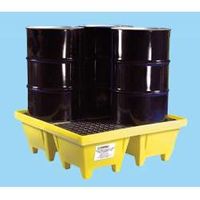
- Material Composition: Polyethylene (PE) Spill Containment Construction
- Capacity Range: 2-Drum and 4-Drum Spill Containment Configurations
- Compliance: EPA Spill Containment and SPCC Compatibility
- Configuration Types: Standard Models and Drain-Enabled Designs
- Applications: Drum Storage, Chemical Handling, and Leak Containment

$488.98
$542.95
(You Save 10%)$341.97
$441.97
(You Save 23%)| Product | Material | Configuration | Drain Option | Application |
|---|---|---|---|---|
| Poly-Spillpallet 6000 | Polyethylene | Standard Spill Pallet | No Drain | General Drum Spill Containment |
| Poly-Spillpallet 6000 With Drain | Polyethylene | Drainable Spill Pallet | Integrated Drain | Liquid Collection and Recovery |
Poly Spill Pallet Configurations
Poly spill pallets are manufactured in several containment configurations based on drum quantity, dispensing requirements, and liquid management procedures. Standard spill pallets utilize a sealed sump basin that captures accidental leaks or container failures beneath stored drums. These systems are commonly used in static storage applications where liquids remain isolated within the containment reservoir until manual cleanup is performed.
Drain-equipped spill pallets incorporate integrated drainage fittings that allow controlled removal of accumulated liquids from the sump area. These models are typically utilized in facilities with recurring liquid transfer operations or washdown procedures where frequent fluid removal is required. Drain systems may include threaded plugs or valve assemblies depending on the pallet design and containment capacity requirements.
Low-profile polyethylene spill pallets are engineered to simplify drum loading using pallet jacks or forklifts while minimizing lifting height during placement operations. Elevated grate systems provide drum stability while separating stored containers from collected liquids below the deck surface.
Polyethylene Material Engineering
Poly spill containment pallets are constructed from rotationally molded polyethylene designed to resist corrosion, chemical degradation, and environmental exposure. Unlike carbon steel containment systems, polyethylene will not rust when exposed to water, moisture, or many industrial chemicals. This construction method also reduces the risk of coating failures commonly associated with painted metal containment products.
High-density polyethylene materials provide impact resistance and structural rigidity under distributed drum loads. Ribbed reinforcement patterns and molded support channels distribute weight across the pallet base to maintain dimensional stability during forklift handling and long-term storage operations. Chemical compatibility is an important engineering consideration when selecting polyethylene spill containment systems. Polyethylene is commonly compatible with oils, coolants, detergents, and many acids or caustic materials, although aggressive oxidizers and certain solvents may require fluorinated or specialized containment materials.
Spill Containment Compliance Standards
Poly spill pallets are commonly used to support compliance with EPA spill prevention regulations and SPCC (Spill Prevention, Control, and Countermeasure) requirements. Secondary containment systems are intended to capture leaks and prevent hazardous liquids from reaching drains, soil, or surrounding work areas. Containment sump capacity is typically designed to retain either the volume of the largest stored container or a percentage of the total liquid volume stored on the pallet, depending on facility requirements and local regulations. Facilities handling hazardous materials often utilize spill containment pallets as part of broader environmental management and workplace safety programs.
Drain-enabled systems should remain closed during standard operations to maintain containment integrity. Collected liquids must be inspected and managed according to facility disposal and hazardous waste procedures.
Industrial Spill Containment Applications
Poly spill pallets are used across chemical processing facilities, maintenance departments, transportation operations, manufacturing plants, and agricultural environments. Common applications include drum dispensing stations, temporary chemical staging, lubricant storage, and waste liquid collection areas. Manufacturing facilities frequently use spill pallets beneath dispensing drums containing lubricants, hydraulic fluids, or cleaning chemicals. Agricultural operations utilize polyethylene containment systems for fertilizer, pesticide, and herbicide storage due to their corrosion-resistant construction. Maintenance shops and fleet service operations often position spill containment pallets beneath oil drums and fluid transfer equipment to capture leaks generated during dispensing and servicing procedures.
Selection Criteria for Spill Pallets
Selection of a spill containment pallet should consider drum quantity, total liquid volume, chemical compatibility, loading method, and sump capacity requirements. Facilities using forklifts or pallet jacks should evaluate deck height and forklift accessibility during product selection. Drain-equipped spill pallets may simplify maintenance procedures in operations involving recurring liquid accumulation, although facilities handling hazardous materials may require sealed containment systems depending on regulatory requirements.
Environmental exposure conditions should also be considered. Outdoor spill containment applications may require UV-resistant polyethylene construction and weather covers to reduce rainwater accumulation inside containment sumps.

