


Torque Wrenches and Socket Tools
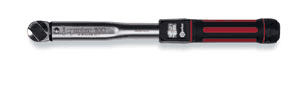
- Material Composition: High-Strength Alloy Steel, Non-Sparking Aluminum Bronze, and Beryllium Copper.
- Torque Range: Fixed/Preset values for drum closures and adjustable dial/lock systems for industrial maintenance.
- Compliance: Calibrated to NIST-traceable standards; non-sparking variants meet FM and OSHA safety requirements.
- Drive Sizes: 1/2", 3/4", and specialized sockets for 70mm screwcaps, Rieke®, and Tri-Sure® drum plugs.

| Product Category | Material / Construction | Primary Application |
|---|---|---|
| Adjustable Torque Wrenches | Alloy Steel with Dial/Lock Mechanisms | Variable torque application for industrial maintenance |
| Non-Sparking Sockets | Aluminum Bronze | Hazardous or explosive environment safety |
| Preset Drum Torque Wrenches | Fixed-torque Steel Handles | Sealing 70mm, Rieke®, and Tri-Sure® closures |
| Torque Wrench Testers | Digital/Analog Calibration Units | Verification of tool accuracy and calibration |
| Plug Impact Sockets | Heavy-Duty Steel | High-torque removal of drum plugs via impact tools |
Precision Torque Tool Configurations Industrial torque tools are categorized into adjustable and preset configurations. Adjustable torque wrenches, including dial and lock-style models, allow operators to select a specific torque value within a defined range. These are utilized in mechanical assembly and maintenance where multiple torque specifications are encountered. Preset torque wrenches are factory-calibrated to a single, non-adjustable value. These are primarily used in repetitive manufacturing and drum-filling operations to ensure that every closure—whether a 70mm screwcap or a Rieke® hex-head plug—is tightened to the exact foot-pound or Newton-meter specification required by the manufacturer and UN packaging standards.
Material Properties and Safety Engineering The metallurgical composition of torque tools is dictated by the operational environment. Standard industrial wrenches are manufactured from chrome-vanadium or high-strength alloy steel for maximum tensile strength and durability. However, in environments involving volatile chemicals or flammable vapors, non-sparking tools are required. These are cast from aluminum bronze or beryllium copper, which possess lower hardness than steel to prevent the generation of friction-based sparks. Specialized socket wrenches, such as the drum plug impact socket, utilize heat-treated steel to withstand the high-frequency vibrational stress of pneumatic impact drivers without fracturing.
Compliance and Calibration Standards Torque application is a critical factor in regulatory compliance for the transport of hazardous materials. Under DOT and UN regulations, shippers must follow the closure instructions provided by the container manufacturer. Failure to apply the specified torque can result in seal failure and environmental contamination. Torque wrench testers are utilized to verify that tools remain within their calibrated tolerance, typically ±3% or ±4%. Many industrial wrenches are supplied with certificates of calibration traceable to the National Institute of Standards and Technology (NIST), ensuring that the applied force meets legal and safety requirements for hazardous material packaging.
Sector-Specific Tool Implementation Torque wrenches and specialized sockets are fundamental across chemical processing, petroleum, and pharmaceutical industries. In the chemical sector, T-handle preset systems are used to seal drum plugs to prevent the escape of vapors. The food and beverage industry utilizes preset wrenches for 70mm screwcaps on plastic carboys and pails to ensure leak-proof seals during palletization. Agriculture and manufacturing plants employ adjustable dial wrenches for equipment maintenance, where precise torque is necessary to prevent bolt shearing or mechanical failure in heavy machinery and pump systems.
Technical Factors for Tool Selection Selecting the appropriate torque tool requires an analysis of the closure type, required torque value, and the surrounding atmosphere. Buyers must identify the specific plug or cap geometry; for example, Rieke® T-style round-head plugs require a different socket profile than Tri-Sure® round-head plugs. The torque range of the tool must align with the manufacturer's specification, ideally falling within the middle 60% of an adjustable wrench's scale for maximum accuracy. Finally, the choice between standard steel and non-sparking alloys must be determined by the presence of explosive dust or flammable liquids in the work area.

