


Torque Wrench Testers & Torque Analyzers
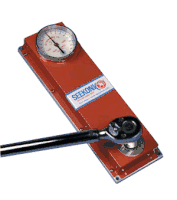
- Material/Construction: Bench-mount torque analyzer bodies with metal drive adapters.
- Torque Range: 0–50 ft-lbs and 0–100 ft-lbs tester options.
- Drive Sizes: 1/2 inch drive, 3/8 inch to 1/2 inch adapter, and 1/2 inch to 1/2 inch dual-sided female adapter.
- Configuration: Bench-mounted torque analyzers for hand-operated torque tools.
- Use Case: Verifying torque wrench output for container closures, fittings, caps, and industrial fasteners.

$933.98
$1,036.98
(You Save 10%)$799.98
$1,200.00
(You Save 33%)$89.96
$109.96
(You Save 18%)$69.98
$100.00
(You Save 30%)
Product Comparison Chart
Configuration Analysis
Bench-Mount Torque Analyzer Design Bench-mounted torque wrench testers are designed to hold a fixed measuring point while the operator applies force with a hand-operated torque wrench. This setup allows the user to compare the wrench setting against the measured output. The Seekonk TAF-50 torque analyzer covers a 0–50 ft-lb range with a 1/2 inch drive configuration. This range is suited for lower-torque closure work, small fasteners, and controlled tightening procedures where repeated verification is required.
0–100 Ft-lb Torque Tester Range The 0–100 ft-lb torque tester is used where a wider torque range is needed for hand-operated torque tools. This range applies to higher-torque industrial fastening, drum closure, IBC cap, plug, and fitting applications. The broader range allows one tester to cover both moderate and heavier tightening procedures. Buyers should match the tester range to the torque values specified by the container, fitting, or fastener manufacturer.
Tester Body and Drive Interface Torque testers use a fixed mechanical or measuring body with a drive interface that receives the torque wrench or adapter. The tester must remain stable during use so the reading is not affected by bench movement, tool misalignment, or side loading. Bench mounting helps control these variables by securing the tester to a work surface. Drive interfaces should be kept clean and free from damaged corners, worn contact surfaces, or loose adapter fit.
Adapter Construction and Fit Drive adapters extend the usable range of a torque tester by allowing different wrench drive sizes to connect to the measuring unit. The 1/2 inch to 1/2 inch dual-sided female adapter is used when a compatible 1/2 inch connection is required on both sides of the setup. The 3/8 inch to 1/2 inch adapter allows a smaller 3/8 inch drive torque wrench to be used with a 1/2 inch tester interface. Adapter fit should be checked before testing because loose or mismatched connections can affect repeatability and tool control.
Torque Verification and Quality Control Torque wrench testers support internal quality control programs by helping users confirm whether a hand-operated torque wrench is reading within the required working range. In packaging and container closure work, torque values may be part of written closing instructions. These instructions are commonly used for drums, IBC totes, caps, bungs, plugs, and fittings. Torque verification helps document that closure tools are being checked before use.
Shipping and Closure Compliance When regulated containers are used for transport, closure torque can affect leak resistance and package performance. Under-tightening may allow loosening, seepage, or gasket movement. Over-tightening may damage threads, distort gaskets, or stress plugs and caps. A torque tester does not replace formal calibration when certified records are required, but it provides a controlled method for routine field or shop checks. Buyers should follow DOT, OSHA, facility, and manufacturer requirements when torque values are tied to shipping or workplace procedures.
Container Closure Operations Torque wrench testers are used in facilities that close drums, pails, IBC totes, valves, caps, plugs, and threaded fittings. In these applications, torque consistency is important because the same closure procedure may be repeated across multiple containers. A tester allows operators to check a torque wrench before starting a production run or after a tool is dropped, repaired, or suspected of reading incorrectly.
Maintenance and Assembly Work These testers are also used in maintenance shops, chemical plants, manufacturing areas, and equipment service departments. Hand-operated torque tools may be used on pumps, flanges, machinery guards, brackets, and industrial hardware. A bench-mounted analyzer gives maintenance personnel a fixed point for checking torque output before applying the wrench to equipment. This reduces the risk of uneven tightening and helps maintain repeatable work practices.
Torque Range Selection The first selection factor is the required torque range. A 0–50 ft-lb analyzer should be selected when most wrench settings fall within lower torque values. A 0–100 ft-lb tester should be selected when the operation includes higher torque requirements or multiple tool ranges. The tester should not be selected only by maximum range; the working torque value should fall comfortably within the tester’s usable measuring span.
Drive Size and Adapter Requirements Drive size must match the torque wrench and tester connection. A 1/2 inch drive tester works directly with compatible 1/2 inch torque tools. A 3/8 inch torque wrench may require a 3/8 inch to 1/2 inch adapter. A 1/2 inch to 1/2 inch dual-sided female adapter may be needed for specific tester and tool setups. Buyers should confirm the wrench drive, tester connection, adapter orientation, and required clearance before ordering.
Work Area and Testing Frequency Testing frequency affects the type of setup needed. A bench-mounted tester is suited for repeated shop, warehouse, or production use. Occasional users may need a simple torque verification station, while higher-volume facilities may require a more formal inspection process with written records. The tester should be mounted on a stable bench, used with compatible adapters, and checked according to facility procedures for torque-sensitive work.
| Product | Torque Range | Drive Size | Configuration | Primary Use |
|---|---|---|---|---|
| Seekonk TAF-50 Torque Analyzer | 0–50 ft-lbs | 1/2 inch drive | Bench mount | Testing lower-range hand torque tools |
| 0–100 Ft-lb Torque Tester For Hand Operated Torque Tools | 0–100 ft-lbs | Torque tool dependent | Torque tester | Testing hand-operated torque tools across a wider range |
| Adapter 1/2 inch to 1/2 inch Dual-Sided Female Torque Wrench Tester | Adapter only | 1/2 inch to 1/2 inch | Dual-sided female adapter, 13 inch L x 4 inch W x 2 inch H | Connecting compatible 1/2 inch torque tools to tester setups |
| Adapter 3/8 inch to 1/2 inch Torque Wrench Tester | Adapter only | 3/8 inch to 1/2 inch | Drive adapter | Adapting 3/8 inch torque tools to 1/2 inch tester connections |
Bench-Mount Torque Analyzer Design Bench-mounted torque wrench testers are designed to hold a fixed measuring point while the operator applies force with a hand-operated torque wrench. This setup allows the user to compare the wrench setting against the measured output. The Seekonk TAF-50 torque analyzer covers a 0–50 ft-lb range with a 1/2 inch drive configuration. This range is suited for lower-torque closure work, small fasteners, and controlled tightening procedures where repeated verification is required.
0–100 Ft-lb Torque Tester Range The 0–100 ft-lb torque tester is used where a wider torque range is needed for hand-operated torque tools. This range applies to higher-torque industrial fastening, drum closure, IBC cap, plug, and fitting applications. The broader range allows one tester to cover both moderate and heavier tightening procedures. Buyers should match the tester range to the torque values specified by the container, fitting, or fastener manufacturer.
Tester Body and Drive Interface Torque testers use a fixed mechanical or measuring body with a drive interface that receives the torque wrench or adapter. The tester must remain stable during use so the reading is not affected by bench movement, tool misalignment, or side loading. Bench mounting helps control these variables by securing the tester to a work surface. Drive interfaces should be kept clean and free from damaged corners, worn contact surfaces, or loose adapter fit.
Adapter Construction and Fit Drive adapters extend the usable range of a torque tester by allowing different wrench drive sizes to connect to the measuring unit. The 1/2 inch to 1/2 inch dual-sided female adapter is used when a compatible 1/2 inch connection is required on both sides of the setup. The 3/8 inch to 1/2 inch adapter allows a smaller 3/8 inch drive torque wrench to be used with a 1/2 inch tester interface. Adapter fit should be checked before testing because loose or mismatched connections can affect repeatability and tool control.
Torque Verification and Quality Control Torque wrench testers support internal quality control programs by helping users confirm whether a hand-operated torque wrench is reading within the required working range. In packaging and container closure work, torque values may be part of written closing instructions. These instructions are commonly used for drums, IBC totes, caps, bungs, plugs, and fittings. Torque verification helps document that closure tools are being checked before use.
Shipping and Closure Compliance When regulated containers are used for transport, closure torque can affect leak resistance and package performance. Under-tightening may allow loosening, seepage, or gasket movement. Over-tightening may damage threads, distort gaskets, or stress plugs and caps. A torque tester does not replace formal calibration when certified records are required, but it provides a controlled method for routine field or shop checks. Buyers should follow DOT, OSHA, facility, and manufacturer requirements when torque values are tied to shipping or workplace procedures.
Container Closure Operations Torque wrench testers are used in facilities that close drums, pails, IBC totes, valves, caps, plugs, and threaded fittings. In these applications, torque consistency is important because the same closure procedure may be repeated across multiple containers. A tester allows operators to check a torque wrench before starting a production run or after a tool is dropped, repaired, or suspected of reading incorrectly.
Maintenance and Assembly Work These testers are also used in maintenance shops, chemical plants, manufacturing areas, and equipment service departments. Hand-operated torque tools may be used on pumps, flanges, machinery guards, brackets, and industrial hardware. A bench-mounted analyzer gives maintenance personnel a fixed point for checking torque output before applying the wrench to equipment. This reduces the risk of uneven tightening and helps maintain repeatable work practices.
Torque Range Selection The first selection factor is the required torque range. A 0–50 ft-lb analyzer should be selected when most wrench settings fall within lower torque values. A 0–100 ft-lb tester should be selected when the operation includes higher torque requirements or multiple tool ranges. The tester should not be selected only by maximum range; the working torque value should fall comfortably within the tester’s usable measuring span.
Drive Size and Adapter Requirements Drive size must match the torque wrench and tester connection. A 1/2 inch drive tester works directly with compatible 1/2 inch torque tools. A 3/8 inch torque wrench may require a 3/8 inch to 1/2 inch adapter. A 1/2 inch to 1/2 inch dual-sided female adapter may be needed for specific tester and tool setups. Buyers should confirm the wrench drive, tester connection, adapter orientation, and required clearance before ordering.
Work Area and Testing Frequency Testing frequency affects the type of setup needed. A bench-mounted tester is suited for repeated shop, warehouse, or production use. Occasional users may need a simple torque verification station, while higher-volume facilities may require a more formal inspection process with written records. The tester should be mounted on a stable bench, used with compatible adapters, and checked according to facility procedures for torque-sensitive work.

