


Adjustable Torque Wrenches | Dial & Lock Tools
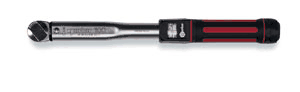
- Materials: Metal wrench bodies with industrial handle construction and precision internal torque mechanisms.
- Torque Ranges: 7.5–37.5 ft-lb and 20–150 ft-lb configurations.
- Drive Sizes: 3/8 inch and 1/2 inch drive torque wrenches with adapter options.
- Adjustment Type: Dial-adjustable torque setting with locking mechanism.
- Applications: IBC tote caps, valves, fittings, fasteners, mechanical assemblies, and maintenance work.

$239.97
$299.97
(You Save 20%)
| Buy More, Save More! | ||
|---|---|---|
| Quantity | Price Each | |
| 1 - 2 pieces | $19.95 ea. | |
| 3 - 5 pieces | $19.35 ea. | |
| 6+ pieces | $18.41 ea. | |
| Buy More, Save More! | ||
|---|---|---|
| Quantity | Price Each | |
| 1 - 2 pieces | $29.64 ea. | |
| 3 - 5 pieces | $28.20 ea. | |
| 6+ pieces | $26.64 ea. | |
Product Comparison Chart
Configuration Analysis
Dial and Lock Torque Wrench Design Adjustable dial and lock torque wrenches are designed to let the operator select a specific torque value before tightening. The dial system provides controlled adjustment across the wrench’s rated torque range. Once the value is selected, the locking mechanism secures the setting to reduce accidental changes during repeated use. This configuration is used when multiple fasteners, caps, or fittings must be tightened to the same torque level across a production, maintenance, or packaging process.
Drive Size and Adapter Compatibility The available wrench configurations include 3/8 inch and 1/2 inch drive sizes. A 3/8 inch drive is commonly used for smaller sockets, light-duty fasteners, and lower torque requirements. A 1/2 inch drive supports broader industrial use and higher torque loads. Drive adapters expand socket compatibility by converting between sizes such as 3/8 inch to 1/2 inch, 1/2 inch to 3/4 inch, and 1/2 inch to 3/8 inch. Adapter use should be matched to the socket, fitting, and torque requirement.
Industrial Tool Construction Adjustable torque wrenches are built with metal bodies designed to handle repeated torque loads during tightening operations. Internal components control the applied torque and release signal once the preset value is reached. Handles are designed for controlled grip and operation in shop, plant, and maintenance environments. For industrial use, tool construction must support repeatable performance, dimensional stability, and resistance to wear from repeated use.
Torque Range Selection The 7.5–37.5 ft-lb range is suited for lighter fastening tasks, smaller caps, and fittings that require controlled but lower force. The 20–150 ft-lb range is used for heavier-duty applications where larger fittings, valves, or mechanical assemblies require higher tightening force. Using a torque wrench within the correct range helps maintain accuracy. A wrench used near the center of its rated range is generally preferred over one used at the extreme low or high end.
Controlled Tightening and Safety Procedures Torque wrenches support compliance with internal maintenance procedures, packaging instructions, equipment manuals, and safety programs by providing repeatable tightening force. In container handling, chemical processing, and industrial maintenance, incorrect tightening can cause leaks, gasket damage, thread damage, or component failure. Torque-controlled fastening is often part of standard operating procedures for IBC tote caps, valves, fittings, and mechanical assemblies.
Calibration and Documentation Torque tools used in regulated or quality-controlled environments may require periodic calibration. Calibration confirms that the wrench applies torque within the accepted tolerance range. Maintenance departments, chemical facilities, and production plants may document tool calibration intervals as part of quality control, safety, or audit procedures. Torque wrenches used for critical sealing or mechanical applications should be inspected for wear, damaged scales, loose lock mechanisms, or inconsistent release behavior.
IBC Tote and Container Fitting Use Adjustable torque wrenches are commonly used for IBC tote cap installation, bung tightening, valve fittings, and closure systems. Applying the correct torque helps compress gaskets evenly without over-tightening threads or deforming sealing surfaces. This is important for liquid storage, chemical handling, and transport preparation where closure integrity affects leak prevention and handling safety.
Maintenance, Automotive, and Assembly Work In maintenance and mechanical assembly, torque wrenches are used on fasteners that require a defined tightening value. Applications include equipment repair, valve installation, pump maintenance, automotive service, and machinery assembly. The dial and lock format allows the same torque setting to be repeated across multiple fasteners or fittings. This reduces variation between operators and supports consistent assembly results.
Torque Range, Drive Size, and Socket Fit Buyers should select a torque wrench based on the required torque value, drive size, and socket compatibility. Lower-range tools are used for lighter closures and smaller fittings, while higher-range tools are used where more force is required. Drive adapters may be used when sockets and wrench drives do not match, but the adapter must be compatible with the load and application. The selected tool should cover the required torque range without forcing the wrench beyond its rated capacity.
Use Environment and Handling Requirements The operating environment affects torque wrench selection and maintenance. Chemical plants, manufacturing areas, packaging lines, and service shops may expose tools to fluids, dust, impacts, or repeated handling. Tools should be stored in clean conditions, protected from drops, and reset according to manufacturer guidance when not in use. For repeated industrial tightening, the lock mechanism, scale readability, handle condition, and calibration status should be checked as part of routine tool control.
| Product | Torque Range | Drive Size | Configuration | Primary Use |
|---|---|---|---|---|
| 7.5 x 37.5 ft-lb Adjustable Dial and Lock Torque Wrench | 7.5–37.5 ft-lb | 3/8 inch | Adjustable Dial and Lock Torque Wrench | Light-duty cap, fitting, and fastener tightening |
| 7.5–37.5 ft-lb Adjustable Dial and Lock Torque Wrench | 7.5–37.5 ft-lb | 1/2 inch | Adjustable Dial and Lock Torque Wrench | Light to medium-duty industrial tightening |
| 20–150 ft-lb Adjustable Dial Lock Torque Wrench | 20–150 ft-lb | 1/2 inch | Adjustable Dial Lock Torque Wrench | Higher-torque industrial and maintenance applications |
| Drive Adapter 3/8 inch to 1/2 inch | N/A | 3/8 inch to 1/2 inch | Drive Adapter | Socket and tool drive conversion |
| Drive Adapter 1/2 inch to 3/4 inch | N/A | 1/2 inch to 3/4 inch | Drive Adapter | Large socket and fitting compatibility |
| Drive Adapter 1/2 inch to 3/8 inch | N/A | 1/2 inch to 3/8 inch | Drive Adapter | Reduced drive-size compatibility |
Dial and Lock Torque Wrench Design Adjustable dial and lock torque wrenches are designed to let the operator select a specific torque value before tightening. The dial system provides controlled adjustment across the wrench’s rated torque range. Once the value is selected, the locking mechanism secures the setting to reduce accidental changes during repeated use. This configuration is used when multiple fasteners, caps, or fittings must be tightened to the same torque level across a production, maintenance, or packaging process.
Drive Size and Adapter Compatibility The available wrench configurations include 3/8 inch and 1/2 inch drive sizes. A 3/8 inch drive is commonly used for smaller sockets, light-duty fasteners, and lower torque requirements. A 1/2 inch drive supports broader industrial use and higher torque loads. Drive adapters expand socket compatibility by converting between sizes such as 3/8 inch to 1/2 inch, 1/2 inch to 3/4 inch, and 1/2 inch to 3/8 inch. Adapter use should be matched to the socket, fitting, and torque requirement.
Industrial Tool Construction Adjustable torque wrenches are built with metal bodies designed to handle repeated torque loads during tightening operations. Internal components control the applied torque and release signal once the preset value is reached. Handles are designed for controlled grip and operation in shop, plant, and maintenance environments. For industrial use, tool construction must support repeatable performance, dimensional stability, and resistance to wear from repeated use.
Torque Range Selection The 7.5–37.5 ft-lb range is suited for lighter fastening tasks, smaller caps, and fittings that require controlled but lower force. The 20–150 ft-lb range is used for heavier-duty applications where larger fittings, valves, or mechanical assemblies require higher tightening force. Using a torque wrench within the correct range helps maintain accuracy. A wrench used near the center of its rated range is generally preferred over one used at the extreme low or high end.
Controlled Tightening and Safety Procedures Torque wrenches support compliance with internal maintenance procedures, packaging instructions, equipment manuals, and safety programs by providing repeatable tightening force. In container handling, chemical processing, and industrial maintenance, incorrect tightening can cause leaks, gasket damage, thread damage, or component failure. Torque-controlled fastening is often part of standard operating procedures for IBC tote caps, valves, fittings, and mechanical assemblies.
Calibration and Documentation Torque tools used in regulated or quality-controlled environments may require periodic calibration. Calibration confirms that the wrench applies torque within the accepted tolerance range. Maintenance departments, chemical facilities, and production plants may document tool calibration intervals as part of quality control, safety, or audit procedures. Torque wrenches used for critical sealing or mechanical applications should be inspected for wear, damaged scales, loose lock mechanisms, or inconsistent release behavior.
IBC Tote and Container Fitting Use Adjustable torque wrenches are commonly used for IBC tote cap installation, bung tightening, valve fittings, and closure systems. Applying the correct torque helps compress gaskets evenly without over-tightening threads or deforming sealing surfaces. This is important for liquid storage, chemical handling, and transport preparation where closure integrity affects leak prevention and handling safety.
Maintenance, Automotive, and Assembly Work In maintenance and mechanical assembly, torque wrenches are used on fasteners that require a defined tightening value. Applications include equipment repair, valve installation, pump maintenance, automotive service, and machinery assembly. The dial and lock format allows the same torque setting to be repeated across multiple fasteners or fittings. This reduces variation between operators and supports consistent assembly results.
Torque Range, Drive Size, and Socket Fit Buyers should select a torque wrench based on the required torque value, drive size, and socket compatibility. Lower-range tools are used for lighter closures and smaller fittings, while higher-range tools are used where more force is required. Drive adapters may be used when sockets and wrench drives do not match, but the adapter must be compatible with the load and application. The selected tool should cover the required torque range without forcing the wrench beyond its rated capacity.
Use Environment and Handling Requirements The operating environment affects torque wrench selection and maintenance. Chemical plants, manufacturing areas, packaging lines, and service shops may expose tools to fluids, dust, impacts, or repeated handling. Tools should be stored in clean conditions, protected from drops, and reset according to manufacturer guidance when not in use. For repeated industrial tightening, the lock mechanism, scale readability, handle condition, and calibration status should be checked as part of routine tool control.

