


Drum Cradles for 55 Gallon Drums | Dispensing & Storage
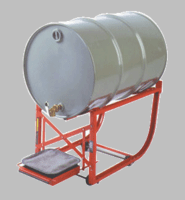
- Material Composition: Welded Carbon Steel, Polyethylene Components, Stainless Steel (select models)
- Capacity Range: 15-Gallon to 55-Gallon Drums; Up to 1,000 lb Load Capacity
- Compliance: EPA Secondary Containment Options; OSHA Handling Considerations
- Configurations: Fixed Cradles, Wheeled Cradles, Tipping Lever, Drainer Trucks

$119.98
$140.00
(You Save 14%)$159.98
$200.00
(You Save 20%)$159.98
$188.00
(You Save 15%)$159.98
$200.00
(You Save 20%)$339.98
$400.00
(You Save 15%)$259.98
$357.97
(You Save 27%)$259.98
$349.98
(You Save 26%)$269.95
$299.95
(You Save 10%)$229.98
$300.00
(You Save 23%)$239.98
$300.00
(You Save 20%)| Buy More, Save More! | ||
|---|---|---|
| Quantity | Price Each | |
| 1 - 1 pieces | $127.62 ea. | |
| 2+ pieces | $121.08 ea. | |
| Buy More, Save More! | ||
|---|---|---|
| Quantity | Price Each | |
| 1 - 1 pieces | $178.40 ea. | |
| 2+ pieces | $168.60 ea. | |
$57.97
$79.95
(You Save 27%)$22.97
$39.95
(You Save 43%)
$169.98
$200.00
(You Save 15%)| Buy More, Save More! | ||
|---|---|---|
| Quantity | Price Each | |
| 1 - 2 pieces | $99.95 ea. | |
| 3 - 5 pieces | $73.76 ea. | |
| 6+ pieces | $69.88 ea. | |
| Buy More, Save More! | ||
|---|---|---|
| Quantity | Price Each | |
| 1 - 2 pieces | $199.95 ea. | |
| 3 - 5 pieces | $162.05 ea. | |
| 6+ pieces | $153.52 ea. | |
$189.98
$449.98
$625.00
(You Save 28%)$519.98
$612.00
(You Save 15%)$373.95$435.95(You Save 14%)
| Buy More, Save More! | ||
|---|---|---|
| Quantity | Price Each | You Save |
| 1 - 1 pieces | $373.95 ea. | $62.00 (14%) |
| 2 - 5 pieces | $355.25 ea. | $80.69 (19%) |
| 6+ pieces | $336.56 ea. | $99.39 (23%) |
| Buy More, Save More! | ||
|---|---|---|
| Quantity | Price Each | |
| 1 - 1 pieces | $299.95 ea. | |
| 2+ pieces | $290.64 ea. | |
| Buy More, Save More! | ||
|---|---|---|
| Quantity | Price Each | |
| 1 - 1 pieces | $329.95 ea. | |
| 2+ pieces | $306.42 ea. | |
$1,198.98
| Buy More, Save More! | ||
|---|---|---|
| Quantity | Price Each | |
| 1 - 2 pieces | $601.99 ea. | |
| 3 - 5 pieces | $571.59 ea. | |
| 6+ pieces | $541.51 ea. | |
| Buy More, Save More! | ||
|---|---|---|
| Quantity | Price Each | |
| 1 - 2 pieces | $757.99 ea. | |
| 3 - 5 pieces | $719.85 ea. | |
| 6+ pieces | $681.97 ea. | |
Product Comparison Chart
Drum cradles are manufactured in multiple configurations based on handling and dispensing requirements. Fixed drum cradles provide a stable horizontal position for storage and gravity-fed dispensing. Wheeled drum cradles incorporate polyolefin, rubber, or steel wheels, allowing movement between workstations. Tipping lever drum cradles use a pivot mechanism to rotate drums incrementally, enabling controlled flow of liquids without sudden shifts in weight. Drum drainer trucks combine mobility and tilt capability, allowing a single operator to transport and empty drums in one operation. Secondary containment cradles integrate sump basins to capture leaks, supporting compliance in regulated environments.
Most drum cradles are constructed from welded carbon steel frames designed for high load-bearing capacity and structural rigidity. Steel thickness and reinforcement points are engineered to support dynamic loads during tilting and transport. Surface finishes often include powder coating or corrosion-resistant treatments to extend service life in chemical or outdoor environments. Polyethylene components are used in containment bases due to chemical resistance and non-corrosive properties. Wheel materials vary by application: steel wheels for high-load durability, rubber for shock absorption, and polyolefin for chemical resistance and low rolling resistance.
Drum cradle systems are frequently used in environments governed by EPA, OSHA, and DOT standards. Secondary containment units are designed to meet EPA 40 CFR 264.175 requirements for spill containment capacity. OSHA guidelines emphasize minimizing manual handling risks and ensuring stable drum positioning. While cradles themselves are not UN-rated, they are used in conjunction with UN-rated drums to maintain compliance during storage and dispensing. Facilities handling hazardous liquids must ensure cradle systems include appropriate spill control measures and compatible materials.
Drum cradles are deployed across multiple industries where bulk liquids are handled. In chemical processing, they support controlled dispensing of solvents and reagents. In automotive and maintenance operations, they are used for oils, lubricants, and cleaning fluids. Food and beverage facilities use compatible models for transferring edible liquids where contamination control is required. Manufacturing plants utilize drum cradles for production line fluid handling, while warehouses rely on mobile units for repositioning and staged dispensing. Secondary containment models are critical in environmental management applications.
Selection of a drum cradle depends on operational requirements and environmental conditions. Key factors include drum size (15, 30, or 55 gallon), total load weight, and frequency of movement. Mobility requirements determine whether fixed or wheeled models are appropriate. For liquid dispensing, tipping or drainer configurations provide controlled flow. Chemical compatibility should be evaluated for both cradle materials and wheel types. Facilities handling hazardous materials should prioritize secondary containment systems. Floor conditions, storage layout, and integration with pumps or faucets also influence equipment selection.
Drum cradles hold 15–55 gallon drums horizontally for storage and dispensing. Main types: fixed, wheeled, tipping, and containment systems. Built from steel with up to ~1,000 lb capacity. Choice depends on mobility, spill control, and dispensing needs.
| Product Type | Capacity | Mobility | Material | Key Function |
|---|---|---|---|---|
| Fixed Drum Cradle | 55 Gallon | No | Carbon Steel | Stable storage and dispensing |
| Wheeled Drum Cradle | 55 Gallon | Yes | Steel Frame + Poly/Rubber Wheels | Transport and positioning |
| Tipping Lever Cradle | 30–55 Gallon | Optional | Carbon Steel | Controlled drum rotation |
| Drum Drainer Truck | 55 Gallon | Yes | Steel or Poly Construction | Transport and draining |
| Secondary Containment Cradle | 30–55 Gallon | Limited | Steel + Poly Sump | Spill capture and compliance |
Drum cradles are manufactured in multiple configurations based on handling and dispensing requirements. Fixed drum cradles provide a stable horizontal position for storage and gravity-fed dispensing. Wheeled drum cradles incorporate polyolefin, rubber, or steel wheels, allowing movement between workstations. Tipping lever drum cradles use a pivot mechanism to rotate drums incrementally, enabling controlled flow of liquids without sudden shifts in weight. Drum drainer trucks combine mobility and tilt capability, allowing a single operator to transport and empty drums in one operation. Secondary containment cradles integrate sump basins to capture leaks, supporting compliance in regulated environments.
Most drum cradles are constructed from welded carbon steel frames designed for high load-bearing capacity and structural rigidity. Steel thickness and reinforcement points are engineered to support dynamic loads during tilting and transport. Surface finishes often include powder coating or corrosion-resistant treatments to extend service life in chemical or outdoor environments. Polyethylene components are used in containment bases due to chemical resistance and non-corrosive properties. Wheel materials vary by application: steel wheels for high-load durability, rubber for shock absorption, and polyolefin for chemical resistance and low rolling resistance.
Drum cradle systems are frequently used in environments governed by EPA, OSHA, and DOT standards. Secondary containment units are designed to meet EPA 40 CFR 264.175 requirements for spill containment capacity. OSHA guidelines emphasize minimizing manual handling risks and ensuring stable drum positioning. While cradles themselves are not UN-rated, they are used in conjunction with UN-rated drums to maintain compliance during storage and dispensing. Facilities handling hazardous liquids must ensure cradle systems include appropriate spill control measures and compatible materials.
Drum cradles are deployed across multiple industries where bulk liquids are handled. In chemical processing, they support controlled dispensing of solvents and reagents. In automotive and maintenance operations, they are used for oils, lubricants, and cleaning fluids. Food and beverage facilities use compatible models for transferring edible liquids where contamination control is required. Manufacturing plants utilize drum cradles for production line fluid handling, while warehouses rely on mobile units for repositioning and staged dispensing. Secondary containment models are critical in environmental management applications.
Selection of a drum cradle depends on operational requirements and environmental conditions. Key factors include drum size (15, 30, or 55 gallon), total load weight, and frequency of movement. Mobility requirements determine whether fixed or wheeled models are appropriate. For liquid dispensing, tipping or drainer configurations provide controlled flow. Chemical compatibility should be evaluated for both cradle materials and wheel types. Facilities handling hazardous materials should prioritize secondary containment systems. Floor conditions, storage layout, and integration with pumps or faucets also influence equipment selection.
Drum cradles hold 15–55 gallon drums horizontally for storage and dispensing. Main types: fixed, wheeled, tipping, and containment systems. Built from steel with up to ~1,000 lb capacity. Choice depends on mobility, spill control, and dispensing needs.

