


Drum & Pail Liners | Bucket & Barrel Liners
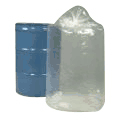
- Material Composition: LDPE, polyethylene, PTFE, conductive anti-static materials, and rigid plastic liner materials.
- Size/Capacity Range: Designed for paint cans, 5-gallon pails, 12-gallon to 55-gallon drums, and 30-gallon to 85-gallon containers.
- Compliance/Ratings: Anti-static conductive liners for static-sensitive materials; PTFE liners for high chemical-resistance applications.
- Closure Types: Compatible with open-head pails, open-head drums, straight-sided containers, tapered drums, and cover disc systems.
- Product Types: Bucket liners, seamless liners, round bottom liners, straight bottom liners, rigid liners, conductive liners, PTFE liners, trash liners, cover discs, and liner rubber bands.

Product Comparison Chart
Configuration Analysis
Flexible, Rigid, Seamless, and Bottom-Style Configurations Drum and pail liners are configured by shape, container size, and removal method. Seamless liners provide a uniform interior barrier with no stitched or seamed weak point inside the container. Round bottom liners conform more closely to the base of cylindrical drums and reduce material accumulation in bottom corners. Straight bottom liners are easier to insert and remove in many storage and waste applications. Rigid drum liners provide added structure and are used when flexible liners may collapse, wrinkle, or pull away from the container wall. Cover discs and liner rubber bands support liner retention, content coverage, and container handling.
Polyethylene, LDPE, PTFE, and Conductive Liner Materials Material selection determines chemical compatibility, flexibility, puncture resistance, and static-control performance. Polyethylene and LDPE liners are used for general storage, waste collection, water-based materials, powders, coatings, and many industrial liquids. PTFE liners provide higher chemical resistance and are used with aggressive materials that may attack standard poly liners. Conductive liners are used where static buildup must be controlled during filling, mixing, or discharge of powders and sensitive materials. Rigid liners are selected where shape retention and sidewall support are required. Thickness, liner fit, temperature exposure, and contact time should be reviewed before use with chemicals or heated materials.
Static Control, Food Handling, and Waste Processing Considerations Liner selection may be affected by static-control requirements, food-contact requirements, and waste classification. Conductive and anti-static liners are used where static discharge could create a handling hazard or affect sensitive materials. Food production environments may require liner materials suitable for contact with ingredients or compliant with internal sanitation programs. Waste handling applications may require liners compatible with the residue or discarded material. PTFE liners may be used where chemical resistance is needed for aggressive contents. Facilities should evaluate chemical safety data, grounding procedures, container compatibility, and disposal rules when liners are used with hazardous or regulated materials.
Use Across Chemical, Food, Coating, and Waste Operations Drum and pail liners are used in chemical processing, food manufacturing, pharmaceutical operations, paint and coatings work, adhesives production, maintenance, and waste handling. Chemical facilities use liners to protect drums from residue, corrosion, and contamination between batches. Food and ingredient processors use liners to support cleaner handling of powders, liquids, syrups, and bulk materials. Paint and coating operations use pail liners and paint can liners to reduce cleaning time after mixing or tinting. Waste operations use economical liners for collection and disposal. Conductive liners are used with static-sensitive materials, while PTFE liners are used for chemically demanding applications.
Technical Factors for Buyers Buyers should first match liner size to the container, including paint cans, 5-gallon pails, 12-gallon to 55-gallon drums, and larger 30-gallon to 85-gallon containers. The next factor is liner shape: seamless, round bottom, straight bottom, rigid, tapered, or disposable. Material compatibility should be checked against the liquid, powder, chemical, coating, adhesive, or waste being handled. PTFE should be considered for aggressive chemicals, while conductive liners should be considered where static control is required. Buyers should also review liner thickness, puncture risk, temperature exposure, fill weight, removal method, cover disc needs, and whether rubber bands are required to secure the liner during use.
| Product | Liner Type | Primary Function | Material / Feature | Application |
|---|---|---|---|---|
| Bucket & Pail Liners – 5 Gallon Pail Liners | Pail liner | Lines small pails for cleaner material handling | Flexible polyethylene liner options | Paints, coatings, food ingredients, chemicals, and general storage |
| Seamless Drum Liners – 12 to 55 Gallon Liners | Seamless drum liner | Provides uniform drum interior coverage | Seamless construction | Liquids, powders, bulk materials, and contamination-sensitive products |
| Round Bottom Drum Liners – 5 to 55 Gallon Liners | Round bottom liner | Conforms to drum shape for full bottom coverage | Flexible round-bottom design | Drums requiring close liner fit and reduced corner buildup |
| Ultraliner ™ Drum Liners – LDPE & Anti-Static Liners | LDPE or anti-static liner | Protects drum interiors and supports static-control applications | LDPE and anti-static options | Chemical handling, powders, and static-sensitive materials |
| Straight Bottom Drum Liners – 30 to 85 Gallon Liners | Straight bottom liner | Provides removable liner protection for larger drums | Straight-bottom design | Industrial storage, manufacturing, waste handling, and bulk material use |
| Rigid Drum Liners – Straight & Tapered Drum Liners | Rigid drum liner | Adds structural support inside drums | Straight or tapered rigid construction | Heavy materials, repeated use, and applications requiring liner shape retention |
| Conductive Drum Liners – Anti-Static Straight Bottom Liners | Conductive liner | Helps control static buildup during material handling | Conductive anti-static material | Static-sensitive powders, chemicals, and controlled handling environments |
| Heavy-Duty (PTFE) DrumRight™ Drum and Bucket Liners | PTFE liner | Provides high chemical resistance for demanding contents | PTFE construction | Aggressive chemicals, coatings, adhesives, and high-resistance applications |
| Gallon Paint Can Liners – Disposable Paint Liners | Paint can liner | Reduces cleanup in paint cans and small containers | Disposable liner format | Paint mixing, coatings, touch-up work, and small-batch finishing |
| Economical Trash Liners – Drum & Can Liners Bulk | Trash liner | Lines drums and cans for waste collection | Bulk economical liner options | Waste handling, housekeeping, shop use, and general collection |
| Drum Cover Discs – Round & Octagon Liner Covers | Cover disc | Covers drum contents or liner openings | Round and octagon disc formats | Product protection, splash reduction, and liner coverage |
| Liner Rubber Bands – Drum, Pail & Pallet Bands | Liner retaining band | Secures liners around container rims or pallets | Elastic rubber band construction | Liner retention, drum handling, pail handling, and pallet containment |
Flexible, Rigid, Seamless, and Bottom-Style Configurations Drum and pail liners are configured by shape, container size, and removal method. Seamless liners provide a uniform interior barrier with no stitched or seamed weak point inside the container. Round bottom liners conform more closely to the base of cylindrical drums and reduce material accumulation in bottom corners. Straight bottom liners are easier to insert and remove in many storage and waste applications. Rigid drum liners provide added structure and are used when flexible liners may collapse, wrinkle, or pull away from the container wall. Cover discs and liner rubber bands support liner retention, content coverage, and container handling.
Polyethylene, LDPE, PTFE, and Conductive Liner Materials Material selection determines chemical compatibility, flexibility, puncture resistance, and static-control performance. Polyethylene and LDPE liners are used for general storage, waste collection, water-based materials, powders, coatings, and many industrial liquids. PTFE liners provide higher chemical resistance and are used with aggressive materials that may attack standard poly liners. Conductive liners are used where static buildup must be controlled during filling, mixing, or discharge of powders and sensitive materials. Rigid liners are selected where shape retention and sidewall support are required. Thickness, liner fit, temperature exposure, and contact time should be reviewed before use with chemicals or heated materials.
Static Control, Food Handling, and Waste Processing Considerations Liner selection may be affected by static-control requirements, food-contact requirements, and waste classification. Conductive and anti-static liners are used where static discharge could create a handling hazard or affect sensitive materials. Food production environments may require liner materials suitable for contact with ingredients or compliant with internal sanitation programs. Waste handling applications may require liners compatible with the residue or discarded material. PTFE liners may be used where chemical resistance is needed for aggressive contents. Facilities should evaluate chemical safety data, grounding procedures, container compatibility, and disposal rules when liners are used with hazardous or regulated materials.
Use Across Chemical, Food, Coating, and Waste Operations Drum and pail liners are used in chemical processing, food manufacturing, pharmaceutical operations, paint and coatings work, adhesives production, maintenance, and waste handling. Chemical facilities use liners to protect drums from residue, corrosion, and contamination between batches. Food and ingredient processors use liners to support cleaner handling of powders, liquids, syrups, and bulk materials. Paint and coating operations use pail liners and paint can liners to reduce cleaning time after mixing or tinting. Waste operations use economical liners for collection and disposal. Conductive liners are used with static-sensitive materials, while PTFE liners are used for chemically demanding applications.
Technical Factors for Buyers Buyers should first match liner size to the container, including paint cans, 5-gallon pails, 12-gallon to 55-gallon drums, and larger 30-gallon to 85-gallon containers. The next factor is liner shape: seamless, round bottom, straight bottom, rigid, tapered, or disposable. Material compatibility should be checked against the liquid, powder, chemical, coating, adhesive, or waste being handled. PTFE should be considered for aggressive chemicals, while conductive liners should be considered where static control is required. Buyers should also review liner thickness, puncture risk, temperature exposure, fill weight, removal method, cover disc needs, and whether rubber bands are required to secure the liner during use.

