


Liner Rubber Bands | Drum, Pail & Pallet Bands
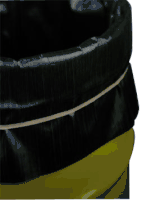
- Material Composition: Heavy-duty elastic rubber band material for industrial liner retention.
- Size/Capacity Range: Available in 28 in., 34 in., 56 in., 72 in., 84 in., 92 in., and 112 in. band sizes.
- Compliance/Ratings: Designed for repeated industrial use in liner, drum, pail, and pallet cover securing applications.
- Closure Types: Stretch-fit retaining bands for pail liners, drum liners, and pallet liners.
- Product Types: Pail liner rubber bands, drum liner rubber bands, and pallet liner rubber bands.

Product Comparison Chart
Configuration Analysis
Pail, Drum, and Pallet Band Configurations Liner rubber bands are configured by stretched diameter, width, and container type. Pail liner bands are sized for smaller bucket and pail rims where liners must be held in place during filling, mixing, or disposal. Drum liner bands are larger and fit around the rim of industrial drums to keep flexible liners from slipping into the container. Pallet liner bands are wider and longer, allowing them to secure pallet covers, pallet liners, or grouped materials around larger load profiles. The stretch-fit design allows quick placement and removal without adhesives, clips, or mechanical fasteners.
Elastic Rubber Construction and Retention Performance The main engineering requirement for liner rubber bands is controlled elasticity. The band must stretch over the container or pallet load while maintaining enough recovery force to hold the liner in place. Narrow 1/2 in. bands are used for pails and drums where rim retention is the main function. Wider 3/4 in. bands are used for pallet covers and larger loads where more surface contact is needed. Band performance depends on rubber formulation, stretch range, storage conditions, temperature exposure, edge contact, and repeated use. Overstretching, sharp container edges, chemical exposure, and UV exposure can reduce service life.
Handling, Sanitation, and Facility Use Requirements Liner rubber bands are accessory retention components rather than primary containment devices. They should be selected as part of a broader handling process for liners, drums, pails, and pallet covers. In food processing or chemical handling areas, facilities should review whether the band may contact product zones, residue, or regulated materials. If used near chemicals, solvents, oils, or cleaning agents, material exposure should be evaluated because some liquids may degrade rubber. OSHA housekeeping and material handling practices may apply where loose liners or unsecured pallet covers create slip, snag, or contamination risks during production and transport.
Use Across Manufacturing, Warehousing, Food, and Chemical Operations Liner rubber bands are used in manufacturing, warehousing, food processing, chemical handling, painting, coatings, waste management, and palletized storage. Manufacturing operations use pail and drum bands to keep liners positioned during filling and batching. Food processors may use liner bands to secure pail liners, drum liners, or pallet covers in clean handling areas. Chemical facilities use bands to reduce liner movement during transfer, storage, and disposal workflows. Warehouses use pallet liner bands to secure covers over palletized products, ingredients, packaging materials, or drums. Waste operations use bands to keep liners open and positioned during collection.
Technical Factors for Buyers Buyers should select liner rubber bands based on container size, liner type, band width, and required stretch. The 28 in. x 1/2 in. band is used for pail liners, while the 34 in. x 1/2 in. band is used for drum liners. Pallet liner bands are available in 56 in., 72 in., 84 in., 92 in., and 112 in. lengths with 3/4 in. widths for larger coverage. Buyers should also review liner thickness, rim size, pallet dimensions, load shape, handling frequency, temperature exposure, and chemical contact. Pack quantity should be matched to production volume and replacement frequency.
| Product | Band Size | Band Width | Pack Quantity | Application |
|---|---|---|---|---|
| Pail Liner Rubber Bands 28 x 1/2, 650 Pack | 28 in. | 1/2 in. | 650 pack | Securing pail liners around bucket and pail rims during filling and handling |
| Drum Liner Rubber Bands 34 x 1/2, 450 Pack | 34 in. | 1/2 in. | 450 pack | Holding drum liners in place around industrial drum openings |
| Pallet Liner Rubber Bands 56 x 3/4, 200 Pack | 56 in. | 3/4 in. | 200 pack | Securing smaller pallet covers, pallet liners, or grouped materials |
| Pallet Liner Rubber Bands, 72 x 3/4, 200 Pack | 72 in. | 3/4 in. | 200 pack | Retaining pallet liners or covers on medium pallet loads |
| Pallet Liner Rubber Bands 84" x 3/4", 200 Pack | 84 in. | 3/4 in. | 200 pack | Securing larger pallet covers, shrink alternatives, or bulk liner systems |
| Pallet Liner Rubber Bands 92 x 3/4, 200 Pack | 92 in. | 3/4 in. | 200 pack | Retaining pallet liners on larger loads during storage and warehouse handling |
| Pallet Liner Rubber Bands 112 x 3/4, 150 Pack | 112 in. | 3/4 in. | 150 pack | Securing large pallet covers, oversized liners, and wide palletized loads |
Pail, Drum, and Pallet Band Configurations Liner rubber bands are configured by stretched diameter, width, and container type. Pail liner bands are sized for smaller bucket and pail rims where liners must be held in place during filling, mixing, or disposal. Drum liner bands are larger and fit around the rim of industrial drums to keep flexible liners from slipping into the container. Pallet liner bands are wider and longer, allowing them to secure pallet covers, pallet liners, or grouped materials around larger load profiles. The stretch-fit design allows quick placement and removal without adhesives, clips, or mechanical fasteners.
Elastic Rubber Construction and Retention Performance The main engineering requirement for liner rubber bands is controlled elasticity. The band must stretch over the container or pallet load while maintaining enough recovery force to hold the liner in place. Narrow 1/2 in. bands are used for pails and drums where rim retention is the main function. Wider 3/4 in. bands are used for pallet covers and larger loads where more surface contact is needed. Band performance depends on rubber formulation, stretch range, storage conditions, temperature exposure, edge contact, and repeated use. Overstretching, sharp container edges, chemical exposure, and UV exposure can reduce service life.
Handling, Sanitation, and Facility Use Requirements Liner rubber bands are accessory retention components rather than primary containment devices. They should be selected as part of a broader handling process for liners, drums, pails, and pallet covers. In food processing or chemical handling areas, facilities should review whether the band may contact product zones, residue, or regulated materials. If used near chemicals, solvents, oils, or cleaning agents, material exposure should be evaluated because some liquids may degrade rubber. OSHA housekeeping and material handling practices may apply where loose liners or unsecured pallet covers create slip, snag, or contamination risks during production and transport.
Use Across Manufacturing, Warehousing, Food, and Chemical Operations Liner rubber bands are used in manufacturing, warehousing, food processing, chemical handling, painting, coatings, waste management, and palletized storage. Manufacturing operations use pail and drum bands to keep liners positioned during filling and batching. Food processors may use liner bands to secure pail liners, drum liners, or pallet covers in clean handling areas. Chemical facilities use bands to reduce liner movement during transfer, storage, and disposal workflows. Warehouses use pallet liner bands to secure covers over palletized products, ingredients, packaging materials, or drums. Waste operations use bands to keep liners open and positioned during collection.
Technical Factors for Buyers Buyers should select liner rubber bands based on container size, liner type, band width, and required stretch. The 28 in. x 1/2 in. band is used for pail liners, while the 34 in. x 1/2 in. band is used for drum liners. Pallet liner bands are available in 56 in., 72 in., 84 in., 92 in., and 112 in. lengths with 3/4 in. widths for larger coverage. Buyers should also review liner thickness, rim size, pallet dimensions, load shape, handling frequency, temperature exposure, and chemical contact. Pack quantity should be matched to production volume and replacement frequency.

