


Silicone Rubber Heat Tape | Industrial Heating Solutions
Free Shipping

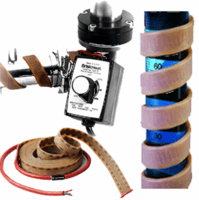
- Material Composition: Moisture and chemical-resistant silicone rubber; high-temperature fiberglass or Samox options.
- Size/Capacity Range: Lengths ranging from 2 feet to 200 feet; widths from 0.5 inches to 2 inches.
- Compliance/Ratings: IP66 rated for moisture; maximum exposure temperatures up to 1400°F (760°C).
- Control Types: Preset thermostats, adjustable dial controllers (HSTAT/MSTAT/BSAT), and percentage timers.

| Product Model | Key Features | Control Mechanism |
|---|---|---|
| Silicone Heating Tape (RKP) | Moisture and chemical resistant | Preset Thermostat |
| Silicone Rubber Heating Tape (HSTAT) | High-temperature capacity | High-Temp Adjustable Control |
| Silicone Rubber Heating Tape (MSTAT) | Process temperature maintenance | Mid-Temp Adjustable Control |
| Silicone Rubber Heating Tape (BSAT) | Variable power output | Time Percentage Dial Control |
| Long-Length Heating Tapes (RKF) | Extended run lengths | External controller required |
| Standard Heating Tapes (BS0) | Extreme flexibility | Non-controlled |
| Grounded Heating Tapes (BS0-G) | Enhanced electrical safety | Non-controlled |
| Emergency De-Icer (HSTAT-R) | Freeze protection optimized | Adjustable Thermostat |
Integrated Control vs. External Regulation Silicone rubber heating tapes are categorized by their thermal regulation interface. Integrated control models, such as the HSTAT and MSTAT series, feature built-in mechanical thermostats that allow for localized temperature adjustments without external wiring. For applications requiring precise duty-cycle management, percentage dial controls (BSAT) regulate the average power delivered by cycling the current. Conversely, non-controlled models like the BS0 and BS0-G series are designed for integration into larger thermal systems where a centralized PID controller or multi-zone panel manages power distribution.
Polymer and Dielectric Insulation The primary insulating material is silicone rubber, chosen for its flexibility and resistance to moisture and industrial chemicals. This material remains pliable at low temperatures, facilitating installation on irregular geometries such as valves and small-diameter piping. For extreme thermal demands, Samox or fiberglass-insulated tapes are utilized to withstand exposure temperatures up to 1400°F (760°C). The internal heating elements consist of multi-strand resistance wires, often configured in a serpentine pattern to maximize surface area contact and ensure rapid heat transfer.
Ingress Protection and Safety Compliance Industrial heating tapes must adhere to specific electrical and safety standards to ensure safe operation in volatile environments. Many silicone-extruded tapes carry an IP66 rating, indicating protection against high-pressure water jets and dust ingress. Grounded configurations (BS0-G) include an internal metal braid or foil layer that provides a path to ground, a requirement for metal piping and safety compliance in various industrial sectors. These tapes are engineered to meet NEC Article 427 standards for fixed electric heating equipment.
Cross-Sector Utility Silicone heat tapes serve critical functions across several industries. In the chemical and oil sectors, they maintain the viscosity of fluids in transfer lines to prevent clogging. In the food and beverage industry, they are used for heating stainless steel tanks and maintaining consistent temperatures for syrups or fats. The agricultural sector utilizes emergency de-icing models (HSTAT-R) to prevent water lines from freezing during sub-zero temperatures. Additionally, laboratory settings employ these tapes for vacuum bake-out processes and heating glassware where precise, rapid temperature elevation is necessary.
Technical Factors for Implementation Proper selection of a heating tape requires analysis of the target temperature, surface material, and environmental exposure. The "watt density" (watts per square inch) must be matched to the thermal conductivity of the pipe or vessel to avoid localized overheating. Buyers must differentiate between maximum exposure temperature (the limit the tape can withstand when powered off) and maximum operating temperature. Chemical compatibility is also a factor; while silicone is resistant to many acids and bases, it may degrade in the presence of certain hydrocarbons or concentrated oils, necessitating the use of specialized fluoropolymer or metal-sheathed alternatives.

