


Cloth Heat Tapes | High Temperature Heating Tape
Free Shipping
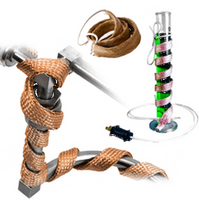
- Materials: Woven Cloth Insulation, Flexible Heating Elements, Heavy Insulated Jackets
- Temperature Range: Standard Temperature to 1400°F (760°C)
- Configurations: Standard Insulated, Heavy Insulated, Grounded, Dual Element
- Applications: Pipe Heating, Surface Heating, Freeze Protection, Process Temperature Control
- Controls: Optional SDC Temperature Controller Bundles Available

| Product Type | Temperature Capability | Insulation Type | Grounded | Controller Bundle | Typical Applications |
|---|---|---|---|---|---|
| Heavy Insulated Heating Tapes (BIH) | High Temperature | Heavy Insulated | No | Optional | Pipe Heating, Freeze Protection |
| High Temperature Heavy Insulated Heating Tapes (BWH) | Up to 1400˘XF | Heavy Insulated | No | No | Industrial Process Heating |
| Grounded Heavy Insulated Heating Tapes (BIH-G) | High Temperature | Heavy Insulated | Yes | No | Industrial Safety Applications |
| High Temperature Standard Insulated Heating Tapes (BW0) | Up to 1400˘XF | Standard Insulated | No | No | Surface Heating Systems |
| Standard Insulated Heating Tapes (B00) | Standard Temperature | Standard Insulated | No | No | General Purpose Heating |
| Dual Element Heating Tapes (BWH-D) | High Temperature | Heavy Insulated | No | Optional | Redundant Heating Systems |
| Dual Element Heating Tapes (BWH-D) With SDC Temperature Controller Bundle | High Temperature | Heavy Insulated | No | Included | Controlled Process Heating |
| Heavy Insulated Heating Tapes (BIH) With SDC Temperature Controller Bundle | High Temperature | Heavy Insulated | No | Included | Temperature-Regulated Pipe Heating |
Cloth Heat Tape Configurations
Cloth heat tapes are manufactured in several configurations to match different industrial heating requirements. Standard insulated heating tapes are designed for general-purpose temperature maintenance and surface warming applications. Heavy insulated models incorporate thicker thermal insulation layers to reduce heat loss and improve efficiency in colder environments or higher operating temperatures.
Grounded heat tapes include integrated grounding protection for applications where electrical safety compliance is required. Dual-element heating tapes contain two separate heating circuits within the same assembly, allowing staged heating, redundant operation, or independent temperature control. Temperature controller bundles combine heating tapes with digital control systems to regulate process temperatures and reduce overheating risks.
Material Construction and Thermal Engineering
Industrial cloth heat tapes use flexible woven insulation materials capable of maintaining structural integrity under repeated heating cycles. The internal heating elements are engineered for consistent watt density distribution to minimize hot spots and uneven surface temperatures. Heavy insulated models provide additional thermal retention, helping maintain process temperatures while reducing energy loss.
High-temperature cloth heating tapes are designed for direct-contact applications involving elevated thermal exposure. Insulation systems are selected based on operating temperature requirements, chemical exposure, flexibility demands, and environmental conditions. Flexible tape construction allows installation around curved surfaces, irregular piping systems, laboratory vessels, and industrial components.
Temperature Control and Heating Performance
Heating tapes are used to maintain process temperatures, reduce viscosity, prevent freezing, and support thermal transfer operations. High-temperature models can achieve operating temperatures up to 1400˘XF (760˘XC), while standard temperature versions are commonly used for freeze protection and low-temperature process heating.
Dual-element heating tapes allow operators to adjust heating intensity by activating one or both internal circuits. SDC temperature controller bundles provide programmable temperature regulation and process monitoring for applications requiring tighter thermal control. Watt density selection depends on surface material, insulation coverage, ambient temperature, and required heat-up rates.
Industrial and Commercial Applications
Cloth heat tapes are used in manufacturing, chemical processing, laboratories, food processing, power generation, water treatment, and maintenance operations. Common applications include pipe tracing, valve heating, drum warming, tank heating, laboratory glassware heating, and viscosity reduction for industrial materials.
High-temperature heating tapes are frequently installed on metal pipes, manifolds, pumps, and industrial vessels requiring elevated thermal exposure. Standard insulated models are commonly used for freeze protection and low-temperature maintenance on water lines, condensate systems, and process piping. Flexible construction allows use on irregular surfaces where rigid heating systems are impractical.
Selection Factors for Heating Tape Systems
Heating tape selection depends on operating temperature, environmental exposure, voltage requirements, watt density, insulation thickness, and installation surface material. Heavy insulated models are generally selected for outdoor installations or applications requiring reduced heat loss. Grounded configurations may be required for industrial electrical safety compliance.
Dual-element systems are commonly selected where process redundancy or adjustable heating output is necessary. Temperature controller compatibility should also be evaluated when process temperatures must remain within specific operating limits. Surface preparation, insulation coverage, and power supply specifications directly affect heating efficiency and long-term system performance.

