


Poly-Rack Shelving Racks & Drum Storage Systems
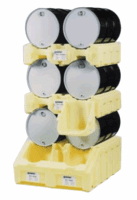
- Materials: Polyethylene Spill Containment Components and Modular Rack Systems
- Configurations: Base Units, Stacker Units, Dispensing Shelves, and Well Liners
- Applications: Drum Storage, Dispensing Operations, Spill Containment, and Floor Space Management
- Compliance: Secondary Containment Designs for Industrial Spill Control Applications
- Design Features: Stackable Rack Systems with Integrated Spill Collection Wells

$349.98
$449.98
(You Save 22%)Product Comparison Chart
Configuration Analysis Poly-Rack™ shelving systems are designed around modular containment and storage configurations that support vertical expansion and liquid handling operations. Base units function as the primary containment platform and support stacked storage assemblies. Stacker units are positioned above the base unit to increase storage density while maintaining spill capture capability within the rack structure. Dispensing shelves provide elevated support surfaces for controlled liquid transfer operations, allowing containers to be positioned above dispensing points. Universal well liners are integrated into containment areas to simplify maintenance and liquid cleanup. The modular design permits facilities to configure rack systems based on drum quantities, dispensing requirements, and available floor space.
Material Engineering and Polyethylene Construction The rack systems utilize molded polyethylene construction for chemical resistance and structural durability in industrial environments. Polyethylene materials resist corrosion from water-based chemicals, oils, cleaning compounds, and many industrial liquids. Unlike painted steel shelving, polyethylene surfaces do not rust or require protective coatings in humid or corrosive environments. The molded containment wells are engineered to retain leaked liquids and prevent floor contamination during storage or dispensing operations. Structural reinforcement within the rack assemblies distributes drum and container loads across the shelving system while maintaining stability during stacking applications. Polyethylene also provides impact resistance in forklift and warehouse traffic areas.
Secondary Containment and Spill Management Integrated spill containment is a primary engineering feature of Poly-Rack™ systems. Containment wells positioned beneath storage levels collect drips, leaks, and dispensing spills before liquids reach facility floors. This secondary containment approach supports compliance with spill prevention procedures used in chemical handling and industrial maintenance operations. Universal well liners can be removed for cleaning or liquid recovery, reducing maintenance time and preventing residue buildup inside containment reservoirs. Spill containment capacity requirements vary depending on stored container volume, chemical classification, and facility regulations. Rack systems are commonly used with smaller drums, pails, and dispensing containers where localized spill control is required.
Industrial Applications and Storage Operations Poly-Rack™ shelving systems are utilized across manufacturing, maintenance, agricultural, automotive, and chemical processing facilities. Maintenance departments use rack systems to organize lubricants, hydraulic fluids, and cleaning compounds in centralized dispensing areas. Chemical processing operations utilize modular racks for segregated chemical storage and transfer applications. Automotive service facilities implement dispensing shelves for oils and automotive fluid handling. Agricultural operations use polyethylene rack systems for fertilizer additives, pesticides, and liquid treatment products. Warehousing operations benefit from the vertical storage design when floor space limitations require compact containment solutions for hazardous or regulated liquids.
Selection Criteria and System Planning Selecting a Poly-Rack™ shelving configuration requires evaluation of container sizes, liquid compatibility, storage volume, and operational workflow. Facilities should determine whether storage applications involve static containment or active dispensing operations. Stacker units increase storage density but require evaluation of load distribution and access requirements. Dispensing shelves should be selected based on container dimensions and transfer equipment compatibility. Chemical compatibility with polyethylene materials must be reviewed for aggressive solvents or oxidizers. Buyers should also evaluate containment capacity requirements, cleaning access, and rack placement relative to forklifts, aisles, and emergency spill response procedures.
| Product | Dimensions | Configuration Type | Primary Application | Material |
|---|---|---|---|---|
| Poly-Rack Stacker Unit | 49" x 40.75" x 12.75" | Stackable Expansion Unit | Vertical Drum and Container Storage | Polyethylene |
| Poly-Rack Dispensing Shelf | 17" x 22" x 17.5" | Dispensing Shelf | Liquid Transfer and Dispensing | Polyethylene |
| Poly-Rack Universal Well Liner | Universal Fit | Containment Accessory | Spill Collection and Cleanup | Polyethylene |
| Poly-Rack Saves Floor Space Base Unit | Base Platform Configuration | Primary Containment Base | Rack Foundation and Spill Control | Polyethylene |
Configuration Analysis Poly-Rack™ shelving systems are designed around modular containment and storage configurations that support vertical expansion and liquid handling operations. Base units function as the primary containment platform and support stacked storage assemblies. Stacker units are positioned above the base unit to increase storage density while maintaining spill capture capability within the rack structure. Dispensing shelves provide elevated support surfaces for controlled liquid transfer operations, allowing containers to be positioned above dispensing points. Universal well liners are integrated into containment areas to simplify maintenance and liquid cleanup. The modular design permits facilities to configure rack systems based on drum quantities, dispensing requirements, and available floor space.
Material Engineering and Polyethylene Construction The rack systems utilize molded polyethylene construction for chemical resistance and structural durability in industrial environments. Polyethylene materials resist corrosion from water-based chemicals, oils, cleaning compounds, and many industrial liquids. Unlike painted steel shelving, polyethylene surfaces do not rust or require protective coatings in humid or corrosive environments. The molded containment wells are engineered to retain leaked liquids and prevent floor contamination during storage or dispensing operations. Structural reinforcement within the rack assemblies distributes drum and container loads across the shelving system while maintaining stability during stacking applications. Polyethylene also provides impact resistance in forklift and warehouse traffic areas.
Secondary Containment and Spill Management Integrated spill containment is a primary engineering feature of Poly-Rack™ systems. Containment wells positioned beneath storage levels collect drips, leaks, and dispensing spills before liquids reach facility floors. This secondary containment approach supports compliance with spill prevention procedures used in chemical handling and industrial maintenance operations. Universal well liners can be removed for cleaning or liquid recovery, reducing maintenance time and preventing residue buildup inside containment reservoirs. Spill containment capacity requirements vary depending on stored container volume, chemical classification, and facility regulations. Rack systems are commonly used with smaller drums, pails, and dispensing containers where localized spill control is required.
Industrial Applications and Storage Operations Poly-Rack™ shelving systems are utilized across manufacturing, maintenance, agricultural, automotive, and chemical processing facilities. Maintenance departments use rack systems to organize lubricants, hydraulic fluids, and cleaning compounds in centralized dispensing areas. Chemical processing operations utilize modular racks for segregated chemical storage and transfer applications. Automotive service facilities implement dispensing shelves for oils and automotive fluid handling. Agricultural operations use polyethylene rack systems for fertilizer additives, pesticides, and liquid treatment products. Warehousing operations benefit from the vertical storage design when floor space limitations require compact containment solutions for hazardous or regulated liquids.
Selection Criteria and System Planning Selecting a Poly-Rack™ shelving configuration requires evaluation of container sizes, liquid compatibility, storage volume, and operational workflow. Facilities should determine whether storage applications involve static containment or active dispensing operations. Stacker units increase storage density but require evaluation of load distribution and access requirements. Dispensing shelves should be selected based on container dimensions and transfer equipment compatibility. Chemical compatibility with polyethylene materials must be reviewed for aggressive solvents or oxidizers. Buyers should also evaluate containment capacity requirements, cleaning access, and rack placement relative to forklifts, aisles, and emergency spill response procedures.

