


Railcar Spill Containment Track Pans
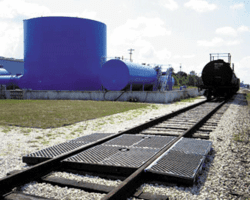
- Materials: Molded containment pans with removable grates; cover options available.
- Configuration Range: Railcar track pan systems with grates or grates and covers.
- Application: Spill containment for rail siding, loading areas, and transfer stations.
- Containment Type: Between-rail and side-rail collection for drips, leaks, and transfer spills.
- Closure/Access: Open grate access or covered containment for debris control.

Product Comparison Chart
| Product | Configuration | Primary Use | Access Type | Cover Included |
|---|---|---|---|---|
| Ultra TrackPans for Railcar Spill Containment With Grates | Track pan system with removable grates | Railcar drip, leak, and transfer spill containment | Grated walking and drainage surface | No |
| Ultra-TrackPans for Railcar Spill Containment With Grates and Covers | Track pan system with grates and protective covers | Outdoor railcar containment with debris and rainwater control | Grated access with covered protection | Yes |
Railcar Spill Containment Configuration
Railcar spill containment track pans are installed in areas where railcars are loaded, unloaded, staged, or serviced. The containment system is positioned around the track structure to collect liquids that may drip from valves, fittings, hoses, pumps, and railcar undercarriages. The Ultra TrackPans listed in this section include models with removable grates and models with both grates and covers. Grates allow personnel to walk over the containment surface while spilled liquids pass through into the pan below. Covered systems add a protective layer that helps limit debris entry when the containment area is not in active use.
Grated Track Pan Design
Ultra TrackPans with grates are used where railcar access, inspection, and transfer activity occur regularly. The grate surface provides a working platform over the containment cavity, allowing operators to reach hose connections, valves, and loading equipment without standing directly in pooled liquids. The open grate structure permits liquid to drain into the containment pan while keeping larger objects above the collection area. This configuration is suited for chemical plants, petroleum handling areas, wastewater treatment facilities, and rail maintenance locations where frequent access is required.
Covered Track Pan Design
Ultra-TrackPans with grates and covers provide containment with added protection against rainwater, dirt, leaves, and other debris. Covers are used when the containment system may remain exposed between loading cycles or when reducing non-product liquid accumulation is a concern. By limiting debris and stormwater entry, covers can reduce cleanout frequency and help maintain containment capacity for actual spills or leaks. This configuration is commonly used in outdoor rail sidings, bulk transfer zones, and storage yards where environmental exposure is a factor.
Material and Structural Considerations
Railcar containment pans must withstand outdoor exposure, equipment traffic near the rail line, chemical contact, and repeated loading activity. Molded containment pans are generally selected for corrosion resistance and compatibility with a range of industrial liquids. Grates must support pedestrian access and allow spilled liquids to drain into the collection area. Buyers should verify chemical compatibility based on the liquids handled at the rail site, including oils, coolants, acids, alkalis, solvents, fuels, or process chemicals. Site conditions such as UV exposure, temperature range, drainage layout, and track spacing should also be reviewed before installation.
Regulatory and Site Compliance Factors
Railcar spill containment systems are commonly used as part of facility spill prevention, stormwater control, and hazardous material handling programs. These systems may support compliance efforts related to EPA spill prevention requirements, OSHA workplace safety practices, and facility-specific environmental control plans. For hazardous material transfer areas, containment sizing, inspection procedures, cleanup protocols, and waste handling practices should be defined by the facility safety plan. Track pan systems do not replace site engineering review; they function as a containment component within a broader spill control system.
Industrial Applications
Ultra-TrackPans are used in chemical processing plants, oil and lubricant terminals, food and ingredient transfer areas, railcar maintenance yards, waste handling facilities, and manufacturing plants with rail delivery operations. In chemical service, the pans collect leaks from hose couplings and valves. In petroleum and lubricant service, they capture drips during transfer and disconnection. In maintenance areas, they help contain fluids released during inspection or service work. In outdoor storage yards, covered systems help protect containment areas from dirt and precipitation when railcars are not being actively serviced.
Selection Criteria
Selection should be based on rail spacing, track location, liquid type, exposure level, maintenance access, and whether covers are needed. Facilities with frequent loading activity may prioritize grated systems for constant access. Outdoor locations with long idle periods may require covers to reduce debris and rainwater collection. Chemical compatibility should be checked before use with aggressive liquids. Buyers should also review installation space, drainage plans, cleanout access, and whether the system must integrate with existing spill response equipment such as absorbents, sump pumps, or secondary containment tanks.

