


Ultra Spill Berms & Portable Spill Containment Berms
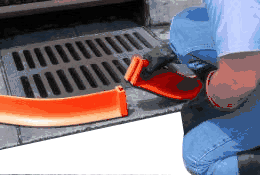
- Material: Copolymer-2000™ reinforced polyethylene with foam sidewall supports
- Containment Sizes: Portable berms ranging from compact utility sizes to large equipment containment systems
- Compliance: EPA 40 CFR 264.175 and SPCC spill containment compliance applications
- Wall Design: Drive-in foam wall sidewalls with collapsible entry and exit points
- Applications: Spill control for drums, tanks, vehicles, frac tanks, generators, and chemical storage

Comparison Chart
| Product | Dimensions | Material | Wall Type | Primary Application |
|---|---|---|---|---|
| Ultra Spillberm Plus 5' x 4" x 4 1/4" | 5' x 4" x 4.25" | Reinforced Polyethylene | Foam Sidewall | Small Equipment and Drum Containment |
| Portable Spill Berm Systems | Multiple Sizes Available | Copolymer-2000™ Fabric | Drive-Over Foam Walls | Vehicle and Equipment Containment |
| Fuel Transfer Spill Berms | Custom Configurations | Chemical Resistant Polyethylene | Flexible Sidewalls | Fueling and Fluid Transfer Operations |
| Frac Tank Spill Berms | Large Capacity Systems | Reinforced Geomembrane | Foam or Aluminum Walls | Oilfield and Tank Containment |
Portable Spill Containment Design
Ultra SpillBerm Plus systems utilize a flexible sidewall configuration designed for rapid deployment and equipment access. The foam-filled sidewalls compress under vehicle weight, allowing forklifts, trucks, generators, and mobile equipment to enter containment areas without requiring separate ramps or wall assemblies. Once pressure is removed, the walls automatically rebound into their containment position. This configuration minimizes setup complexity while maintaining liquid retention capabilities during active industrial operations.
Material Engineering and Construction
The berm material consists of Copolymer-2000™ reinforced polyethylene engineered for puncture resistance, abrasion resistance, and chemical compatibility. The fabric-reinforced construction improves tensile strength during repeated folding, transport, and field deployment. Heat-welded seams create continuous liquid barriers to reduce leakage risks at connection points. Depending on the chemical environment, optional geomembrane materials may be selected for compatibility with petroleum products, solvents, acids, and wastewater containment applications.
Containment Capacity and Wall Configurations
Containment berms are available in multiple dimensions and sidewall heights to support varying liquid capacities and equipment footprints. Low-profile wall designs simplify vehicle entry for mobile containment applications, while taller wall configurations increase total containment volume for larger storage systems. Portable spill berm sizing is commonly determined by the total liquid volume of tanks, drums, or equipment operating within the containment area. Regulatory spill capacity calculations typically require secondary containment systems capable of retaining the largest container volume plus precipitation allowance.
Environmental and Regulatory Compliance
Portable spill berm systems are utilized to support compliance with EPA SPCC regulations, OSHA workplace spill control standards, and environmental containment requirements for fuel and chemical storage operations. Secondary containment systems assist in preventing hazardous liquids from entering soil, storm drains, and waterways during equipment servicing or liquid transfer operations. Industries using petroleum products, hydraulic fluids, and hazardous chemicals frequently implement portable berm systems as part of spill prevention and emergency response planning.
Industrial and Field Applications
Ultra SpillBerm Plus systems are used across construction, oil and gas, utility maintenance, transportation, military, aviation, and environmental remediation sectors. Common applications include frac tank containment, fuel transfer operations, decontamination zones, generator containment, vehicle washdown stations, drum storage, and temporary hazardous material staging. Portable containment systems are particularly useful in remote field operations where permanent concrete containment structures are unavailable or impractical.
Selection Criteria for Spill Berm Systems
Selection factors include chemical compatibility, required containment capacity, wall height, deployment frequency, surface conditions, and anticipated equipment traffic. Facilities handling aggressive chemicals may require specialized geomembrane liners or enhanced chemical-resistant materials. Portable applications may prioritize lighter-weight berm systems with rapid deployment capability, while stationary industrial applications may focus on maximum containment volume and long-term durability. Environmental exposure factors such as UV radiation, temperature extremes, and surface abrasion should also be evaluated when selecting containment materials.

