


Metal Utility Cans & Screw-Top Tin Containers | 4oz to 1 Gallon
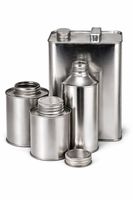
- Material Composition: Tin-Coated Cold-Rolled Steel.
- Size/Capacity Range: 4 oz, 8 oz, 1 Pint (16 oz), 1 Quart (32 oz), and 1 Gallon.
- Compliance/Ratings: General Industrial Grade; solvent and chemical resistant construction.
- Closure Types: Screw-Top Lids (Flat Utility, Cone-Top, and F-Style Alpha/Beta Necks).


$19.98
$24.99
(You Save 20%)$19.96
$29.96
(You Save 33%)$19.96
$29.96
(You Save 33%)$69.98
$89.00
(You Save 21%)$59.98
$70.56
(You Save 15%)$159.98
$188.21
(You Save 15%)$139.98
$159.99
(You Save 13%)$69.95
$99.95
(You Save 30%)$59.95
$79.95
(You Save 25%)| Product Description | Capacity | Shape/Type | Quantity |
|---|---|---|---|
| Round Steel Tin Coated Metal Cans & Flat Utility Screw-Top | 1 Quart (32oz) | Round Utility | 10 Pack |
| Round Steel Tin Coated Metal Cans & Flat Utility Screw-Top | 1 Pint (16oz) | Round Utility | 10 Pack |
| Round Steel Tin Cans Screw Top | 8oz | Round Utility | 10 Pack |
| Round Steel Tin Coated Metal Cans & Flat Utility Screw-Top (1 3/4" Cap) | 1/4 Pint (4oz) | Round Utility | 10 Pack |
| Round Steel Tin Coated Metal Cans & Flat Utility Screw-Top (1 1/4" Cap) | 1/4 Pint (4oz) | Round Utility | 10 Pack |
| Round Cone-Top Screw-Top Metal Cans | 1 Quart | Cone-Top | 10 Case Pack |
| Round Cone-Top Screw-Top Metal Cans | 1 Pint | Cone-Top | 10 Pack |
| F-style Oblong Screw-Top Metal Can (1 3/4" Neck) | 1 Gallon | F-Style Oblong | 10 Pack |
| F-style Oblong Screw-Top Metal Can (1 1/4" Alpha Neck) | 1 Gallon | F-Style Oblong | 10 Pack |
| F-style Oblong Screw-Top Metal Cans | 1 Quart | F-Style Oblong | 10 Pack |
| F-style Oblong Screw-Top Metal Cans | 1 Pint | F-Style Oblong | 10 Pack |
Technical Container Profiles The structural configuration of metal utility containers is dictated by the intended application and space requirements. Round utility cans feature a low-profile, flat-top design, maximizing vertical shelf space in workshops. Cone-top cans are engineered with a sloped shoulder leading to the orifice, which facilitates a controlled, continuous pour and reduces "glugging" by allowing air displacement. F-style oblong containers are rectangular in footprint, optimized for high-density storage and palletization. These oblong cans often feature integrated handles on the top surface to assist in the controlled pouring of larger volumes, such as the 1-gallon variants.
Tin-Coated Steel Properties These containers are manufactured from thin-gauge steel sheets coated with a microscopic layer of tin via an electrolytic process. This tin layer acts as a sacrificial anode to prevent the oxidation of the underlying steel substrate. The construction utilizes a one-piece top design in many models, which eliminates the traditional soldered neck joint. This engineering choice removes a common failure point, reducing the risk of stress fractures and leakage at the neck-to-body interface. The material is non-reactive with a wide spectrum of hydrocarbons, making it a standard choice for volatile organic compounds (VOCs).
Industrial Compliance and Shipping While these containers are designed for general industrial use, their construction must adhere to specific manufacturing tolerances to ensure compatibility with Department of Transportation (DOT) shipping regulations for non-hazardous or limited-quantity hazardous materials. The screw-top closures provide a mechanical seal that meets standard vapor-pressure retention requirements for the storage of flammable liquids within OSHA-compliant safety cabinets. Users must verify the specific UN Rating requirements for their contents, as these containers are primarily categorized as general-purpose utility vessels rather than heavy-duty UN-certified shipping drums.
Cross-Sector Utility In automotive and aerospace maintenance, these cans are used for the containment of lubricants, brake fluids, and degreasers. The chemical industry utilizes the smaller 4 oz and 8 oz sizes for laboratory sampling and the distribution of specialized reagents. In the commercial coatings and adhesives sector, the 1-quart and 1-gallon F-style cans serve as primary packaging for wood stains, thinners, and industrial-grade glues. The absence of an internal brush in these specific models allows for bulk pouring into secondary application equipment or the use of custom dip-tools without contamination.
Technical Factors for Procurement Selecting the appropriate metal container requires an evaluation of neck size and closure compatibility. Orifice diameters, such as 1 1/4" Alpha or 1 3/4" Beta necks, must match existing dispensing pumps or funnels. Buyers must also consider the internal environment; while tin-coated steel is resistant to many chemicals, aqueous-based solutions may require an internal phenolic lining to prevent long-term corrosion. Capacity selection should be based on the consumption rate of the contents; smaller 4 oz vessels reduce the headspace air-to-liquid ratio, thereby minimizing the oxidative skinning of paints and resins during intermittent use.

