


Screw Caps and Brush-Top Caps | Industrial Can Closures
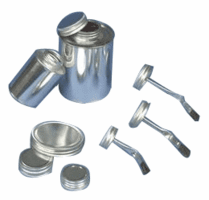
- Material Composition: Plain Tin-Plated Steel, Aluminum Foil Liners, Synthetic Solv Seal® Liners.
- Size/Capacity Range: 1" to 1 3/4" Neck Diameters; Brush caps sized for 8oz to 16oz cans.
- Compliance/Ratings: Chemical-resistant lining options for solvent and industrial chemical storage.
- Closure Types: Standard Screw Caps, Brush-Top Applicator Caps, and Friction-Fit Inner Seals.

$29.98
$39.98
(You Save 25%)$29.90
$39.90
(You Save 25%)$39.90
$49.90
(You Save 20%)$44.95
$49.95
(You Save 10%)$57.98
$69.98
(You Save 17%)| Buy More, Save More! | ||
|---|---|---|
| Quantity | Price Each | |
| 1 - 4 pieces | $14.98 ea. | |
| 5 - 9 pieces | $12.98 ea. | |
| 10+ pieces | $9.98 ea. | |
| Product Description | Neck Size | Closure Type | Liner/Feature | Pack Qty |
|---|---|---|---|---|
| Plain Tin Screw Cap | 1" | Screw Cap | Delta Solv Seal® | 100 |
| Plain Tin Screw Cap | 1 1/8" | Screw Cap | Beta Plain | 100 |
| Plain Tin Screw Cap | 1 1/4" | Screw Cap | Alpha Solv Seal® | 100 |
| Plain Tin Screw Cap | 1 3/4" | Screw Cap | Delta Liner | 100 |
| Cap Steel Screw Cap | 1 1/4" | Screw Cap | Foil Liner | 100 |
| Inner Seals for Metal Cans | 1 3/4" | Inner Seal | Friction Fit | 100 |
| Inner Seals for Metal Cans | 1 1/4" | Inner Seal | Friction Fit | 100 |
| Brush-Top Screw Cap (8oz) | 1 3/4" | Brush Cap | Integrated Brush | 10 |
| Brush-Top Screw Cap (16oz) | 1 3/4" | Brush Cap | Integrated Brush | 1000 |
Functional Design of Industrial Closures Industrial screw caps for metal cans are categorized by their thread configuration and applicator functionality. Standard screw caps provide a primary seal for transport and long-term storage, utilizing torque to compress a liner against the can’s orifice. Brush-top caps serve a dual purpose, functioning as both a secure closure and a delivery system. The brush is permanently attached to the interior of the cap, ensuring the applicator remains submerged in the medium (such as PVC cement, pipe dope, or touch-up paint) to prevent drying. Inner seals provide a secondary layer of protection; these are friction-fit metal disks inserted into the neck of the can before the screw cap is applied, providing tamper evidence and leak redundancy.
Substrate Composition and Liner Technology The primary material used in these closures is tin-plated steel, which offers a balance of rigidity and corrosion resistance. The effectiveness of the seal is determined by the internal liner material. Solv Seal® liners are synthetic barriers engineered specifically to resist the permeating effects of hydrocarbons and aggressive solvents that would degrade standard polyethylene liners. Foil liners provide a high-purity barrier, often used to prevent moisture vapor transmission and oxygen ingress. The "Delta," "Alpha," and "Beta" designations refer to industry-standard neck finishes, ensuring dimensional compatibility between the cap threads and the metal can’s threaded neck.
Compliance and Transport Safety While the caps themselves are individual components, they are critical to the UN rating of the final container assembly. For a metal can to meet Department of Transportation (DOT) shipping standards for hazardous materials, the closure must be matched specifically to the container's neck finish and applied with specified torque values. The use of inner seals is often a requirement for high-volatility fluids to meet vapor pressure ratings. Proper selection ensures the assembly maintains its structural integrity during the vertical drop tests and vibration cycles required for industrial transit compliance.
Sector-Specific Utility Screw caps and brush-top applicators are utilized extensively in the chemical manufacturing and automotive industries. In the plumbing and construction sectors, brush-top cans are the standard for solvent cements and primers. Laboratories utilize Solv Seal® lined caps for the containment of reagents and analytical samples to prevent evaporation or cross-contamination. The agricultural sector employs these closures for concentrated pesticides and fertilizers, where precise application and secure resealability are required to maintain product efficacy and worker safety.
Technical Factors for Procurement Selecting the correct closure requires an analysis of chemical compatibility and neck geometry. Buyers must identify the neck finish of the existing container (e.g., 1 1/4" Alpha vs. 1 1/4" Delta) as thread pitches vary between standards. Chemical compatibility charts should be consulted to determine if a Solv Seal®, foil, or plain liner is required based on the pH and solvent strength of the contents. Additionally, the choice between a standard cap and a brush-top cap depends on the end-use viscosity; higher viscosity materials often require the integrated brush for uniform distribution, whereas low-viscosity fluids are better served by standard caps with inner seals to prevent capillary leakage.

