


Rubbermaid Rotomolded Tilt Trucks | Bulk Handling Carts
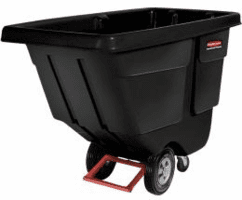
- Material: Rotomolded structural foam polyethylene body.
- Size Range: 60 x 28 x 38 in. to 81 x 46 x 50 in.
- Capacity Range: 1/2 cubic yard, 1 cubic yard, and 2 cubic yard models.
- Configuration: Tilt truck body with wheeled base for bulk transport and dumping.
- Applications: Waste handling, material transport, facility cleanup, and industrial collection.

Product Comparison Chart
Configuration Analysis
Rubbermaid rotomolded tilt trucks are configured for bulk transport and controlled dumping of loose materials. The tilt body allows operators to load contents from the top, move the truck across a facility, and empty the contents by pivoting the container forward. The 60 x 28 x 38 inch models are suited for tighter aisles, smaller collection zones, and localized cleanup tasks. The 72 x 33 x 43 inch 1 cubic yard models provide higher volume for warehouse, custodial, and production floor use. The 81 x 46 x 50 inch 2 cubic yard model is designed for larger collection routes where fewer trips are required.
Material Engineering
The rotomolded polyethylene body is produced as a single-piece molded structure, reducing seams that can collect debris or become weak points under load. Polyethylene provides resistance to moisture, many cleaning chemicals, and routine impacts from facility handling. The rounded interior surface supports easier unloading when handling trash, packaging scraps, textiles, and general refuse. Compared with metal carts, polyethylene tilt trucks do not rust and are less likely to dent during repeated use. The molded body also helps reduce tare weight, which can improve handling when the cart is moved manually.
Wheel and Handling Design
Tilt trucks rely on wheel placement, axle structure, and body balance to control movement under load. The design supports rolling transport through service corridors, warehouses, loading areas, and production spaces. Larger models require more floor clearance and turning space, while smaller models are easier to position near workstations or collection points. Buyers should confirm doorway widths, elevator access, aisle spacing, and floor surface conditions before selecting a cart size. Smooth concrete, sealed floors, and level service areas are typical operating environments for this equipment.
Regulatory and Workplace Considerations
Tilt trucks are not shipping containers and are generally used for internal plant, warehouse, or facility movement rather than regulated transport. For OSHA-aligned workplace handling, the focus is on load control, operator visibility, safe pushing practices, and keeping routes clear of obstructions. Facilities handling food waste, chemical waste, or contaminated materials should verify sanitation procedures, labeling needs, and internal waste segregation rules. If the truck is used around hazardous materials, compatibility between the material being handled and the polyethylene body should be reviewed before use.
Industrial Applications
Rubbermaid rotomolded tilt trucks are used in maintenance departments for trash removal, grounds cleanup, and facility repair debris. Warehouses use them for cardboard, shrink wrap, broken pallets, packing scrap, and returned goods processing. Manufacturing plants use them for production scrap, offcuts, rejected parts, and general material transfer. Food service and hospitality operations use tilt trucks for laundry, bulk waste, and back-of-house cleanup. Schools, hospitals, office campuses, and property management crews use these carts for custodial collection routes and exterior cleanup.
Selection Criteria
Selection should be based on capacity, dimensions, load type, route distance, and dumping method. A 1/2 cubic yard tilt truck may be suitable for smaller areas where space is limited. A 1 cubic yard model provides a middle range for routine refuse and material handling. A 2 cubic yard model is used when the priority is higher collection volume and fewer trips. Buyers should also consider the weight and shape of the contents. Dense materials may reach safe handling limits before the truck is filled by volume, while light materials such as packaging waste may use the full cubic yard capacity.
| Product | Dimensions | Capacity | Material | Configuration |
|---|---|---|---|---|
| Rubbermaid Rotomolded Tilt Truck | 60 x 28 x 38 in. | Not specified | Rotomolded polyethylene | Tilt truck |
| Rubbermaid Rotomolded Tilt Truck | 60 x 28 x 38 in. | 1/2 cu yd | Rotomolded polyethylene | Tilt truck |
| Rubbermaid Rotomolded Tilt Truck | 72 x 33 x 43 in. | 1 cu yd | Rotomolded polyethylene | Tilt truck |
| Rubbermaid Rotomolded Tilt Truck | 72 x 33 x 43 in. | 1 cu yd | Rotomolded polyethylene | Tilt truck |
| Rubbermaid Rotomolded Tilt Truck | 81 x 46 x 50 in. | 2 cu yd | Rotomolded polyethylene | Tilt truck |
Configuration Analysis
Rubbermaid rotomolded tilt trucks are configured for bulk transport and controlled dumping of loose materials. The tilt body allows operators to load contents from the top, move the truck across a facility, and empty the contents by pivoting the container forward. The 60 x 28 x 38 inch models are suited for tighter aisles, smaller collection zones, and localized cleanup tasks. The 72 x 33 x 43 inch 1 cubic yard models provide higher volume for warehouse, custodial, and production floor use. The 81 x 46 x 50 inch 2 cubic yard model is designed for larger collection routes where fewer trips are required.
Material Engineering
The rotomolded polyethylene body is produced as a single-piece molded structure, reducing seams that can collect debris or become weak points under load. Polyethylene provides resistance to moisture, many cleaning chemicals, and routine impacts from facility handling. The rounded interior surface supports easier unloading when handling trash, packaging scraps, textiles, and general refuse. Compared with metal carts, polyethylene tilt trucks do not rust and are less likely to dent during repeated use. The molded body also helps reduce tare weight, which can improve handling when the cart is moved manually.
Wheel and Handling Design
Tilt trucks rely on wheel placement, axle structure, and body balance to control movement under load. The design supports rolling transport through service corridors, warehouses, loading areas, and production spaces. Larger models require more floor clearance and turning space, while smaller models are easier to position near workstations or collection points. Buyers should confirm doorway widths, elevator access, aisle spacing, and floor surface conditions before selecting a cart size. Smooth concrete, sealed floors, and level service areas are typical operating environments for this equipment.
Regulatory and Workplace Considerations
Tilt trucks are not shipping containers and are generally used for internal plant, warehouse, or facility movement rather than regulated transport. For OSHA-aligned workplace handling, the focus is on load control, operator visibility, safe pushing practices, and keeping routes clear of obstructions. Facilities handling food waste, chemical waste, or contaminated materials should verify sanitation procedures, labeling needs, and internal waste segregation rules. If the truck is used around hazardous materials, compatibility between the material being handled and the polyethylene body should be reviewed before use.
Industrial Applications
Rubbermaid rotomolded tilt trucks are used in maintenance departments for trash removal, grounds cleanup, and facility repair debris. Warehouses use them for cardboard, shrink wrap, broken pallets, packing scrap, and returned goods processing. Manufacturing plants use them for production scrap, offcuts, rejected parts, and general material transfer. Food service and hospitality operations use tilt trucks for laundry, bulk waste, and back-of-house cleanup. Schools, hospitals, office campuses, and property management crews use these carts for custodial collection routes and exterior cleanup.
Selection Criteria
Selection should be based on capacity, dimensions, load type, route distance, and dumping method. A 1/2 cubic yard tilt truck may be suitable for smaller areas where space is limited. A 1 cubic yard model provides a middle range for routine refuse and material handling. A 2 cubic yard model is used when the priority is higher collection volume and fewer trips. Buyers should also consider the weight and shape of the contents. Dense materials may reach safe handling limits before the truck is filled by volume, while light materials such as packaging waste may use the full cubic yard capacity.

