


Digital Pocket Thermometer | Food & Lab Temperature Tool
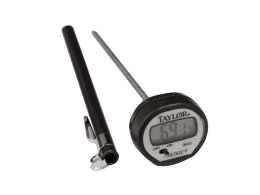
- Material Composition: Plastic housing with stainless steel probe.
- Temperature Tool Type: Handheld digital pocket thermometer.
- Use Range: Food service, receiving inspection, laboratory, maintenance, and general temperature checks.
- Display Type: Digital readout for spot temperature measurement.
- Storage Design: Pocket-size format for portable use.

| Buy More, Save More! | ||
|---|---|---|
| Quantity | Price Each | |
| 1 - 2 pieces | $19.95 ea. | |
| 3+ pieces | $18.65 ea. | |
Product Comparison Chart
| Product | Type | Probe Style | Display | Primary Use | Purchase Break |
|---|---|---|---|---|---|
| Digital Pocket Thermometer | Handheld pocket thermometer | Stainless steel probe | Digital readout | Spot temperature checks | 1–2 pieces; 3+ pieces |
Configuration Analysis
Digital pocket thermometers are configured as compact handheld instruments with an integrated display and probe. The probe is inserted into the material being checked, while the digital head provides the temperature reading. This design is different from wall-mounted thermometers, infrared thermometers, and panel-mounted temperature controls because it is used for direct-contact spot measurement. The pocket format supports mobile inspection work where the user moves between workstations, receiving areas, storage rooms, production lines, or food preparation zones. The product group listed here is a single digital pocket thermometer with quantity-based purchasing breaks for small-quantity and multi-unit use.
Material Engineering
A typical digital pocket thermometer uses a stainless steel probe because stainless steel resists corrosion, cleans more easily than uncoated metal, and tolerates repeated contact with food products, liquids, and process materials. The digital display housing is commonly made from molded plastic to reduce weight and allow pocket storage. The probe must remain straight, clean, and free of residue to support accurate readings. In food and production environments, the probe should be cleaned between uses to reduce cross-contact between materials. Stainless steel construction is also useful where the thermometer may be exposed to moisture, washdown areas, or repeated handling.
Regulatory Standards
Digital pocket thermometers are commonly used as part of temperature control procedures in food service, receiving, storage, and process inspection programs. For food handling operations, temperature checks support cold holding, hot holding, cooking verification, cooling verification, and receiving inspection. OSHA does not certify pocket thermometers as a storage or transport container, but workplace safety programs may require temperature monitoring where heat, cold, or process conditions affect worker safety or product handling. Buyers should verify any required calibration, food-contact approval, or internal quality-control documentation before using a thermometer for regulated inspection records.
Industrial Applications
Food service operations use digital pocket thermometers to check prepared foods, refrigerated products, hot-holding stations, and delivered goods. Warehouses and receiving departments use them to inspect temperature-sensitive shipments. Laboratories may use pocket thermometers for general liquid checks where high-precision instruments are not required. Maintenance teams can use them for utility checks, water temperature verification, and general process monitoring. Agricultural and greenhouse operations may use handheld thermometers to check water, soil slurry, or storage conditions. The small format makes the tool suitable for supervisors, inspectors, maintenance staff, and production workers who need a portable temperature reference.
Selection Criteria
Buyers should consider the required temperature range, probe length, response time, display readability, cleaning procedure, and storage method. For food safety use, the thermometer should match the temperature range required for frozen, refrigerated, hot-held, or cooked products. For industrial use, chemical exposure and probe compatibility should be reviewed before contact with liquids or process materials. Multi-unit purchasing may be useful when each workstation, inspector, or vehicle needs a dedicated thermometer. Facilities should also consider whether calibration checks are required and whether written temperature records are part of their operating procedure.

