


Metal Drum Faucets & Gate Valves | Industrial Dispensing
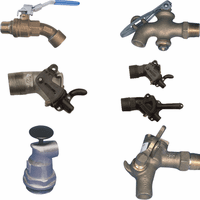
- Material Composition: Solid Brass, Die-Cast Zinc, Cast Iron, and Aluminum.
- Size/Inlet Range: 3/4" NPT, 1.25" NPT, 2" NPT, and 3" NPT.
- Seal Types: Buna-N, Viton, and metal-to-metal seating.
- Action Types: Self-Closing, Manual Gate, Ball Valve, and Gravity Feed.

| Buy More, Save More! | ||
|---|---|---|
| Quantity | Price Each | |
| 1 - 2 pieces | $79.95 ea. | |
| 3 - 5 pieces | $75.95 ea. | |
| 6 - 11 pieces | $71.95 ea. | |
| 12 - 23 pieces | $67.96 ea. | |
| 24+ pieces | $63.96 ea. | |
| Buy More, Save More! | ||
|---|---|---|
| Quantity | Price Each | |
| 1 - 2 pieces | $158.95 ea. | |
| 3 - 5 pieces | $151.00 ea. | |
| 6 - 11 pieces | $143.06 ea. | |
| 12 - 23 pieces | $135.11 ea. | |
| 24+ pieces | $127.16 ea. | |

| Buy More, Save More! | ||
|---|---|---|
| Quantity | Price Each | |
| 1 - 2 pieces | $35.95 ea. | |
| 3 - 5 pieces | $34.15 ea. | |
| 6 - 11 pieces | $32.35 ea. | |
| 12 - 23 pieces | $30.56 ea. | |
| 24+ pieces | $28.76 ea. | |
Metal Drum Faucets & Gate Valves | Industrial Dispensing
- Material Composition: Solid Brass, Die-Cast Zinc, Cast Iron, and Aluminum.
- Size/Inlet Range: 3/4" NPT, 1.25" NPT, 2" NPT, and 3" NPT.
- Seal Types: Buna-N, Viton, and metal-to-metal seating.
- Action Types: Self-Closing, Manual Gate, Ball Valve, and Gravity Feed.
Metal drum faucets and gate valves are precision-engineered components designed for the controlled extraction of liquids from industrial drums, barrels, and storage tanks. This category encompasses a diverse range of hardware, including self-closing brass faucets for safety-critical applications and heavy-duty cast iron gate valves for high-viscosity fluids. Available in standard NPT sizes from 3/4 inch to 3 inches, these components ensure leak-proof integration with tight-head drum bungs. The selection features various metallurgy options—including zinc, aluminum, and brass—to meet specific chemical compatibility requirements and regulatory standards for industrial fluid management across the chemical, agricultural, and manufacturing sectors.
Metal Drum Faucet & Gate Valve Comparison
| Component Type | Primary Material | Inlet Size (NPT) | Common Seal/Seat | Primary Application |
|---|---|---|---|---|
| Self-Closing Faucet | Solid Brass | 3/4" | Viton or Buna-N | Safety-critical dispensing of oils and fuels. |
| Standard Drum Faucet | Die-Cast Zinc | 3/4" | N/A | General-purpose, low-viscosity liquid transfer. |
| Industrial Gate Valve | Cast Iron | 3/4" to 3" | Metal-to-Metal | High-viscosity fluids (resins, heavy lubricants). |
| Bung Faucet | Aluminum | 2" | N/A | High-flow gravity dispensing from large drums. |
| Ball Valve | Brass | 3/4" | PTFE/Synthetic | Small tanks, utility tanks, and farm equipment. |
| Gate Valve (Long Handle) | Cast Iron | 2" to 3" | Metal-to-Metal | Precision flow control for bulk viscous materials. |
Configuration Analysis
Industrial Valve and Faucet Designs
The architecture of a drum dispensing system is determined by the viscosity of the media and the required flow rate. Standard drum faucets, typically available in 3/4" NPT, utilize a simple lever or turn-handle mechanism for low-to-medium viscosity liquids like oils or water-based chemicals. Self-closing models incorporate an internal spring-loaded mechanism that automatically terminates flow when the handle is released, preventing accidental overfills and spills. For high-viscosity materials such as heavy lubricants, resins, or molasses, gate valves are the technical standard. These utilize a sliding wedge or "gate" that clears the entire flow path, minimizing internal friction and allowing for the rapid discharge of thick substances that would clog standard faucet apertures.
Material Engineering
Metallurgy and Seal Specifications
Material selection is critical to preventing galvanic corrosion and chemical degradation. Solid brass faucets are non-sparking and provide high durability for petroleum-based products. Die-cast zinc offers a cost-effective alternative for non-corrosive general-purpose fluids. For heavy industrial use, cast iron gate valves provide the structural integrity required for large-diameter (2" to 3") bungs and high-pressure gravity feeds. Beyond the housing, internal seals define the valve’s chemical resistance profile. Buna-N seals are standard for petroleum and general oils, while Viton (FKM) seals are engineered for high-temperature applications and aggressive synthetic chemicals. Aluminum variants provide a lightweight, corrosion-resistant option for specific agricultural or fuel-transfer environments.
Regulatory Standards
Compliance and Safety Protocols
Industrial dispensing hardware must align with workplace safety and environmental regulations. Self-closing faucets are often required in facilities adhering to OSHA (Occupational Safety and Health Administration) standards to mitigate slip hazards and environmental contamination. While the drums themselves carry UN ratings for transport, the dispensing hardware must maintain the integrity of the containment system during stationary use. For flammable liquid dispensing, non-sparking brass or specialized grounded systems are utilized to comply with NFPA (National Fire Protection Association) 30 codes. Furthermore, certain gate valves feature lockable handles or lock-nuts to prevent unauthorized access or accidental discharge in accordance with site security protocols.
Industrial Applications
Sector-Specific Deployment
In the chemical processing industry, Viton-sealed brass faucets are deployed for the precise measurement of reagents and solvents. The agricultural sector utilizes 3/4" brass ball valves and gravity-feed faucets for overhead farm tanks and mobile machinery refueling. Manufacturing facilities rely on large-bore cast iron gate valves for the bulk transfer of coolants and lubricants into smaller containers for floor use. Additionally, specialized aluminum bung faucets are used in fuel transport where weight reduction is a factor. For sensitive materials, desiccant cartridges and adapters are integrated into the secondary bung to prevent moisture-laden air from entering the drum during the dispensing process, preserving the chemical purity of the remaining contents.
Selection Criteria
Technical Procurement Factors
Selecting the appropriate dispensing component requires an analysis of three technical variables: thread compatibility, chemical compatibility, and viscosity. The inlet size must match the drum bung, typically 3/4" or 2" NPT. Buyers must cross-reference the Safety Data Sheet (SDS) of the stored liquid with material compatibility charts for brass, iron, or zinc to prevent hardware failure. Viscosity determines the valve type; liquids with a centipoise (cP) rating similar to water or light oil are compatible with standard faucets, whereas fluids exceeding 1,000 cP require a gate valve or high-flow ball valve. Finally, the choice between manual and self-closing actions should be dictated by the frequency of use and the volatility of the liquid being handled.
TYPES OF METAL DRUM FAUCETS: Metal drum faucets include several types such as brass faucets, zinc faucets, cast iron gate valves, and aluminum bung faucets. Brass drum faucets are commonly used for corrosion resistance and long life. Zinc faucets provide a cost-effective option for general use. Gate valves are designed for thicker liquids, while ball valves offer quick shut-off control.
INLET SIZES AND CONNECTIONS: Most drum faucets are designed with standard 3/4-inch or 2-inch NPT inlets to fit common drum bung openings. Outlet styles vary, including threaded and non-threaded designs, allowing compatibility with hoses, fittings, and dispensing systems.
SELF-CLOSING SAFETY FEATURES: Self-closing drum faucets automatically stop the flow of liquid when not in use. Models with Buna-N or Viton seals provide chemical resistance and help prevent leaks and spills. These features are important in environments handling hazardous or valuable liquids.
FLOW CONTROL OPTIONS: Different valve types provide different levels of control. Gate valves allow precise adjustment of flow, making them ideal for viscous liquids. Ball valves provide quick on/off control, while gravity faucets are used for simple dispensing without complex controls.
MATERIAL COMPATIBILITY: Material selection is important when choosing a drum faucet. Brass is suitable for many oils and non-corrosive liquids. Zinc is used for general-purpose applications. Cast iron is often used for heavier-duty or viscous fluid handling. Selecting the right material helps ensure durability and safe operation.
INDUSTRY APPLICATIONS: Metal drum faucets are used in chemical processing, oil and fuel handling, agriculture, manufacturing, and maintenance operations. They are commonly installed on drums, tanks, and containers for controlled liquid dispensing.
BUYING CONSIDERATIONS: When selecting a drum faucet, consider fluid type, viscosity, inlet size, and required flow control. For hazardous or corrosive liquids, choose materials and seals that provide proper chemical resistance.
COST AND EFFICIENCY: Using the right drum faucet improves dispensing accuracy, reduces spills, and increases efficiency. Durable metal construction ensures long-term performance and reduces replacement costs.
Metal drum faucets control liquid flow from drums. Brass = corrosion resistant. Zinc = budget option. Gate valves = precise control. Ball valves = quick shut-off. Used for oils, chemicals, and fuel dispensing.

