


Closed-Head Drum Mixers | Industrial Drum Agitation Systems
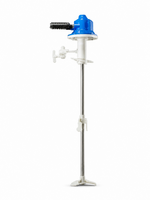
- Motor Types: TEFC Electric Motors, Explosion-Proof Electric Motors, Pneumatic Air Motors
- Power Range: 1/2 HP to 2 HP Configurations
- Drum Compatibility: Closed-Head Industrial Drums with Bung Openings
- Drive Systems: Direct Drive and Gear Drive Designs
- Compliance Options: Explosion-Proof Configurations for Hazardous Locations; Industrial Mixing Applications

$1,769.98
$2,081.00
(You Save 15%)$2,439.98
$3,000.00
(You Save 19%)$1,998.98
$2,353.00
(You Save 15%)$2,869.98
$3,376.00
(You Save 15%)$1,699.98
$2,000.00
(You Save 15%)$2,789.98$3,300.00(You Save 15%)
| Buy More, Save More! | ||
|---|---|---|
| Quantity | Price Each | You Save |
| 1 - 1 pieces | $2,789.98 ea. | $510.02 (15%) |
| 2+ pieces | $2,698.98 ea. | $601.02 (18%) |
$2,869.98
$3,412.00
(You Save 16%)$2,998.98
$3,529.98
(You Save 15%)Product Comparison Chart
Configuration Analysis Closed-head drum mixers are designed specifically for use with sealed industrial drums equipped with standard bung openings. Unlike open-top mixing systems, these units allow operators to perform agitation without removing the drum cover, reducing exposure to contaminants and minimizing vapor release. Direct-drive models connect the motor shaft directly to the impeller assembly, creating a compact mechanical arrangement with fewer moving components. Gear-drive models incorporate a gearbox between the motor and mixing shaft, reducing rotational speed while increasing torque output. This configuration is commonly utilized for higher-viscosity materials that require greater mixing force. Motor options include Totally Enclosed Fan Cooled (TEFC) electric motors, explosion-proof electric motors, and pneumatic air motors, allowing selection based on facility requirements and operating environments.
Material Engineering and Mechanical Design Industrial drum mixers are constructed using corrosion-resistant metallic components capable of continuous operation in demanding process environments. Mixing shafts are commonly manufactured from stainless steel to provide resistance against chemical exposure, moisture, and cleaning solutions. Impeller assemblies may utilize marine-style propellers, hydrofoil blades, or pitched-blade designs depending on fluid characteristics. Direct-drive systems deliver motor speed directly to the mixing shaft, making them suitable for low- to medium-viscosity materials. Gear-drive configurations utilize reduction gearing to convert motor speed into higher torque output, enabling agitation of denser fluids, slurries, and concentrated solutions. Motor housings are engineered to withstand industrial operating conditions while maintaining cooling efficiency and mechanical durability.
Regulatory Standards and Hazardous Location Requirements Motor selection is often governed by facility safety standards and process conditions. TEFC motors are designed to prevent the ingress of dust, dirt, and moisture into the motor enclosure and are commonly utilized in general industrial environments. Explosion-proof motors are engineered for installations where flammable vapors, gases, or combustible atmospheres may be present. These motors are manufactured to contain internal ignition sources and prevent flame propagation outside the enclosure. Pneumatic air motors eliminate electrical components entirely, making them suitable for environments where electrical equipment restrictions apply. Drum mixing operations may also be subject to OSHA workplace safety requirements, hazardous material handling protocols, and facility-specific process safety management procedures.
Industrial Applications Closed-head drum mixers are utilized throughout numerous industrial sectors requiring in-drum agitation. Chemical manufacturers use these systems to maintain uniformity in solvents, additives, treatment chemicals, and process solutions. Paint, coatings, and adhesive facilities employ drum mixers to prevent pigment settling and maintain product consistency during storage. Water and wastewater treatment operations utilize drum agitation equipment for blending treatment chemicals and process additives. Agricultural operations use drum mixers for fertilizers, micronutrient concentrates, and liquid treatment products. Food ingredient processing facilities may utilize compatible mixer configurations for blending liquid ingredients, flavorings, syrups, and concentrates where closed-container processing is required.
Selection Criteria
Selection of a closed-head drum mixer should be based on fluid viscosity, drum size, process duration, operating environment, and available utilities. Lower-viscosity liquids typically perform effectively with direct-drive configurations, while higher-viscosity products often require gear-drive systems that provide increased torque. Motor horsepower should be matched to fluid density and mixing intensity requirements. Facilities handling combustible vapors may require explosion-proof electric motors or pneumatic air motors to satisfy operational safety requirements. Additional considerations include shaft length, impeller diameter, rotational speed, chemical compatibility, maintenance access, compressed air availability, and duty cycle requirements. Proper matching of these factors contributes to consistent mixing performance and process control across industrial applications.
| Product | Drive Type | Motor Type | Horsepower | Application Environment |
|---|---|---|---|---|
| Direct Drive, TEFC Motor Closed-Head Drum Mixer | Direct Drive | TEFC Electric | 1/2 HP | General Industrial |
| Direct Drive, TEFC Motor Closed-Head Drum Mixer | Direct Drive | TEFC Electric | 1 HP | General Industrial |
| Direct Drive, Explosion-Proof Motor Closed-Head Drum Mixer | Direct Drive | Explosion-Proof Electric | 1/2 HP | Hazardous Locations |
| Direct Drive, Explosion-Proof Motor Closed-Head Drum Mixer | Direct Drive | Explosion-Proof Electric | 1 HP | Hazardous Locations |
| Direct Drive, Air Motor Closed-Head Drum Mixer | Direct Drive | Pneumatic Air | 1 HP | Compressed Air Facilities |
| Direct Drive, Air Motor Closed-Head Drum Mixer | Direct Drive | Pneumatic Air | 2 HP | Compressed Air Facilities |
| Gear Drive, Air Motor Closed-Head Drum Mixer | Gear Drive | Pneumatic Air | 1 HP | High-Torque Mixing |
| Gear Drive, Air Motor Closed-Head Drum Mixer | Gear Drive | Pneumatic Air | 2 HP | High-Torque Mixing |
Configuration Analysis Closed-head drum mixers are designed specifically for use with sealed industrial drums equipped with standard bung openings. Unlike open-top mixing systems, these units allow operators to perform agitation without removing the drum cover, reducing exposure to contaminants and minimizing vapor release. Direct-drive models connect the motor shaft directly to the impeller assembly, creating a compact mechanical arrangement with fewer moving components. Gear-drive models incorporate a gearbox between the motor and mixing shaft, reducing rotational speed while increasing torque output. This configuration is commonly utilized for higher-viscosity materials that require greater mixing force. Motor options include Totally Enclosed Fan Cooled (TEFC) electric motors, explosion-proof electric motors, and pneumatic air motors, allowing selection based on facility requirements and operating environments.
Material Engineering and Mechanical Design Industrial drum mixers are constructed using corrosion-resistant metallic components capable of continuous operation in demanding process environments. Mixing shafts are commonly manufactured from stainless steel to provide resistance against chemical exposure, moisture, and cleaning solutions. Impeller assemblies may utilize marine-style propellers, hydrofoil blades, or pitched-blade designs depending on fluid characteristics. Direct-drive systems deliver motor speed directly to the mixing shaft, making them suitable for low- to medium-viscosity materials. Gear-drive configurations utilize reduction gearing to convert motor speed into higher torque output, enabling agitation of denser fluids, slurries, and concentrated solutions. Motor housings are engineered to withstand industrial operating conditions while maintaining cooling efficiency and mechanical durability.
Regulatory Standards and Hazardous Location Requirements Motor selection is often governed by facility safety standards and process conditions. TEFC motors are designed to prevent the ingress of dust, dirt, and moisture into the motor enclosure and are commonly utilized in general industrial environments. Explosion-proof motors are engineered for installations where flammable vapors, gases, or combustible atmospheres may be present. These motors are manufactured to contain internal ignition sources and prevent flame propagation outside the enclosure. Pneumatic air motors eliminate electrical components entirely, making them suitable for environments where electrical equipment restrictions apply. Drum mixing operations may also be subject to OSHA workplace safety requirements, hazardous material handling protocols, and facility-specific process safety management procedures.
Industrial Applications Closed-head drum mixers are utilized throughout numerous industrial sectors requiring in-drum agitation. Chemical manufacturers use these systems to maintain uniformity in solvents, additives, treatment chemicals, and process solutions. Paint, coatings, and adhesive facilities employ drum mixers to prevent pigment settling and maintain product consistency during storage. Water and wastewater treatment operations utilize drum agitation equipment for blending treatment chemicals and process additives. Agricultural operations use drum mixers for fertilizers, micronutrient concentrates, and liquid treatment products. Food ingredient processing facilities may utilize compatible mixer configurations for blending liquid ingredients, flavorings, syrups, and concentrates where closed-container processing is required.
Selection Criteria
Selection of a closed-head drum mixer should be based on fluid viscosity, drum size, process duration, operating environment, and available utilities. Lower-viscosity liquids typically perform effectively with direct-drive configurations, while higher-viscosity products often require gear-drive systems that provide increased torque. Motor horsepower should be matched to fluid density and mixing intensity requirements. Facilities handling combustible vapors may require explosion-proof electric motors or pneumatic air motors to satisfy operational safety requirements. Additional considerations include shaft length, impeller diameter, rotational speed, chemical compatibility, maintenance access, compressed air availability, and duty cycle requirements. Proper matching of these factors contributes to consistent mixing performance and process control across industrial applications.

