


Drum Gauges & Liquid Samplers | Level Monitoring
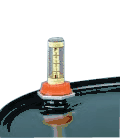
- Material Composition: Polypropylene, Polyethylene, Stainless Steel, Brass, and Borosilicate Glass.
- Monitoring Range: Solutions for 5-Gallon Pails, 55-Gallon Drums, and Large Storage Tanks.
- Compliance/Ratings: Options for Hazardous Waste Sampling and ATEX-compatible mechanical indicators.
- Indicator Types: Visual Sight Gauges, Audible Alarms, Ultrasonic Sensors, and Manual Gauge Poles.

Featured Products
| Product Name | Primary Material | Primary Function |
|---|---|---|
| Ultrasonic Drum Gauges | Synthetic Polymer | Non-contact Level Sensing |
| Pop-Up Drum Gauge | Polyethylene/Metal | Vertical Level Indication |
| High/Low Level Audible Alarm | Electronic Components | Overfill Prevention |
| Calibrated Sight Gauges | Glass/Metal | Horizontal Volume Measurement |
| 55 Gallon Drum Gauge Stick | Hardwood/Aluminum | Manual Depth Measurement |
| Shatter-Proof Liquid Sampler | Reinforced Polymer | Representative Fluid Extraction |
| Multi-Purpose Stainless Steel Dippers | 304/316 Stainless Steel | Surface Sampling |
| C-Level Liquid Level Sensor | Plastic-Compatible Sensor | Sealed Drum Monitoring |
| Kolor Kut Gauge Paste | Chemical Indicator | Water/Fuel Interface Detection |
| NASCO Whirl-Pak Sampling Bags | Polyethylene | Sterile Sample Storage |
Liquid Level Monitoring Systems Drum gauges are categorized into mechanical and electronic configurations based on the method of measurement. Mechanical gauges, such as pop-up or float-based indicators, utilize buoyancy to provide a visual reference of remaining volume. These are typically installed in 3/4" or 2" NPT bungs. For sealed environments where vapor containment is critical, ultrasonic and C-level sensors provide non-contact measurement, transmitting data without breaking the drum seal. Horizontal configurations utilize sight gauges or calibrated sticks to account for the elliptical volume of a drum on its side, whereas vertical gauges focus on linear depth.
Chemical Compatibility and Durability The construction materials of gauges and samplers are selected based on the chemical properties of the media being measured. Stainless steel dippers and nickel-plated brass samplers offer high resistance to heat and caustic chemicals. Polypropylene and polyethylene samplers, such as Coliwasa tubes, are used for hazardous waste and acidic environments due to their non-reactive properties. For pharmaceutical or high-purity applications, borosilicate glass (Drum Thiefs) ensures no leaching of contaminants. Gauge poles are often manufactured from hardwood to prevent sparking in flammable environments, while fluoropolymer samplers are utilized for high-purity solvent extraction.
Sampling Compliance and Safety Industrial sampling and gauging equipment must adhere to specific DOT, EPA, and OSHA standards. Coliwasa samplers are engineered to meet EPA requirements for representative hazardous waste sampling (RCRA). Equipment used in proximity to flammable liquids must meet non-sparking requirements to comply with NFPA codes. Furthermore, UN-rated drums require specific gauge installations that do not compromise the integrity of the container's pressure rating. Proper use of calibrated sticks and ultrasonic sensors assists facilities in maintaining accurate inventory records for environmental reporting and spill prevention protocols.
Cross-Sector Utility Gauging and sampling tools are fundamental in chemical processing for monitoring raw material consumption. In the petroleum industry, gauge poles and indicator pastes are used to detect water levels in fuel tanks via chemical reaction. The food and beverage sector utilizes stainless steel dippers and sterile Whirl-Pak bags to ensure batch consistency and hygiene. Agricultural operations utilize economical polypropylene samplers for liquid fertilizer analysis. These tools are also essential in environmental remediation for taking stratified samples from drums containing unknown liquid waste.
Technical Factors for Implementation Selecting the appropriate monitoring tool requires analysis of fluid viscosity, chemical volatility, and the storage environment. High-viscosity liquids may interfere with float-style gauges, necessitating ultrasonic or manual stick measurements. If the drum is stored in a horizontal rack, a sight gauge with a faucet assembly is required for simultaneous dispensing and monitoring. Buyers must also consider the "wetted materials" of any sampler to ensure the tool does not degrade or contaminate the sample. For pressurized or vacuum-sealed systems, electronic sensors that mount externally or through airtight seals are the standard for maintaining container pressure.

