


Polypropylene COLIWASA Samplers | Liquid Sampling Free Shipping
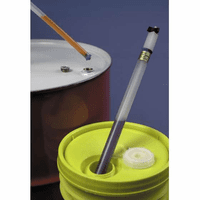
- Materials: Polypropylene sampler bodies with purge-squeegee and coupler accessories.
- Capacities: 130 mL, 190 mL, 230 mL, 460 mL, 560 mL, 830 mL, and 1043 mL.
- Container Use: Pails, drums, tanks, IBCs, buckets, and tank wagons.
- Pack Sizes: 10-pack samplers; 5-pack purge-squeegee kits and coupler sets.
- Sampling Function: Liquid sampling for quality control, waste characterization, and process verification.
Polypropylene COLIWASA samplers are liquid sampling tools used to collect representative composite samples from containers such as pails, drums, tanks, IBCs, buckets, and tank wagons. This section includes polypropylene sampler sizes ranging from 130 mL drum units to 1043 mL tank wagon samplers, with 10-pack sampler options and 5-pack accessory kits. Polypropylene construction provides chemical resistance for many aqueous solutions, acids, bases, and process liquids when compatibility is verified before use. Available purge-squeegee kits, coupler sets, and refill components support sample recovery, liquid removal, and sampler maintenance during quality control, environmental, and industrial sampling tasks across regulated handling environments.

$399.96
$499.96
(You Save 20%)
Product Comparison Chart
Sampler Configurations by Container Type
COLIWASA samplers are configured by container depth, access opening, and sample volume. Pail samplers, including the 190 mL polypropylene model, are sized for smaller containers where short insertion depth and controlled sample capture are required. Drum samplers include 130 mL and 460 mL options for standard industrial drums, allowing users to collect liquid columns through bung openings or open-head access points. Tank and tank wagon models, including 230 mL, 830 mL, and 1043 mL capacities, are used where deeper liquid profiles or larger composite samples are required.
Polypropylene Construction and Chemical Compatibility
Polypropylene is used in these samplers because it resists many inorganic acids, alkalis, salts, and water-based process liquids. It has low moisture absorption and does not corrode in the manner of metal sampling tools. Compatibility must be evaluated against the target liquid before sampling because solvents, oxidizers, elevated temperatures, and concentrated chemicals can affect polymer performance. For quality control and waste sampling, material selection should account for sample integrity, extractables, container residue, and the potential for chemical reaction between the sampler and the liquid.
Sampling Procedures and Handling Compliance
COLIWASA sampling is commonly used in environmental, industrial, and hazardous waste characterization procedures where representative liquid samples are required. The sampler itself does not determine transport classification, hazardous material status, or disposal requirements. Users should follow applicable site-specific standard operating procedures, safety data sheet guidance, DOT shipping rules, OSHA exposure controls, and waste handling regulations. When sampling regulated liquids, personnel should verify required personal protective equipment, container labeling, decontamination procedures, sample preservation methods, and chain-of-custody documentation before collection.
Use Cases Across Liquid Handling Operations
Polypropylene COLIWASA samplers are used in chemical processing, manufacturing, environmental services, agriculture, wastewater treatment, and industrial maintenance. Chemical facilities may use them to collect raw material, intermediate, or waste liquid samples for laboratory testing. Environmental contractors use drum, tank, and IBC samplers during waste profiling and remediation projects. Agricultural operations may apply them to liquid fertilizer, process water, and non-solvent chemical sampling where polypropylene compatibility is suitable. Manufacturing sites use sampler kits during incoming material checks, production batch verification, and container residue evaluation.
Technical Factors for Sampler Selection
Selection should begin with liquid chemistry, required sample volume, and container geometry. A 130 mL or 190 mL sampler may be suitable for small-volume containers or limited sample requirements, while 560 mL, 830 mL, and 1043 mL units support larger containers and deeper liquid columns. Buyers should consider access diameter, sampling depth, viscosity, suspended solids, purge requirements, decontamination method, and whether couplers or squeegee components are needed. For repeated sampling, purge-squeegee kits and refill components support liquid removal from the sampler body and help maintain consistent handling between sampling events.
| Product | Material | Capacity | Container Type | Pack Size | Accessory Type |
|---|---|---|---|---|---|
| Pail Polypropylene COLIWASA Sampler | Polypropylene | 190 mL | Pail | 10 Pack | Sampler |
| Drum Polypropylene COLIWASA Sampler | Polypropylene | 460 mL | Drum | 10 Pack | Sampler |
| Drum Polypropylene COLIWASA Sampler | Polypropylene | 130 mL | Drum | 10 Pack | Sampler |
| Tank Polypropylene COLIWASA Sampler | Polypropylene | 830 mL | Tank | 10 Pack | Sampler |
| Tank Polypropylene COLIWASA Sampler | Polypropylene | 230 mL | Tank | 10 Pack | Sampler |
| Tank Wagon Polypropylene COLIWASA Sampler | Polypropylene | 1043 mL | Tank Wagon | 10 Pack | Sampler |
| IBC Polypropylene COLIWASA Sampler | Polypropylene | 560 mL | IBC | 10 Pack | Sampler |
| Bucket Purge-Squeegee Kit | Polypropylene | N/A | Bucket | 5 Pack | Purge-Squeegee Kit |
| Drum Purge-Squeegee Kit | Polypropylene | N/A | Drum | 5 Pack | Purge-Squeegee Kit |
| Tank Purge-Squeegee Kit | Polypropylene | N/A | Tank | 5 Pack | Purge-Squeegee Kit |
| Squeegee Refill | Polypropylene | N/A | Sampler Maintenance | 10 Pack | Refill Component |
| Coupler Set | Polypropylene | N/A | Sampler Assembly | 5 Pack | Coupler Set |
Sampler Configurations by Container Type
COLIWASA samplers are configured by container depth, access opening, and sample volume. Pail samplers, including the 190 mL polypropylene model, are sized for smaller containers where short insertion depth and controlled sample capture are required. Drum samplers include 130 mL and 460 mL options for standard industrial drums, allowing users to collect liquid columns through bung openings or open-head access points. Tank and tank wagon models, including 230 mL, 830 mL, and 1043 mL capacities, are used where deeper liquid profiles or larger composite samples are required.
Polypropylene Construction and Chemical Compatibility
Polypropylene is used in these samplers because it resists many inorganic acids, alkalis, salts, and water-based process liquids. It has low moisture absorption and does not corrode in the manner of metal sampling tools. Compatibility must be evaluated against the target liquid before sampling because solvents, oxidizers, elevated temperatures, and concentrated chemicals can affect polymer performance. For quality control and waste sampling, material selection should account for sample integrity, extractables, container residue, and the potential for chemical reaction between the sampler and the liquid.
Sampling Procedures and Handling Compliance
COLIWASA sampling is commonly used in environmental, industrial, and hazardous waste characterization procedures where representative liquid samples are required. The sampler itself does not determine transport classification, hazardous material status, or disposal requirements. Users should follow applicable site-specific standard operating procedures, safety data sheet guidance, DOT shipping rules, OSHA exposure controls, and waste handling regulations. When sampling regulated liquids, personnel should verify required personal protective equipment, container labeling, decontamination procedures, sample preservation methods, and chain-of-custody documentation before collection.
Use Cases Across Liquid Handling Operations
Polypropylene COLIWASA samplers are used in chemical processing, manufacturing, environmental services, agriculture, wastewater treatment, and industrial maintenance. Chemical facilities may use them to collect raw material, intermediate, or waste liquid samples for laboratory testing. Environmental contractors use drum, tank, and IBC samplers during waste profiling and remediation projects. Agricultural operations may apply them to liquid fertilizer, process water, and non-solvent chemical sampling where polypropylene compatibility is suitable. Manufacturing sites use sampler kits during incoming material checks, production batch verification, and container residue evaluation.
Technical Factors for Sampler Selection
Selection should begin with liquid chemistry, required sample volume, and container geometry. A 130 mL or 190 mL sampler may be suitable for small-volume containers or limited sample requirements, while 560 mL, 830 mL, and 1043 mL units support larger containers and deeper liquid columns. Buyers should consider access diameter, sampling depth, viscosity, suspended solids, purge requirements, decontamination method, and whether couplers or squeegee components are needed. For repeated sampling, purge-squeegee kits and refill components support liquid removal from the sampler body and help maintain consistent handling between sampling events.

