


Hardwood Gauge Poles & Tank Measuring Sticks
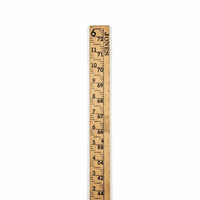
- Material Composition: Select Kiln-Dried Hardwood (Ash or Hickory).
- Size/Capacity Range: 44-Inch to 15-Foot Lengths.
- Compliance/Ratings: NIST-Traceable Calibration Markings; Spark-Resistant.
- Configuration Types: One-Piece Rigid Poles and Multi-Section Folding Poles.

$29.96$35.99(You Save 17%)
| Buy More, Save More! | ||
|---|---|---|
| Quantity | Price Each | You Save |
| 1 - 5 pieces | $29.96 ea. | $6.03 (17%) |
| 6+ pieces | $27.98 ea. | $8.01 (22%) |
$24.98
$34.99
(You Save 29%)$29.98
$35.99
(You Save 17%)$56.98
$63.95
(You Save 11%)$199.98
$259.98
(You Save 23%)$161.98
$199.99
(You Save 19%)$169.98
$199.99
(You Save 15%)$221.98
$259.99
(You Save 15%)$249.98
$299.99
(You Save 17%)$252.97
$293.95
(You Save 14%)$297.57
$359.97
(You Save 17%)$599.98
$706.00
(You Save 15%)$479.76
$599.76
(You Save 20%)| Product Name | Length/Calibration | Configuration | Pack Size |
|---|---|---|---|
| 55 Gallon Hardwood Drum Gauge Stick | 44 Inch | One-Piece | Single |
| One-Piece Poles Hardwood Gauge Poles | 54 Inch | One-Piece | Single |
| One-Piece Poles Hardwood Gauge Poles | 6 Foot | One-Piece | Single |
| Folding Hardwood Gauge Pole | 12 Foot | 4-Section Folding | Single |
| Folding Poles Hardwood Gauge Poles | 8 Foot | 3-Section Folding | 6-Pack |
| Folding Poles Hardwood Gauge Poles | 10 Foot | 3-Section Folding | 6-Pack |
| Folding Poles Hardwood Gauge Poles | 12 Foot | 2-Section Folding | 6-Pack |
| Folding Poles Hardwood Gauge Poles | 15 Foot | 4-Section Folding | 6-Pack |
| One-Piece Poles Hardwood Gauge Poles | 8 Foot | One-Piece | 12-Pack |
| One-Piece Poles Hardwood Gauge Poles | 10 Foot | One-Piece | 12-Pack |
| 12 ft Hardwood Tank Gauge Stick | 12 Foot | One-Piece | 12-Pack |
| One-Piece Hardwood Gauge Poles | 14 Foot | One-Piece | 12-Pack |
| Folding Poles Hardwood Gauge Poles | 14 Foot | 2-Section Folding | 12-Pack |
Standard Rigid vs. Folding Architectures Industrial gauge poles are manufactured in two primary formats: one-piece rigid sticks and multi-section folding poles. One-piece poles, ranging from 44 inches to 14 feet, offer maximum structural integrity and a continuous surface for uninterrupted measurement. These are primarily utilized in stationary environments where vertical clearance is sufficient for insertion. Folding poles, available in 2, 3, or 4-section configurations, utilize heavy-duty brass or stainless steel hinges to allow for compact transport and storage. These folding models are necessary for field technicians and mobile refueling units where space is limited, providing extended reach up to 15 feet while collapsing into manageable lengths.
Wood Selection and Surface Treatment The choice of hardwood—typically American Ash or Hickory—is dictated by the requirement for high flexural strength and resistance to warping. Kiln-drying processes reduce the moisture content to a specific percentage, ensuring that the wood remains dimensionally stable when exposed to varying temperatures and hydrocarbon-based liquids. Unlike metallic tapes or plastic rods, hardwood does not generate static electricity upon friction, reducing ignition risks. The poles are often finished with a clear, chemical-resistant coating that prevents the absorption of oils and chemicals into the wood fibers, preserving the clarity of the calibration markings over extended service life.
Calibration Accuracy and Safety Compliance Manual gauging tools must adhere to strict calibration standards to ensure inventory accuracy and regulatory compliance. These sticks are typically stamped with fractional or decimal increments that align with NIST (National Institute of Standards and Technology) traceable benchmarks. In the context of hazardous liquid storage, the use of wood fulfills OSHA and NFPA requirements for non-sparking tools in Class I, Division 1 environments. The chemical resistance of the hardwood ensures that the tool does not degrade or contaminate the stored medium, maintaining the purity of food-grade or pharmaceutical-grade contents.
Sector-Specific Utility Hardwood gauge poles are utilized across the petroleum, chemical, and agricultural sectors. In the petroleum industry, they serve as the primary manual backup for electronic tank monitoring systems, verifying fuel levels in underground storage tanks (UST) and aboveground storage tanks (AST). In agricultural settings, these poles measure liquid fertilizer and pesticide volumes in large-scale dispensing units. The 44-inch and 54-inch variants are specifically sized for 55-gallon drums, allowing operators to monitor consumption rates in manufacturing facilities without removing the drum from its secondary containment or racking system.
Technical Factors for Procurement When selecting a gauge pole, the primary consideration is the depth of the vessel relative to the overhead clearance. For tanks deeper than 10 feet, folding poles provide the necessary reach while maintaining portability. Buyers must also evaluate the increment density; poles calibrated in inches are standard for volume estimation, while more granular metric or decimal calibrations may be required for high-precision chemical blending. Finally, the packaging configuration—ranging from single units to 12-pack bulk quantities—should be selected based on the scale of the facility and the frequency of manual inspections required across the site.

