


Low Profile Drum Scales | Industrial Weighing Systems
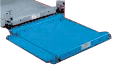
- Construction: Carbon Steel or 304 Stainless Steel platforms.
- Capacities: 500 lb to 2,500 lb weight ratings.
- Dimensions: Low-profile decks typically 1.5" to 2" in height.
- Compliance: NTEP certified options; IP65/IP67/IP68 rated load cells.
- Connectivity: RS-232, 4-20mA, and digital weight indicators.
Low profile drum scales are precision weighing instruments engineered for the measurement of heavy industrial containers, including 55-gallon drums, barrels, and cylinders. These scales feature an ultra-low deck height and integrated ramps to facilitate the loading of containers via manual drum trucks or dollies. Constructed from heavy-duty carbon steel or corrosion-resistant stainless steel, these units are designed to withstand the rigors of chemical processing, waste management, and food production environments. This category includes various platform sizes and weight capacities, ensuring compatibility with standard industrial footprints and specific regulatory requirements for trade accuracy and environmental protection.

| Product Name | Material | Capacity (lb) | Platform Size |
|---|---|---|---|
| Standard Low Profile Drum Scale | Carbon Steel | 1,000 lbs | 30" x 30" |
| Heavy-Duty Drum Scale | Carbon Steel | 2,500 lbs | 36" x 36" |
| Stainless Steel Washdown Scale | 304 Stainless Steel | 1,000 lbs | 30" x 30" |
Configuration Analysis Scale Architecture and Loading Mechanisms Low profile drum scales are defined by their low-to-the-ground deck height, which minimizes the effort required to move heavy loads onto the weighing surface. Most models incorporate integrated "live" side rails or dual ramps, allowing wheels to pass over the scale without damaging the internal load cells. The "live" rail design ensures that even if a drum is positioned slightly off-center or overhanging the edge, the weight is accurately captured. Digital indicators are typically connected via a shielded interface cable, allowing the readout to be wall-mounted or placed on a stand at eye level for operator safety and ergonomic data entry.
Substrate Properties and Environmental Protection Industrial drum scales are manufactured to handle specific environmental stressors. Carbon steel models are finished with industrial-grade powder coatings or epoxy paint to provide resistance to mechanical abrasion and mild moisture. For environments involving caustic chemicals, brine, or high-pressure washdowns, 304 or 316 stainless steel platforms are utilized. These alloys contain chromium and nickel, which provide a passive layer of protection against oxidation. Internal components, specifically the load cells, are often hermetically sealed or potted to achieve IP67 or IP68 ingress protection ratings, preventing dust and water from compromising the strain gauge circuitry.
NTEP Certification and Safety Compliance For applications where products are sold based on weight, scales must meet the National Type Evaluation Program (NTEP) standards. NTEP-certified scales undergo rigorous testing to ensure they maintain accuracy within specific tolerances (Handbook 44). Furthermore, for use in hazardous locations—such as chemical plants with volatile vapors—scales must be equipped with intrinsically safe indicators and barriers that comply with Class I, Div. 1 or 2 standards. These ratings ensure that the electrical components of the scale cannot generate enough thermal or electrical energy to ignite the surrounding atmosphere.
Sector-Specific Deployment In the chemical and petroleum industries, drum scales are utilized for inventory management and the precise blending of raw materials. In pharmaceutical and food-grade manufacturing, stainless steel variants are required to meet sanitary standards, as the material does not harbor bacterial growth and withstands harsh sanitizing agents. Agricultural sectors utilize these scales for weighing pesticides and fertilizers for bulk distribution. Waste management facilities employ heavy-capacity drum scales to monitor the weight of hazardous waste barrels for transport manifest compliance, ensuring loads do not exceed Department of Transportation (DOT) limits for vehicle safety.
Technical Factors for Procurement Selecting a drum scale requires an evaluation of the maximum anticipated load versus the scale’s rated capacity. It is standard practice to select a scale with a capacity 20-25% higher than the heaviest load to prevent damage from shock loading. Chemical compatibility is the secondary factor; acidic or corrosive substances necessitate stainless steel construction or specialized coatings. Additionally, the environment dictates the required Ingress Protection (IP) rating for the load cells and indicators. Finally, users must determine if data integration—such as RS-232, USB, or Ethernet connectivity—is required for automated logging into a Warehouse Management System (WMS) or Enterprise Resource Planning (ERP) platform.

