


Explosion-Proof Self-Powered Drum Scales | Industrial
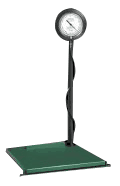
- Material Composition: Epoxy-Coated Carbon Steel and 304 Stainless Steel options.
- Weight Capacity: Standard industrial drum capacities up to 1,000 lbs.
- Compliance/Ratings: Explosion-Proof rated for hazardous environments (Class I, Div 1).
- Display/Interface: Pedestal-mounted or remote digital indicators.

| Buy More, Save More! | ||
|---|---|---|
| Quantity | Price Each | |
| 1 - 2 pieces | $2,590.95 ea. | |
| 3+ pieces | $2,403.48 ea. | |
| Buy More, Save More! | ||
|---|---|---|
| Quantity | Price Each | |
| 1 - 2 pieces | $3,523.95 ea. | |
| 3+ pieces | $3,376.32 ea. | |
| Buy More, Save More! | ||
|---|---|---|
| Quantity | Price Each | |
| 1 - 2 pieces | $2,914.95 ea. | |
| 3+ pieces | $2,792.10 ea. | |
| Product Name | Configuration | Material Construction |
|---|---|---|
| Self-Powered Drum Scale, Explosion-Proof Pedestal Epoxy Coated | Pedestal-Mounted Indicator | Epoxy-Coated Carbon Steel |
| Self-Powered Drum Scale, Explosion-Proof Pedestal Stainless Steel | Pedestal-Mounted Indicator | 304 Stainless Steel |
| Self-Powered Drum Scale, Explosion-Proof Remote Stainless Steel | Remote-Mounted Indicator | 304 Stainless Steel |
Industrial Drum Scale Design Variations The mechanical configuration of a drum scale determines its utility within a specific workflow. Pedestal-mounted scales integrate the digital weight indicator directly onto the scale frame via a fixed vertical column. This setup provides a self-contained, mobile-friendly unit where the display is positioned at eye level for the operator. Remote-display configurations utilize a flexible cord to connect the weighing platform to an indicator that can be mounted on a wall or a separate stand. Remote configurations are utilized in washdown areas or cramped workspaces where the operator must monitor weight from a safe distance or a different orientation than the drum placement.
Substrate Durability and Surface Protection Industrial scales are subjected to mechanical impact and chemical exposure. Epoxy-coated carbon steel provides a high-strength chassis suitable for dry chemical environments where abrasion resistance is required. The epoxy layer acts as a barrier against oxidation and mild chemical splashes. For environments involving high humidity, caustic cleaning agents, or food processing, 304-grade stainless steel is the technical standard. Stainless steel offers inherent corrosion resistance and a non-porous surface that prevents bacterial growth and resists degradation when exposed to acids and salts.
Explosion-Proof Compliance and Safety Ratings Equipment operated in hazardous locations must adhere to strict safety classifications. These drum scales are engineered to meet Class I, Division 1 standards, signifying they are safe for use in areas where ignitable concentrations of flammable gases or vapors exist under normal operating conditions. The "Self-Powered" designation often refers to internal battery systems designed with intrinsically safe circuitry, limiting electrical and thermal energy to levels below those required to ignite a specific hazardous atmospheric mixture. Compliance with these standards is mandatory for OSHA-regulated facilities handling volatile organic compounds (VOCs) or combustible dust.
Sector-Specific Deployment Explosion-proof scales are critical in the petrochemical and chemical manufacturing sectors for the precise filling and batching of solvents and fuels. In the pharmaceutical industry, stainless steel remote models are utilized in "clean room" hazardous zones to maintain sanitary standards while weighing volatile ingredients. Agricultural facilities use these scales for weighing pesticides and fertilizers that may emit flammable vapors. The low-profile design of the weighing platform is specifically engineered to accommodate standard 55-gallon drums, allowing for the use of drum trucks or ramps without straining the load cells.
Technical Factors for Procurement When selecting a drum scale, the primary technical consideration is the compatibility of the scale material with the chemicals handled. If the facility undergoes frequent high-pressure washdowns, stainless steel is required. Secondly, the configuration of the indicator—pedestal versus remote—should be decided based on the physical layout of the production line. Accuracy tolerances and weight graduation increments must also be verified to ensure they meet the specific requirements of the process control system. Finally, the specific hazardous zone classification of the installation site must match the scale's explosion-proof rating to ensure full regulatory compliance and facility safety.

