


Wizard Self-Propelled Drum Deheaders
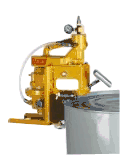
- Material Composition: Self-propelled electric or air-powered deheader systems with tool steel or non-ferrous cutting wheel options.
- Size/Capacity Range: Designed for industrial closed-head drum deheading, including standard steel drums.
- Compliance/Ratings: USDA compliant outside-cut models available; non-ferrous cutting wheel models available for flammable area requirements.
- Closure Types: Used for inside cut, outside cut, and below-chime cut removal of sealed drum tops.
- Product Types: Electric, air-powered, non-ferrous, USDA compliant, below-chime, and automatic air self-propelled drum deheaders.

$7,749.96
$7,058.00
(You Save -10%)$6,498.96
$7,058.98
(You Save 8%)$6,498.98
$7,058.00
(You Save 8%)$6,498.96
$7,058.00
(You Save 8%)$5,949.96
$6,649.98
(You Save 11%)$6,498.96
$7,058.00
(You Save 8%)$5,498.96
$7,700.00
(You Save 29%)$5,049.98
$6,049.98
(You Save 17%)$9,496.96
$11,000.00
(You Save 14%)$7,999.98
$8,199.98
(You Save 2%)$6,979.98
$7,479.98
(You Save 7%)Product Comparison Chart
Configuration Analysis
Self-Propelled Cut Configuration Wizard self-propelled drum deheaders are configured to travel around a closed-head drum while the cutting wheel removes the lid. Inside cut models cut near the inside of the chime and are used when the outer rim profile should remain largely intact. Outside cut models cut from the exterior side and include USDA compliant versions for facilities with sanitation or regulated handling requirements. Below-chime models cut lower on the drum body, below the rolled chime, creating a different edge profile for disposal, scrap preparation, or specific reuse needs. Automatic air models support repeated cutting cycles where pneumatic operation and reduced operator input are required.
Cutting Wheel and Power System Construction The main mechanical elements are the self-propelled drive system, cutting wheel, alignment mechanism, and power source. Electric models use motor-driven operation where electrical service is suitable for the work area. Air models use compressed air and may be selected in facilities already equipped with pneumatic systems. Tool steel cutting wheels are used for standard steel drum cutting where spark reduction is not required. Non-ferrous cutting wheels are used where drums may have contained flammable liquids, solvents, fuels, or volatile chemicals. Cutting performance depends on wheel condition, drum gauge, chime shape, corrosion, dents, and proper tool adjustment before operation.
USDA, OSHA, DOT, and Vapor-Control Requirements USDA compliant outside-cut models may be used in food, ingredient, agricultural, or sanitation-controlled environments where equipment construction and cleanability are part of the facility standard. OSHA workplace rules may apply to powered drum cutting, including machine guarding, PPE, operator training, and lockout procedures. DOT requirements may apply when drums previously contained regulated materials or hazardous residues. Non-ferrous wheels are used as part of spark-reduction procedures, but they do not replace vapor testing, cleaning, ventilation, grounding, bonding, or area classification review. Unknown drum contents should be treated as hazardous until the prior contents and residue condition are verified.
Use Across High-Volume Drum Processing Operations Wizard self-propelled drum deheaders are used in drum reconditioning plants, recycling yards, chemical facilities, food processing operations, waste handling sites, and industrial maintenance departments. Reconditioning facilities use inside, outside, or below-chime cuts depending on whether the drum will be cleaned, repaired, reused, or scrapped. Recycling operations use self-propelled deheaders to prepare drums for crushing, sorting, or metal recovery. Chemical and coating facilities may use non-ferrous cutting wheel models when vapor risk is present. Food and agricultural operations may use USDA compliant outside-cut units where drums are handled in sanitation-controlled areas. Automatic air models are used where repeated drum processing is part of a daily workflow.
Technical Factors for Buyers Buyers should first identify the required cut type: inside cut, outside cut, or below-chime cut. The next factor is power source. Electric models require suitable electrical service and should be reviewed for the work area classification. Air models require adequate compressed air supply, pressure, and line capacity. Non-ferrous cutting wheel models should be considered where spark reduction is required due to flammable vapor risk. USDA compliant outside-cut models should be selected where sanitation or regulated handling requirements apply. Automatic air versions may be appropriate when repeated drum processing requires lower operator input. Drum size, steel thickness, chime condition, prior contents, maintenance access, and cutting wheel replacement needs should also be reviewed.
| Product | Power Type | Cut Type | Wheel / Compliance Type | Application |
|---|---|---|---|---|
| Electric Inside Cut - Wizard Self-Propelled Drum Deheaders | Electric | Inside cut | Standard cutting wheel | Powered inside-cut drum deheading for industrial drum processing |
| Air Inside Cut - Wizard Self-Propelled Drum Deheaders | Compressed air | Inside cut | Standard cutting wheel | Pneumatic inside-cut drum opening where air power is preferred |
| Air Inside Cut Non-Ferrous Cutting Wheel Drum Deheaders | Compressed air | Inside cut | Non-ferrous cutting wheel | Inside-cut drum deheading where spark reduction is required |
| Electric Outside Cut USDA Compliant - Drum Deheaders | Electric | Outside cut | USDA compliant | Outside-cut drum opening for facilities with sanitation or regulated handling requirements |
| Air Outside Cut USDA Compliant Drum Deheaders | Compressed air | Outside cut | USDA compliant | Pneumatic outside-cut drum opening for USDA-related handling environments |
| Electric Below Chime Cut Wizard Self-Propelled Drum Deheaders | Electric | Below-chime cut | Standard cutting wheel | Powered below-chime drum top removal |
| Air Below Chime Cut - Wizard Self-Propelled Drum Deheaders | Compressed air | Below-chime cut | Standard cutting wheel | Pneumatic below-chime cutting for drum processing and disposal preparation |
| Air Below Chime Cut Non-Ferrous Cutting Wheel Drum Deheaders | Compressed air | Below-chime cut | Non-ferrous cutting wheel | Below-chime cutting where spark reduction is required |
| Automatic Air Inside Cut - Wizard Self-Propelled Drum Deheaders | Automatic compressed air | Inside cut | Standard cutting wheel | Repeated inside-cut drum processing with automatic pneumatic operation |
| Automatic Air Outside Cut USDA Compliant Drum Deheaders | Automatic compressed air | Outside cut | USDA compliant | Automatic outside-cut drum deheading for regulated handling environments |
| Automatic Air Below Chime Cut Wizard Self-Propelled Drum Deheaders | Automatic compressed air | Below-chime cut | Standard cutting wheel | Automatic below-chime cutting for repeated industrial drum processing |
Self-Propelled Cut Configuration Wizard self-propelled drum deheaders are configured to travel around a closed-head drum while the cutting wheel removes the lid. Inside cut models cut near the inside of the chime and are used when the outer rim profile should remain largely intact. Outside cut models cut from the exterior side and include USDA compliant versions for facilities with sanitation or regulated handling requirements. Below-chime models cut lower on the drum body, below the rolled chime, creating a different edge profile for disposal, scrap preparation, or specific reuse needs. Automatic air models support repeated cutting cycles where pneumatic operation and reduced operator input are required.
Cutting Wheel and Power System Construction The main mechanical elements are the self-propelled drive system, cutting wheel, alignment mechanism, and power source. Electric models use motor-driven operation where electrical service is suitable for the work area. Air models use compressed air and may be selected in facilities already equipped with pneumatic systems. Tool steel cutting wheels are used for standard steel drum cutting where spark reduction is not required. Non-ferrous cutting wheels are used where drums may have contained flammable liquids, solvents, fuels, or volatile chemicals. Cutting performance depends on wheel condition, drum gauge, chime shape, corrosion, dents, and proper tool adjustment before operation.
USDA, OSHA, DOT, and Vapor-Control Requirements USDA compliant outside-cut models may be used in food, ingredient, agricultural, or sanitation-controlled environments where equipment construction and cleanability are part of the facility standard. OSHA workplace rules may apply to powered drum cutting, including machine guarding, PPE, operator training, and lockout procedures. DOT requirements may apply when drums previously contained regulated materials or hazardous residues. Non-ferrous wheels are used as part of spark-reduction procedures, but they do not replace vapor testing, cleaning, ventilation, grounding, bonding, or area classification review. Unknown drum contents should be treated as hazardous until the prior contents and residue condition are verified.
Use Across High-Volume Drum Processing Operations Wizard self-propelled drum deheaders are used in drum reconditioning plants, recycling yards, chemical facilities, food processing operations, waste handling sites, and industrial maintenance departments. Reconditioning facilities use inside, outside, or below-chime cuts depending on whether the drum will be cleaned, repaired, reused, or scrapped. Recycling operations use self-propelled deheaders to prepare drums for crushing, sorting, or metal recovery. Chemical and coating facilities may use non-ferrous cutting wheel models when vapor risk is present. Food and agricultural operations may use USDA compliant outside-cut units where drums are handled in sanitation-controlled areas. Automatic air models are used where repeated drum processing is part of a daily workflow.
Technical Factors for Buyers Buyers should first identify the required cut type: inside cut, outside cut, or below-chime cut. The next factor is power source. Electric models require suitable electrical service and should be reviewed for the work area classification. Air models require adequate compressed air supply, pressure, and line capacity. Non-ferrous cutting wheel models should be considered where spark reduction is required due to flammable vapor risk. USDA compliant outside-cut models should be selected where sanitation or regulated handling requirements apply. Automatic air versions may be appropriate when repeated drum processing requires lower operator input. Drum size, steel thickness, chime condition, prior contents, maintenance access, and cutting wheel replacement needs should also be reviewed.

