


Carts and Trucks | Material Handling Equipment
- Materials: Welded steel, steel deck construction, structural foam, plastic, and cylinder-support frames.
- Capacity Range: Utility bucket carts, service carts, platform trucks, cube trucks, tilt trucks, and work platforms.
- Compliance/Ratings: Industrial material handling configurations; forkliftable models available for elevated access and tool storage.
- Wheel/Caster Types: Swivel casters, rigid casters, dolly wheels, trolley wheels, and platform truck wheel assemblies.
- Configurations: Flat deck, multi-shelf, tilt hopper, cube truck, cylinder dolly, ladder cart, trolley, and foodservice cart designs.

Featured Products
Product Comparison Chart
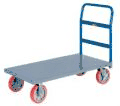
Platform Truck Design Steel deck platform trucks and heavy-duty platform trucks use a flat load surface supported by a steel frame and wheel assembly. This configuration is suited for cartons, equipment, bins, containers, and tools that can be stacked or staged on a horizontal deck. Heavy-duty versions are typically selected when load density, deck rigidity, and impact resistance are primary concerns.
Service Cart and Utility Cart Design Welded service carts, plastic service carts, foodservice carts, restock carts, and Xtra carts provide shelf-based transport for smaller items. Multi-shelf layouts separate tools, supplies, parts, cleaning materials, or foodservice inventory during movement. Welded steel carts are used where frame rigidity is required, while plastic carts are commonly used where lower cart weight, corrosion resistance, and surface cleanability are relevant.
Specialized Transport Designs Structural foam tilt trucks, cube trucks, ladder carts, cylinder dollies, triple trolleys, and utility bucket carts address specific load geometries. Tilt trucks and cube trucks move bulk items such as waste, packaging, textiles, or loose materials. Ladder carts support long items, while single and dual cylinder dollies stabilize compressed gas cylinders during movement.
Steel Frame Construction Steel deck platform trucks, heavy-duty platform trucks, welded service carts, forkliftable work platforms, ladder carts, and cylinder dollies use steel components for load-bearing performance. Welded construction reduces joint movement and supports repeated facility use. Steel decks resist surface deformation from concentrated loads, while reinforced frames distribute weight across the caster or wheel layout.
Structural Foam and Plastic Construction Structural foam tilt trucks and plastic service carts use molded polymer bodies to reduce corrosion exposure and simplify cleaning. Structural foam provides wall rigidity and impact absorption for bulk handling tasks. Plastic cart bodies are commonly used in foodservice, janitorial, healthcare support, warehouse picking, and restocking environments where moisture exposure or frequent wipe-down cleaning may occur.
Wheel and Caster Considerations Caster layout affects turning radius, load control, and operator effort. Swivel casters improve maneuverability in tight aisles, while rigid wheels improve tracking over longer distances. Cylinder dollies use larger wheel profiles for load balance and cylinder support. Platform trucks require wheel assemblies matched to deck load, floor surface, debris exposure, and expected travel distance.
Workplace Handling Requirements Carts and trucks are used within OSHA-regulated workplaces as part of material handling operations. Buyers should evaluate equipment based on load stability, operator visibility, wheel condition, braking requirements, and facility traffic patterns. Forkliftable work platforms require added review because they involve elevated personnel access and must be used with compatible forklift equipment and site-specific safety procedures.
Cylinder Handling Controls Single and dual cylinder dollies are used for compressed gas cylinder movement. Cylinder transport requires attention to upright positioning, restraint chains or straps, valve protection, and separation practices where applicable. The cart frame should support the cylinder diameter and height to reduce tipping risk during movement.
Warehouse and Manufacturing Use Platform trucks, service carts, cube trucks, and tilt trucks are used for material staging, work-in-process movement, tool transfer, packaging disposal, and maintenance support. Steel carts are commonly selected where metal parts, dense boxes, machine components, or shop supplies are moved across concrete floors.
Foodservice and Facility Operations Foodservice and restock carts support inventory replenishment, dishroom supply movement, pantry stocking, and janitorial tasks. Plastic service carts and structural foam trucks are used where cleaning access, moisture resistance, and non-corroding surfaces are operational factors.
Agriculture, Chemical, and Maintenance Use Utility bucket carts, cylinder dollies, ladder carts, and tilt trucks support maintenance crews, grounds operations, chemical handling support, and general facility repair work. Cylinder dollies are used for welding gases, maintenance gases, and process cylinders, while bucket carts assist with pails, small containers, and liquid-handling tasks.
Load Geometry and Weight Distribution Selection should begin with the shape, weight, and center of gravity of the material being moved. Flat-bottom containers align with platform trucks, loose bulk materials align with tilt trucks or cube trucks, and tall cylindrical loads require dedicated cylinder dollies.
Operating Environment Floor condition, aisle width, slope, doorway clearance, washdown exposure, and outdoor movement affect cart selection. Steel frames support high-load industrial use, while plastic and structural foam bodies address corrosion exposure and cleaning requirements.
Handling Frequency and Access Needs Frequent-access applications may require service carts with open shelving. Bulk disposal may require tilt trucks with sloped bodies. Elevated maintenance work may require forkliftable work platforms with tool storage. Long materials require ladder carts or extended load supports to maintain balance during transport.
| Product Type | Primary Configuration | Material/Construction | Typical Use Case |
|---|---|---|---|
| LITTLE GIANT Steel Deck Platform Trucks | Flat deck platform truck | Steel deck construction | Moving cartons, bins, tools, and general facility loads |
| LITTLE GIANT Heavy-Duty Platform Trucks | Reinforced platform truck | Heavy-duty steel frame | Transporting dense or high-volume industrial materials |
| LITTLE GIANT Welded Service Carts | Multi-shelf service cart | Welded steel construction | Tool staging, maintenance work, and parts movement |
| Pail Pal Utility Bucket Cart | Bucket and pail transport cart | Utility cart frame | Handling pails, buckets, cleaning supplies, or liquid containers |
| Xtra Carts | General-purpose utility cart | Cart frame with caster assembly | Facility transport, restocking, and workplace supply movement |
| Structural Foam Tilt Trucks | Tilt hopper truck | Structural foam body | Bulk material movement, waste handling, and collection tasks |
| Triple Trolley | Trolley transport unit | Wheeled trolley design | Moving grouped items through service or warehouse areas |
| Foodservice & Restock Carts | Restocking and service cart | Plastic or metal cart body | Foodservice supply movement, inventory replenishment, and janitorial staging |
| Forkliftable Work Platform/Tool Locker | Forkliftable elevated platform with storage | Steel platform and tool locker structure | Elevated maintenance access and tool containment |
| Ladder Cart | Long-load cart | Cart frame designed for ladders | Transporting ladders, pipe, conduit, and elongated materials |
| Single and Dual Cylinder Dollies | Cylinder transport dolly | Metal frame with cylinder restraints | Moving gas cylinders in industrial or maintenance settings |
| Standard Duty Cube Trucks | Bulk cube truck | Plastic or molded body with caster base | Laundry, refuse, packaging, and bulk item transport |
| Plastic Service Carts | Multi-shelf plastic cart | Plastic shelf and frame construction | Light-duty service, maintenance, janitorial, and office support tasks |
Platform Truck Design Steel deck platform trucks and heavy-duty platform trucks use a flat load surface supported by a steel frame and wheel assembly. This configuration is suited for cartons, equipment, bins, containers, and tools that can be stacked or staged on a horizontal deck. Heavy-duty versions are typically selected when load density, deck rigidity, and impact resistance are primary concerns.
Service Cart and Utility Cart Design Welded service carts, plastic service carts, foodservice carts, restock carts, and Xtra carts provide shelf-based transport for smaller items. Multi-shelf layouts separate tools, supplies, parts, cleaning materials, or foodservice inventory during movement. Welded steel carts are used where frame rigidity is required, while plastic carts are commonly used where lower cart weight, corrosion resistance, and surface cleanability are relevant.
Specialized Transport Designs Structural foam tilt trucks, cube trucks, ladder carts, cylinder dollies, triple trolleys, and utility bucket carts address specific load geometries. Tilt trucks and cube trucks move bulk items such as waste, packaging, textiles, or loose materials. Ladder carts support long items, while single and dual cylinder dollies stabilize compressed gas cylinders during movement.
Steel Frame Construction Steel deck platform trucks, heavy-duty platform trucks, welded service carts, forkliftable work platforms, ladder carts, and cylinder dollies use steel components for load-bearing performance. Welded construction reduces joint movement and supports repeated facility use. Steel decks resist surface deformation from concentrated loads, while reinforced frames distribute weight across the caster or wheel layout.
Structural Foam and Plastic Construction Structural foam tilt trucks and plastic service carts use molded polymer bodies to reduce corrosion exposure and simplify cleaning. Structural foam provides wall rigidity and impact absorption for bulk handling tasks. Plastic cart bodies are commonly used in foodservice, janitorial, healthcare support, warehouse picking, and restocking environments where moisture exposure or frequent wipe-down cleaning may occur.
Wheel and Caster Considerations Caster layout affects turning radius, load control, and operator effort. Swivel casters improve maneuverability in tight aisles, while rigid wheels improve tracking over longer distances. Cylinder dollies use larger wheel profiles for load balance and cylinder support. Platform trucks require wheel assemblies matched to deck load, floor surface, debris exposure, and expected travel distance.
Workplace Handling Requirements Carts and trucks are used within OSHA-regulated workplaces as part of material handling operations. Buyers should evaluate equipment based on load stability, operator visibility, wheel condition, braking requirements, and facility traffic patterns. Forkliftable work platforms require added review because they involve elevated personnel access and must be used with compatible forklift equipment and site-specific safety procedures.
Cylinder Handling Controls Single and dual cylinder dollies are used for compressed gas cylinder movement. Cylinder transport requires attention to upright positioning, restraint chains or straps, valve protection, and separation practices where applicable. The cart frame should support the cylinder diameter and height to reduce tipping risk during movement.
Warehouse and Manufacturing Use Platform trucks, service carts, cube trucks, and tilt trucks are used for material staging, work-in-process movement, tool transfer, packaging disposal, and maintenance support. Steel carts are commonly selected where metal parts, dense boxes, machine components, or shop supplies are moved across concrete floors.
Foodservice and Facility Operations Foodservice and restock carts support inventory replenishment, dishroom supply movement, pantry stocking, and janitorial tasks. Plastic service carts and structural foam trucks are used where cleaning access, moisture resistance, and non-corroding surfaces are operational factors.
Agriculture, Chemical, and Maintenance Use Utility bucket carts, cylinder dollies, ladder carts, and tilt trucks support maintenance crews, grounds operations, chemical handling support, and general facility repair work. Cylinder dollies are used for welding gases, maintenance gases, and process cylinders, while bucket carts assist with pails, small containers, and liquid-handling tasks.
Load Geometry and Weight Distribution Selection should begin with the shape, weight, and center of gravity of the material being moved. Flat-bottom containers align with platform trucks, loose bulk materials align with tilt trucks or cube trucks, and tall cylindrical loads require dedicated cylinder dollies.
Operating Environment Floor condition, aisle width, slope, doorway clearance, washdown exposure, and outdoor movement affect cart selection. Steel frames support high-load industrial use, while plastic and structural foam bodies address corrosion exposure and cleaning requirements.
Handling Frequency and Access Needs Frequent-access applications may require service carts with open shelving. Bulk disposal may require tilt trucks with sloped bodies. Elevated maintenance work may require forkliftable work platforms with tool storage. Long materials require ladder carts or extended load supports to maintain balance during transport.

