


Parking Lot Striping Equipment & Line Painting Machines


$139.96
$164.00
(You Save 15%)Product Comparison Chart
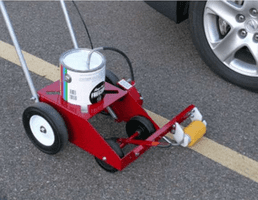
Parking lot striping equipment can be configured around different paint-application methods depending on surface conditions, project scale, and required line geometry. The RollMaster 1000 is a roller-based striping machine designed to guide paint application along a controlled path. Roller systems differ from pressurized airless stripers, which atomize coating through a spray tip. A roller configuration physically transfers paint to the pavement and can be used for parking stalls, boundary lines, warehouse markings, and other linear layouts. Replaceable rollers are maintenance components because repeated contact with pavement, coatings, and surface debris gradually affects roller condition. Stencils can be incorporated into the marking process for handicap symbols, directional indicators, warnings, numbers, letters, and facility-specific graphics.
Striping performance depends on the interaction between the machine, roller, pavement, and coating formulation. Traffic paints are formulated for application to surfaces such as asphalt and concrete, where adhesion and visibility are required under pedestrian and vehicle traffic. This product group includes white, yellow, and blue traffic paint supplied in 1-gallon containers. Color selection generally corresponds to the facility's pavement-marking plan, applicable regulations, and internal traffic-control requirements. Replacement rollers should be matched to the striping machine and intended coating system. Before application, pavement should be evaluated for moisture, dirt, loose aggregate, oil, existing coatings, and surface deterioration because these conditions can affect paint transfer and adhesion.
Parking lot markings may be subject to federal, state, municipal, accessibility, fire-code, and facility-specific requirements. Accessible parking spaces and access aisles should be laid out according to applicable accessibility standards and local requirements rather than solely according to equipment capabilities. OSHA requirements can also affect workplace traffic-control and floor-marking practices in industrial environments. Color, line width, spacing, symbols, and placement can vary according to the type of facility and governing authority. Buyers should verify current requirements for the specific property before establishing a new layout. Striping equipment itself does not establish regulatory compliance; compliance depends on the completed marking system, dimensions, colors, placement, signage, and other required controls.
Line painting machines are used across commercial, municipal, institutional, and industrial properties. Parking facilities use striping equipment to establish individual stalls, driving lanes, loading zones, pedestrian routes, and restricted areas. Warehouses and manufacturing facilities can use painted lines to identify aisles, equipment zones, storage boundaries, work areas, and traffic paths. Schools, apartment complexes, retail centers, distribution facilities, and office properties may use the same equipment for pavement maintenance and periodic restriping. Agricultural and industrial sites can also use line-marking equipment to define loading areas, staging locations, equipment routes, and controlled-access zones. Stencils expand these applications by adding standardized symbols, warnings, letters, numbers, and directional graphics.
Equipment selection should account for project frequency, pavement condition, required line width, coating type, paint capacity, maintenance requirements, and operator workflow. Roller-based machines can be considered when direct paint transfer and mechanical line guidance are appropriate for the application. Buyers should confirm that replacement rollers and selected traffic paints are compatible with the machine. Paint color should correspond to the intended marking function and applicable facility requirements. Storage conditions for paint and equipment should also be considered, particularly where temperature, moisture, or contamination could affect coating properties. For recurring striping work, availability of replacement rollers and stencil systems should be incorporated into maintenance planning.
| Product | Product Type | Size / Quantity | Color | Primary Function |
|---|---|---|---|---|
| RollMaster 1000 Striping Machine | Line Painting Machine | 1 Machine | N/A | Parking lot and pavement line striping |
| RollMaster Striping Machine White Traffic Paint | Traffic Striping Paint | 1 Gallon | White | White pavement and facility markings |
| RollMaster Striping Machine Yellow Traffic Paint | Traffic Striping Paint | 1 Gallon | Yellow | Yellow pavement and traffic markings |
| RollMaster Striping Machine Blue Traffic Paint | Traffic Striping Paint | 1 Gallon | Blue | Blue pavement and designated-area markings |
| RollMaster Striping Machine Rollers | Replacement Rollers | 12 per Case | N/A | Replacement application components for striping equipment |
Parking lot striping equipment can be configured around different paint-application methods depending on surface conditions, project scale, and required line geometry. The RollMaster 1000 is a roller-based striping machine designed to guide paint application along a controlled path. Roller systems differ from pressurized airless stripers, which atomize coating through a spray tip. A roller configuration physically transfers paint to the pavement and can be used for parking stalls, boundary lines, warehouse markings, and other linear layouts. Replaceable rollers are maintenance components because repeated contact with pavement, coatings, and surface debris gradually affects roller condition. Stencils can be incorporated into the marking process for handicap symbols, directional indicators, warnings, numbers, letters, and facility-specific graphics.
Striping performance depends on the interaction between the machine, roller, pavement, and coating formulation. Traffic paints are formulated for application to surfaces such as asphalt and concrete, where adhesion and visibility are required under pedestrian and vehicle traffic. This product group includes white, yellow, and blue traffic paint supplied in 1-gallon containers. Color selection generally corresponds to the facility's pavement-marking plan, applicable regulations, and internal traffic-control requirements. Replacement rollers should be matched to the striping machine and intended coating system. Before application, pavement should be evaluated for moisture, dirt, loose aggregate, oil, existing coatings, and surface deterioration because these conditions can affect paint transfer and adhesion.
Parking lot markings may be subject to federal, state, municipal, accessibility, fire-code, and facility-specific requirements. Accessible parking spaces and access aisles should be laid out according to applicable accessibility standards and local requirements rather than solely according to equipment capabilities. OSHA requirements can also affect workplace traffic-control and floor-marking practices in industrial environments. Color, line width, spacing, symbols, and placement can vary according to the type of facility and governing authority. Buyers should verify current requirements for the specific property before establishing a new layout. Striping equipment itself does not establish regulatory compliance; compliance depends on the completed marking system, dimensions, colors, placement, signage, and other required controls.
Line painting machines are used across commercial, municipal, institutional, and industrial properties. Parking facilities use striping equipment to establish individual stalls, driving lanes, loading zones, pedestrian routes, and restricted areas. Warehouses and manufacturing facilities can use painted lines to identify aisles, equipment zones, storage boundaries, work areas, and traffic paths. Schools, apartment complexes, retail centers, distribution facilities, and office properties may use the same equipment for pavement maintenance and periodic restriping. Agricultural and industrial sites can also use line-marking equipment to define loading areas, staging locations, equipment routes, and controlled-access zones. Stencils expand these applications by adding standardized symbols, warnings, letters, numbers, and directional graphics.
Equipment selection should account for project frequency, pavement condition, required line width, coating type, paint capacity, maintenance requirements, and operator workflow. Roller-based machines can be considered when direct paint transfer and mechanical line guidance are appropriate for the application. Buyers should confirm that replacement rollers and selected traffic paints are compatible with the machine. Paint color should correspond to the intended marking function and applicable facility requirements. Storage conditions for paint and equipment should also be considered, particularly where temperature, moisture, or contamination could affect coating properties. For recurring striping work, availability of replacement rollers and stencil systems should be incorporated into maintenance planning.

