


REMCO Polyethylene Spill Response Squeegees
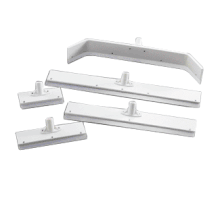
- Material: Polyethylene construction for chemical spill response and washdown use.
- Blade Widths: 8", 12", 24", 30", and 28" curved models.
- Handle Types: 12" bench handles and 53" floor handles.
- Configurations: Straight bench squeegees, straight floor squeegees, and curved floor squeegees.
- Applications: Spill control, liquid recovery, floor cleanup, bench cleanup, and chemical handling areas.

| Buy More, Save More! | ||
|---|---|---|
| Quantity | Price Each | |
| 1 - 2 pieces | $32.46 ea. | |
| 3 - 5 pieces | $31.02 ea. | |
| 6+ pieces | $28.80 ea. | |
| Buy More, Save More! | ||
|---|---|---|
| Quantity | Price Each | |
| 1 - 2 pieces | $33.84 ea. | |
| 3 - 5 pieces | $32.40 ea. | |
| 6+ pieces | $30.24 ea. | |
| Buy More, Save More! | ||
|---|---|---|
| Quantity | Price Each | |
| 1 - 2 pieces | $51.06 ea. | |
| 3 - 5 pieces | $48.72 ea. | |
| 6+ pieces | $46.50 ea. | |
| Buy More, Save More! | ||
|---|---|---|
| Quantity | Price Each | |
| 1 - 2 pieces | $56.40 ea. | |
| 3 - 5 pieces | $53.94 ea. | |
| 6+ pieces | $51.66 ea. | |
| Buy More, Save More! | ||
|---|---|---|
| Quantity | Price Each | |
| 1 - 2 pieces | $65.58 ea. | |
| 3 - 5 pieces | $63.48 ea. | |
| 6+ pieces | $60.90 ea. | |
Product Comparison Chart
| Product | Handle Length | Blade Width | Blade Style | Primary Use |
|---|---|---|---|---|
| REMCO Spill Response Polyethylene Squeegee | 12" Bench Handle | 8" Wide | Straight | Bench tops, small spill zones, lab surfaces |
| REMCO Spill Response Polyethylene Squeegee | 12" Bench Handle | 12" Wide | Straight | Workstations, counters, small containment trays |
| REMCO Spill Response Polyethylene Squeegee | 53" Floor Handle | 24" Wide | Straight | Floor spill cleanup and liquid movement |
| REMCO Spill Response Polyethylene Squeegee | 53" Floor Handle | 30" Wide | Straight | Larger floor areas and washdown zones |
| REMCO Spill Response Poly Squeegee | 53" Floor Handle | 28" Wide | Curved | Directing liquids toward drains or recovery points |
Configuration Analysis
REMCO polyethylene spill response squeegees are available in bench-handle and floor-handle configurations. The 12" bench-handle models are designed for close-range liquid control on tables, workbenches, shelves, processing counters, and small containment surfaces. The 8" blade provides localized control in confined work areas, while the 12" blade covers more surface area during small spill cleanup. The 53" floor-handle models are intended for standing operation across floors, production areas, washdown zones, and loading areas. Straight 24" and 30" models move liquid in a broad, direct path. The 28" curved model is shaped to gather and guide liquids toward a collection point.
Material Engineering
Polyethylene is used in spill response tools because it resists water exposure, many cleaning agents, and a range of industrial liquids. Unlike metal squeegees, polyethylene tools do not introduce rust into wet cleanup areas and are less likely to react with corrosive residues. The non-sparking and non-absorbent characteristics of plastic construction may support use in controlled cleanup areas, depending on the liquid and site safety requirements. Polyethylene also allows the tool to be rinsed after use, reducing retained residue on the blade and handle. Buyers should confirm compatibility with the specific chemical, solvent, oil, or cleaning compound being handled.
Regulatory Standards
Spill response squeegees are cleanup tools, not containment vessels or shipping containers, so they do not carry UN packaging ratings. Their compliance role is tied to housekeeping, spill response planning, and safe liquid control practices. Facilities handling hazardous liquids may use polyethylene squeegees as part of a larger spill control program that includes absorbents, drain covers, PPE, containment pallets, overpack drums, and written response procedures. OSHA-related workplace safety programs may require accessible cleanup tools where slippery floors, chemical spills, or liquid leaks create hazards. DOT requirements apply when recovered liquids or contaminated materials are packaged and transported after cleanup.
Industrial Applications
These polyethylene squeegees are used in chemical processing, manufacturing, laboratories, maintenance shops, food handling areas, wastewater operations, and warehouse environments. Bench-handle models fit smaller work areas where liquids collect on counters, carts, trays, or equipment surfaces. Floor-handle models are used to move water, coolants, cleaning liquids, oils, and non-compatible spill residues toward absorbents or collection points. The curved floor squeegee supports directional liquid control where the operator needs to pull or guide fluids into a tighter path. Facilities with spill kits may pair these squeegees with absorbent pads, loose sorbents, drain protection, and recovery vacuum systems.
Selection Criteria
Selection should begin with the cleanup area and liquid type. For small workstations, the 8" or 12" bench-handle models provide better control in tight areas. For floors, the 24" and 30" straight models cover wider paths and reduce cleanup passes. The 28" curved model is suited for gathering liquid instead of pushing it in a flat line. Chemical compatibility should be checked before use with acids, caustics, solvents, oils, or specialty fluids. Buyers should also consider aisle width, drain location, storage space, worker reach, and whether the squeegee will be stored inside a spill kit or mounted near a response station.

