


Ultra Safety Cabinet Containment Systems | Spill Control
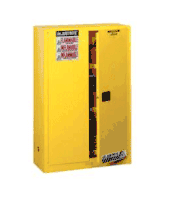
- Material Composition: High-Density Polyethylene (HDPE).
- Capacity Range: 82-Gallon to 100-Gallon Sump Capacities.
- Compliance: EPA 40 CFR 264.175, SPCC, and UFC Requirements.
- Configuration: One-Drum and Two-Drum Low-Profile Systems.

| Product Name | Configuration | Dimensions (Inches) | Sump Capacity (Gallons) |
|---|---|---|---|
| Ultra Safety Cabinet Containment System | One-Drum | 6 x 36 1/2 x 36 1/2 | 82 Gallon |
| Ultra Safety Cabinet Containment System | Two-Drum | 6 x 36 1/2 x 61 1/2 | 100 Gallon |
Design and Spatial Integration Ultra Safety Cabinet Containment Systems are manufactured in two distinct footprint configurations to match standard industrial cabinet sizes. The one-drum system utilizes a square 36.5-inch base, while the two-drum variant extends to 61.5 inches in width. Both models maintain a 6-inch vertical profile. This low-clearance design is intentional, as it minimizes the elevation of the safety cabinet, ensuring that internal shelves remain at ergonomic heights for workers while providing the necessary volume for spill capture. The sumps are designed to be "place-and-set" components that do not require mechanical fastening to the cabinet itself.
Polyethylene Durability and Resistance The primary construction material for these containment systems is 100% high-density polyethylene (HDPE). HDPE is selected for industrial spill control due to its high strength-to-density ratio and its inertness when exposed to a wide range of aggressive chemicals, including acids, bases, and solvents. Unlike metal containment trays, HDPE will not rust or corrode when exposed to moisture or leaked electrolytes. The material is also UV-stabilized, preventing degradation or brittleness if the unit is positioned near windows or in high-intensity lighting environments common in industrial labs.
Compliance and Environmental Protection These systems are engineered to assist facilities in maintaining compliance with EPA 40 CFR 264.175, which mandates that secondary containment systems must have sufficient capacity to contain 10% of the volume of the containers or 100% of the volume of the largest container, whichever is greater. Furthermore, these units meet Spill Prevention, Control, and Countermeasure (SPCC) requirements and Uniform Fire Code (UFC) standards. By providing up to 100 gallons of sump capacity, these systems often exceed the minimum regulatory requirements for standard 55-gallon drum storage housed within safety cabinets.
Sector-Specific Deployment The utility of cabinet containment systems spans several technical sectors. In chemical processing plants, they serve as a secondary defense against corrosive leaks. In pharmaceutical and laboratory settings, they prevent cross-contamination of floors and drainage systems. Agricultural facilities utilize these sumps to manage liquid fertilizers and pesticides stored in bulk. The non-sparking nature of the HDPE material also makes these systems suitable for environments where flammable liquids are stored, as the material does not contribute to ignition risks during a spill event or container movement.
Technical Compatibility and Sizing When selecting an Ultra Safety Cabinet Containment System, the primary technical factor is the alignment of the sump capacity with the total volume of hazardous liquids stored above it. Buyers must calculate the cumulative volume of all primary containers to ensure the 82-gallon or 100-gallon sump meets local and federal containment ratios. Additionally, chemical compatibility charts must be consulted to ensure the HDPE material is rated for the specific pH levels and chemical compositions of the stored materials. Physical dimensions must also account for the floor load-bearing capacity and the footprint of the existing safety cabinet.

