


Pesticide Safety Storage Cabinets for Drums and Cans
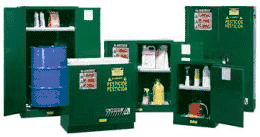
- Material Composition: 18-gauge double-walled welded steel with 1.5-inch insulating air space.
- Size/Capacity Range: 12-gallon (1-door) to 55-gallon (2-door) drum storage configurations.
- Compliance/Ratings: FM Approved; meets OSHA 29 CFR 1910.106 and NFPA Code 30 standards.
- Closure Types: Manual-close doors (180-degree opening) or Self-close doors (fusible link actuated).

| Product Model | Capacity | Door Configuration | Closure Type |
|---|---|---|---|
| Justrite Pesticide Safety Storage Cabinet | 6 - 5 gal. cans | 2-door | Manual |
| Justrite Pesticide Safety Storage Cabinet | 6 - 5 gal. cans | 2-door | Self-close |
| Justrite Pesticide Safety Storage Cabinet | 9 - 5 gal. cans | 2-door | Manual |
| Justrite Pesticide Safety Storage Cabinet | 9 - 5 gal. cans | 2-door | Self-close |
| Justrite Pesticide Safety Storage Cabinet | 12 - 1 gal. cans | 1-door | Manual |
| Justrite Pesticide Safety Storage Cabinet | 12 - 1 gal. cans | 1-door | Self-close |
| Justrite Pesticide Safety Storage Cabinet | 1 - 55 gal. drum | 2-door | Manual |
| Justrite Pesticide Safety Storage Cabinet | 1 - 55 gal. drum | 2-door | Self-close |
Manual vs. Self-Closing Mechanisms Industrial pesticide cabinets are categorized by their door actuation systems. Manual-close models allow the doors to swing open to a full 180 degrees, providing unobstructed access to tiered shelving for inventory management. Self-closing models utilize a synchronized mechanism equipped with a fusible link. In the event of a fire, the link melts at 165°F (74°C), triggering the automatic closure and latching of the doors. This feature ensures the cabinet remains sealed to prevent fire spread, even if personnel are not present. Both configurations utilize a three-point stainless steel bullet latching system to maintain a secure seal against the cabinet frame.
Structural Integrity and Chemical Resistance The cabinets are manufactured from 18-gauge cold-rolled steel. The double-wall construction creates a 1.5-inch (38 mm) insulating air space, which functions as a thermal barrier during high-heat exposure. Exterior and interior surfaces are finished with a lead-free green epoxy/polyester powder-coat paint. This finish provides resistance to the corrosive properties of common pesticides and fertilizers while maintaining high visibility for safety identification. Internal components, including galvanized steel SpillSlope shelves, are designed to direct incidental leaks toward the back and bottom of the unit into a 2-inch (51 mm) liquid-tight containment sump.
Compliance and Safety Certifications Adherence to standardized safety protocols is mandatory for the storage of hazardous agricultural chemicals. These cabinets are designed to meet OSHA 29 CFR 1910.106 and NFPA Code 30 requirements for the storage of Class I, II, and III flammable and combustible liquids. Furthermore, the units are FM (Factory Mutual) Approved, indicating they have undergone rigorous testing for fire performance and structural durability. Integration of built-in grounding connectors assists in dissipating static electricity, a critical factor when transferring liquids between containers within or near the cabinet.
Sector-Specific Deployment Pesticide safety cabinets are deployed across multiple sectors requiring chemical segregation. In the agricultural sector, these units house concentrated insecticides and herbicides, preventing unauthorized access and environmental contamination. Landscaping and golf course maintenance facilities utilize smaller 12-gallon and 30-gallon units for the storage of turf management chemicals. For industrial chemical processors, the 55-gallon vertical drum cabinets allow for the direct storage of bulk pesticides, often utilized in conjunction with drum pumps for metered dispensing. The specialized green color coding serves as a universal indicator for pesticide storage, separating these contents from general flammables.
Technical Assessment for Capacity and Compatibility Choosing the appropriate cabinet requires an analysis of both total volume and container type. For facilities utilizing 1-gallon or 5-gallon pails, tiered shelving configurations maximize vertical space. For bulk storage, a drum-specific cabinet must be used to accommodate the height and diameter of a 55-gallon drum. Buyers must also evaluate floor space requirements; self-closing doors require specific clearance for the closing arc. The chemical compatibility of the stored substances must be verified against the epoxy/polyester coating to ensure long-term housing stability. Proper ventilation must also be addressed via the integrated 2-inch NPT threaded vents if the application requires mechanical exhaust.

