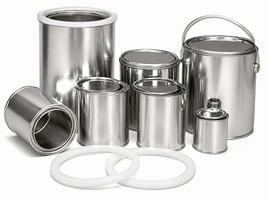
- Material Composition: Tin-Plated Steel with optional Epoxy-Phenolic linings.
- Size/Capacity Range: 1/2 Pint, 1 Pint, 1 Quart, 1/2 Gallon, 1 Gallon, and 5 Quart.
- Compliance/Ratings: Industrial-grade construction for chemical and solvent storage.
- Closure Types: Friction-top lids and pails with integrated handles.
Industrial paint cans and metal pails provide a standardized solution for the containment of architectural coatings, solvents, and adhesives. This category includes a comprehensive range of capacities, from 1/2 pint containers to 5-quart pails, manufactured from tin-plated steel. The selection features both unlined interiors for oil-based products and epoxy-phenolic lined interiors for water-based or corrosive materials. These containers are designed with friction-fit closures to prevent vapor loss and maintain product integrity. Available in individual units or bulk case packs, these metal containers meet the requirements of laboratory sampling, retail paint distribution, and industrial manufacturing.
| Product Name |
Capacity |
Interior Lining |
Quantity |
| Paint Can |
5 Quart |
Unlined |
Single Unit |
| Pail with Handle |
1 Gallon |
Unlined |
12 Case Pack |
| Paint Can |
1 Gallon |
Unlined |
12 Case Pack |
| Pail with Handle |
1 Gallon |
Epoxy Lined |
12 Case Pack |
| Paint Can |
1 Gallon |
Epoxy Lined |
12 Case Pack |
| Paint Can |
1/2 Gallon |
Unlined |
12 Case Pack |
| Paint Can |
1 Quart |
Unlined |
12 Case Pack |
| Paint Can |
1 Quart |
Epoxy Lined |
12 Case Pack |
| Paint Can |
1 Pint |
Unlined |
12 Case Pack |
| Paint Can |
1 Pint |
Epoxy Phenolic Lined |
12 Case Pack |
| Paint Can |
1/2 Pint |
Unlined |
24 Case Pack |
| Paint Can |
1/2 Pint |
Lined |
24 Case Pack |
Friction-Top and Pail Designs
Industrial paint containers are categorized by their closure mechanisms and handling features. Friction-top cans, available in sizes ranging from 1/2 pint to 1 gallon, utilize a multi-friction seal where the lid is pressed into a groove, creating multiple contact points to prevent leakage and air intrusion. This design is specialized for repeated opening and closing. For larger volume requirements, the 5-quart and 1-gallon pails often include integrated wire bail handles with plastic grips to facilitate manual transport. The 1-gallon pails are further distinguished from standard cans by their reinforced rims and handle attachments, which are engineered to support the higher weight of dense liquids.
Tin-Plated Steel and Internal Coatings
The primary substrate for these containers is tin-plated steel, which provides a balance of structural rigidity and cost-efficiency. Steel offers high impact resistance compared to plastic alternatives, ensuring the containers remain intact during high-speed filling and stacking. Interior linings are a critical engineering factor; unlined cans are the industry standard for solvent-based paints, varnishes, and lacquers. However, water-based (latex) products require epoxy-phenolic linings. These specialized coatings prevent the water content in the product from reacting with the steel substrate, thereby eliminating the risk of oxidation and maintaining the chemical purity of the stored contents.
Shipping and Safety Compliance
While paint cans are commonly used for consumer goods, their industrial application involves adherence to DOT and OSHA standards for hazardous material communication. Standard tin-plated cans are engineered to withstand the internal pressures associated with non-regulated liquids. For materials classified as hazardous for transport, specific UN-rated packaging must be utilized. The containers listed here are intended for industrial and commercial use, where the friction-lid design provides a vapor-tight seal when properly seated. This ensures compliance with workplace safety standards regarding the containment of Volatile Organic Compounds (VOCs) and flammable vapors in storage environments.
Sector-Specific Utility
The utility of metal paint cans extends across multiple industrial sectors. In the chemical industry, they are used for the storage of catalysts, resins, and specialized coatings. The laboratory sector utilizes smaller 1/2 pint and 1 pint cans for volatile samples where plastic containers might leach or degrade. In the architectural and construction sectors, 1-gallon and 5-quart pails are the standard for field-applied paints and sealants. Additionally, the agricultural sector employs these containers for the distribution of pesticides and liquid fertilizers that require a light-blocking, puncture-resistant barrier to remain stable during outdoor use or warehouse storage.
Technical Compatibility Factors
Selecting the appropriate metal container requires an analysis of chemical compatibility and storage duration. Buyers must determine if the product pH or solvent base will interact with raw steel; water-based substances necessitate an epoxy-lined interior to prevent rust. Capacity must also be matched to the distribution model, with larger 5-quart options providing higher volume efficiency and smaller pint sizes reducing product waste for low-volume applications. Environmental factors, such as humidity levels in the storage facility, should also be considered, as the exterior tin-plating provides a level of corrosion resistance but may require secondary containment in high-moisture industrial settings.