


6" IBC Tote Caps & Covers | Polypropylene Fill Caps
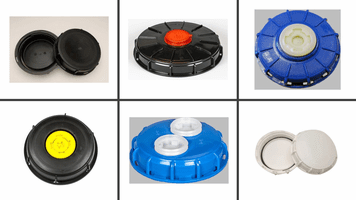
- Material Composition: Injection-Molded Polypropylene (PP), PTFE Vent Membrane, EPDM/Santoprene Gaskets
- Size Range: Standard 6-Inch IBC Fill Opening (Some 9-Inch Variants)
- Compliance: Food-Grade Options Available; Pressure/Vacuum Venting Configurations
- Closure Types: Solid Caps, Plug-Type Caps (2" NPS), Vented Caps with Membrane

Featured Products

Product Comparison Chart
Configuration Analysis
IBC fill caps are available in three primary configurations based on access and venting requirements. Solid caps feature a closed-top design with no secondary openings, used for sealed transport and storage where no dispensing or airflow is required. Plug-type caps include a central 2-inch NPS threaded opening, allowing connection to pumps, hoses, or transfer systems without removing the full cap. Vented caps incorporate a PTFE membrane within the plug assembly, enabling controlled airflow to equalize pressure and prevent container deformation during filling, dispensing, or temperature changes. Selection depends on whether the application requires sealed containment, fluid transfer access, or pressure regulation.
Material Engineering
Polypropylene (PP) is used due to its resistance to a wide range of chemicals, including acids, bases, and solvents. The material maintains structural integrity across a broad temperature range and resists cracking under repeated installation cycles. PTFE vent membranes provide gas permeability while blocking liquid ingress, supporting safe pressure equalization. Gasket materials such as EPDM and Santoprene are selected based on chemical compatibility and sealing requirements. EPDM performs well in water-based and mild chemical environments, while Santoprene offers broader resistance and durability. Some caps integrate metal-reinforced wrench heads for torque-controlled installation.
Regulatory Standards
IBC caps and closures must align with UN/DOT regulations when used for transporting hazardous materials. Vented caps are critical in applications involving volatile or temperature-sensitive liquids, where pressure buildup must be managed to meet safety standards. Food-grade polypropylene and gasket materials are required for potable water or food-related storage applications, ensuring compliance with FDA guidelines. Proper cap selection supports OSHA safety requirements by reducing risks associated with leaks, vapor release, or container failure during handling and transport.
Industrial Applications
These caps are used across multiple industries requiring sealed bulk storage and controlled dispensing. In chemical processing, vented caps manage pressure fluctuations during reactions or storage. In agriculture, plug-type caps allow direct connection to irrigation or transfer systems for fertilizers and liquid nutrients. Water treatment operations use solid and vented caps for storage of potable or treated water, where contamination prevention and pressure balance are required. Manufacturing facilities rely on these closures to maintain system integrity during transport and staging of liquid materials.
Selection Criteria
Cap selection depends on compatibility, access requirements, and environmental conditions. Chemical compatibility between the stored liquid and polypropylene, gasket material, and vent membrane must be verified to prevent degradation. Applications involving pressure changes require vented caps with PTFE membranes. If frequent access or fluid transfer is needed, plug-type caps with 2-inch NPS openings are preferred. Installation requirements should also be considered, including torque application using integrated wrench heads. Environmental exposure, including UV and temperature variation, should be evaluated to ensure long-term performance.
| Product Type | Top Design | Center Opening | Venting | Gasket Type | Primary Use |
|---|---|---|---|---|---|
| Solid Cap | Closed Top | None | No | EPDM / Santoprene | Sealed storage and transport |
| Plug-Type Cap | Flat Top | 2" NPS Threaded | No | EPDM / Santoprene | Fluid transfer access |
| Vented Cap | Flat Top | 2" Vent Plug | PTFE Membrane | EPDM / Santoprene | Pressure and vacuum relief |
Configuration Analysis
IBC fill caps are available in three primary configurations based on access and venting requirements. Solid caps feature a closed-top design with no secondary openings, used for sealed transport and storage where no dispensing or airflow is required. Plug-type caps include a central 2-inch NPS threaded opening, allowing connection to pumps, hoses, or transfer systems without removing the full cap. Vented caps incorporate a PTFE membrane within the plug assembly, enabling controlled airflow to equalize pressure and prevent container deformation during filling, dispensing, or temperature changes. Selection depends on whether the application requires sealed containment, fluid transfer access, or pressure regulation.
Material Engineering
Polypropylene (PP) is used due to its resistance to a wide range of chemicals, including acids, bases, and solvents. The material maintains structural integrity across a broad temperature range and resists cracking under repeated installation cycles. PTFE vent membranes provide gas permeability while blocking liquid ingress, supporting safe pressure equalization. Gasket materials such as EPDM and Santoprene are selected based on chemical compatibility and sealing requirements. EPDM performs well in water-based and mild chemical environments, while Santoprene offers broader resistance and durability. Some caps integrate metal-reinforced wrench heads for torque-controlled installation.
Regulatory Standards
IBC caps and closures must align with UN/DOT regulations when used for transporting hazardous materials. Vented caps are critical in applications involving volatile or temperature-sensitive liquids, where pressure buildup must be managed to meet safety standards. Food-grade polypropylene and gasket materials are required for potable water or food-related storage applications, ensuring compliance with FDA guidelines. Proper cap selection supports OSHA safety requirements by reducing risks associated with leaks, vapor release, or container failure during handling and transport.
Industrial Applications
These caps are used across multiple industries requiring sealed bulk storage and controlled dispensing. In chemical processing, vented caps manage pressure fluctuations during reactions or storage. In agriculture, plug-type caps allow direct connection to irrigation or transfer systems for fertilizers and liquid nutrients. Water treatment operations use solid and vented caps for storage of potable or treated water, where contamination prevention and pressure balance are required. Manufacturing facilities rely on these closures to maintain system integrity during transport and staging of liquid materials.
Selection Criteria
Cap selection depends on compatibility, access requirements, and environmental conditions. Chemical compatibility between the stored liquid and polypropylene, gasket material, and vent membrane must be verified to prevent degradation. Applications involving pressure changes require vented caps with PTFE membranes. If frequent access or fluid transfer is needed, plug-type caps with 2-inch NPS openings are preferred. Installation requirements should also be considered, including torque application using integrated wrench heads. Environmental exposure, including UV and temperature variation, should be evaluated to ensure long-term performance.

